Foxconn enters Japan through joint venture with Mitsubishi Fuso for electric buses
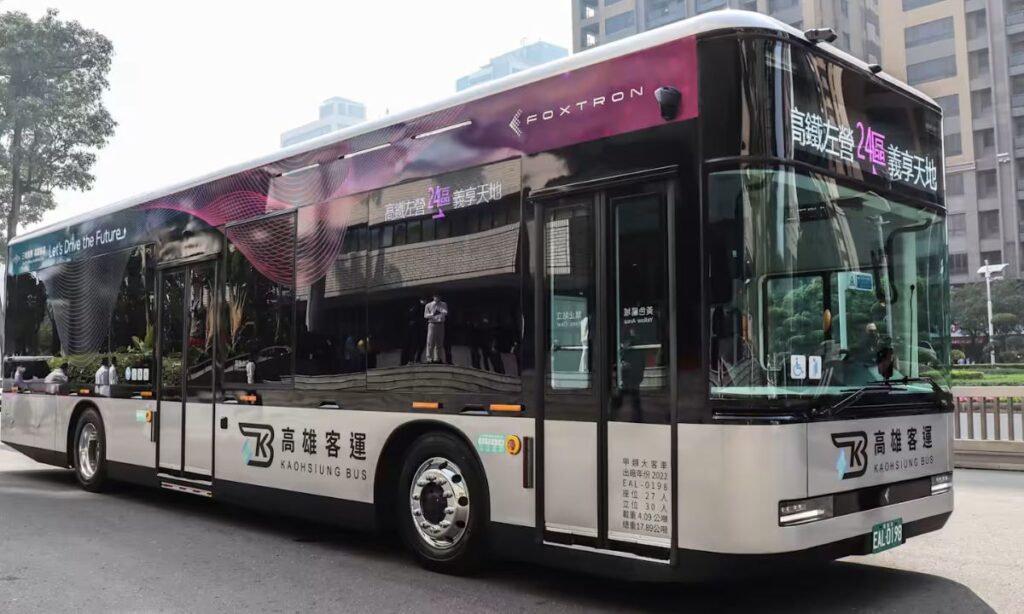
Foxconn (officially Hon Hai Technology Group) is making its first major manufacturing move into Japan by forming a 50/50 joint venture with Mitsubishi Fuso Truck and Bus Corporation (MFTBC), a Daimler Truck subsidiary. The new company, set to launch in the second half of 2026, will focus exclusively on developing, producing, and selling zero-emission electric buses under the FUSO brand.
The partnership builds on a memorandum of understanding signed in August 2025 and aims to accelerate the rollout of competitive battery-electric buses, starting with the Japanese domestic market and later expanding internationally. Buses will be manufactured at MFTBC’s existing bus production facility in Toyama, Japan.
Strategic rationale behind the collaboration
Several key drivers explain why this tie-up is happening now:
- Japan’s aggressive push toward carbon neutrality by 2050, with strong government incentives for zero-emission public transport fleets
- Rising demand from municipalities and operators for reliable electric buses amid tightening emissions regulations
- MFTBC’s established expertise in bus chassis, body engineering, and after-sales service in Japan and Asia
- Foxconn’s growing EV capabilities through its Foxtron subsidiary, including battery systems, power electronics, and scalable manufacturing know-how
- Foxconn’s ambition to expand beyond consumer electronics into commercial vehicle platforms and mobility services
The joint venture allows Foxconn to enter the Japanese market — one of the world’s most technically demanding and quality-focused — without building a greenfield facility from scratch.
How the JV will operate
The new entity will handle end-to-end bus development:
- Vehicle design and integration combining FUSO’s proven bus platforms with Foxconn’s electrified drivetrains
- Sourcing of key components, including batteries, motors, and inverters
- Production at the Toyama plant, leveraging MFTBC’s existing infrastructure and workforce
- Sales and service under the established FUSO brand, maintaining continuity for customers
This structure gives Foxconn direct access to Japan’s commercial vehicle ecosystem while letting MFTBC benefit from faster electrification without bearing the full R&D burden alone.
Broader implications for both companies
For MFTBC, the partnership speeds up its zero-emission roadmap. The company already offers electric models like the eCanter light truck, but buses represent a higher-volume, higher-visibility segment in urban transit. Collaborating with Foxconn provides access to advanced EV tech and global supply-chain scale.
For Foxconn, this marks a strategic foothold in Japan — a market long dominated by local players. It complements Foxconn’s existing EV efforts (Model C, Model T, Model V prototypes) and positions the company as a serious player in commercial electrification beyond passenger cars. Success here could open doors to further collaborations in Asia’s bus-heavy transit markets.
What this means for Japan’s EV bus landscape
Japan’s public transport operators face mounting pressure to replace aging diesel fleets. Electric buses offer quiet operation, zero tailpipe emissions, and lower total cost of ownership over time — but high upfront costs and charging infrastructure remain barriers.
The FUSO-Foxconn JV could help by delivering competitively priced, Japan-tuned electric buses with strong local support networks. If the models prove reliable in demanding urban routes (frequent stops, hilly terrain, cold winters), they stand a good chance of gaining share against European and Chinese competitors already active in the market.
Looking ahead
The joint venture is expected to start taking orders in 2027, with first deliveries following soon after. While specific technical specs (battery size, range, passenger capacity) have not yet been disclosed, the focus on “competitive” zero-emission buses suggests emphasis on efficiency, durability, and total lifecycle costs.
This move signals deepening ties between Taiwan’s electronics manufacturing giant and Japan’s commercial vehicle industry — a cross-border alliance that could reshape how electric buses are developed and deployed in one of Asia’s most advanced mobility markets.