BMW Check Engine light on: common causes, mistakes, and what to do
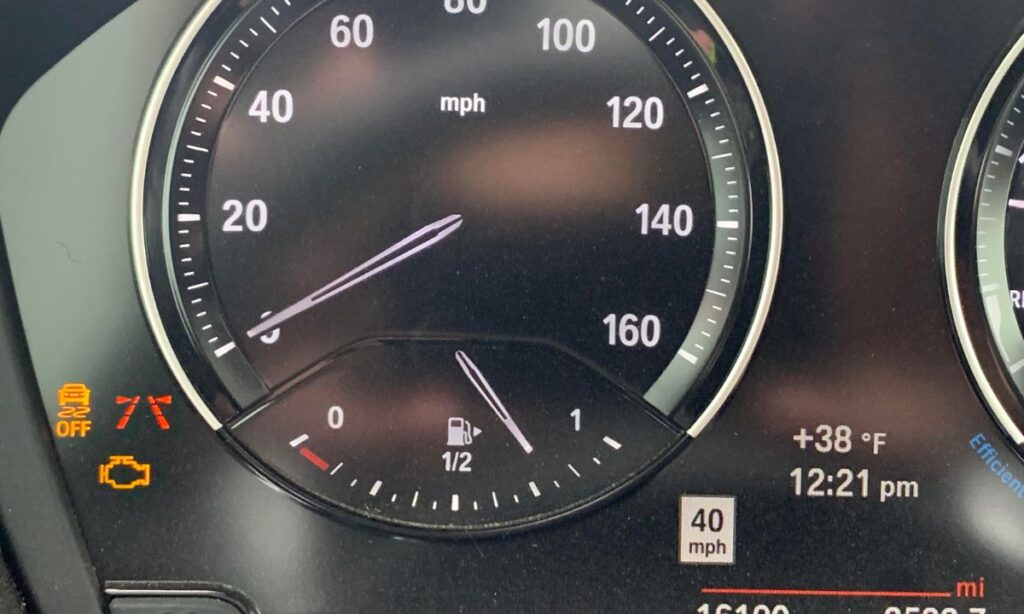
The check engine light (CEL) — the yellow or orange engine icon on your BMW dashboard — is one of the most frequent warnings BMW owners see. Sometimes labeled “service engine soon” on older models, it means the engine control unit (ECU) has detected a problem in the engine, emissions system, or related components. Ignoring it can lead to worse fuel economy, rough running, failed emissions tests, or significantly more expensive repairs later.
In BMWs the light behaves in two main ways:
- Steady light — usually a non-urgent fault; you can drive short distances but should diagnose it soon.
- Flashing light — indicates a serious issue (most often a misfire); stop driving as quickly as possible to prevent catalytic converter damage.
Most common reasons the check engine light appears on BMWs
BMW engines are complex and sensitive, so many different faults can trigger the CEL. These are the issues that appear most often in real-world BMWs:
- Loose, cracked, damaged, or missing fuel filler cap — the single most frequent cause. The EVAP system detects a leak and sets a code (commonly P0455 or P0442).
- Faulty oxygen (O₂) sensors — upstream or downstream sensors fail over time, especially on higher-mileage N52, N54, N55, and B58 engines.
- Dirty or failed mass airflow (MAF) sensor — causes incorrect air measurement, resulting in rough idle, hesitation, and poor throttle response.
- Ignition system faults — worn spark plugs, failing ignition coils, or cracked plug boots lead to misfires (codes P0300–P0306). Very common on turbocharged models.
- VANOS issues — variable valve timing solenoids or valves become clogged with oil sludge (typical on N52 and N54 engines).
- Catalytic converter efficiency problems — usually a secondary effect of long-term misfires or bad O2 sensors.
- EVAP system leaks — cracked purge valve, leaking hoses, faulty leak detection pump, or fuel tank pressure sensor.
- Low engine oil level or overdue oil service — some models will trigger the CEL if oil is critically low or sensors detect issues.
- Other sensors — camshaft or crankshaft position sensors, coolant temperature sensor, throttle body problems, or intake manifold issues.
Typical mistakes BMW owners make with the check engine light
Many people respond to the light in ways that make the situation worse or more expensive:
- Ignoring a steady light, thinking “it’s just an emissions thing” — this often leads to catalytic converter failure.
- Clearing the code without fixing the problem — using a scanner or disconnecting the battery turns the light off temporarily, but the fault returns and valuable diagnostic history is lost.
- Replacing the fuel cap without scanning first — it’s a common fix, but not always the real issue.
- Continuing to drive with a flashing light — this dumps unburned fuel into the exhaust and can destroy the catalytic converter.
- Fitting very cheap replacement parts — low-quality sensors, coils, or MAFs usually fail quickly and bring the light back on.
- Trying to guess the fault instead of reading codes — leads to unnecessary part replacements.
What to do step by step when the light comes on
Follow this sequence to handle it safely and efficiently:
- Quick visual checks
- Confirm the fuel cap is properly tightened (listen for several clicks).
- Check engine oil level via the dipstick or iDrive screen (top up if low).
- Evaluate the light type
- Steady → you can drive to a workshop or home, but don’t ignore it for long.
- Flashing → reduce engine load immediately (turn off A/C, avoid hard acceleration), and get the car to a specialist or have it towed.
- Read the diagnostic trouble codes
- Use an OBD-II scanner (basic generic ones work, but BMW-specific tools like Carly, BimmerCode, INPA, or ISTA read deeper codes).
- Write down all stored and pending codes (e.g., P0171/P0174 for lean condition, P030x for cylinder misfire, P0420/P0430 for catalyst efficiency).
- Decide on action
- Simple fixes (fuel cap, obvious loose connection) — try resolving them yourself.
- Sensor, ignition, or VANOS problems — take the car to a BMW-savvy independent specialist or dealer for proper diagnosis.
- Avoid general chain workshops unless they have proven BMW experience.
- After the repair
- Clear the codes only once the fault is fixed.
- Drive a complete drive cycle (mix of city and highway driving) so the ECU can verify the repair.
- If the light returns, re-scan — there may be additional or related faults.
A check engine light on a BMW almost always means something needs attention, but catching it early usually keeps the repair simple and inexpensive. Most triggers are sensor-, maintenance-, or wear-related rather than catastrophic engine failure. If you tell me your BMW model, year, approximate mileage, and the exact codes you read, more targeted guidance is possible.