Tesla launches fully driverless robotaxi service
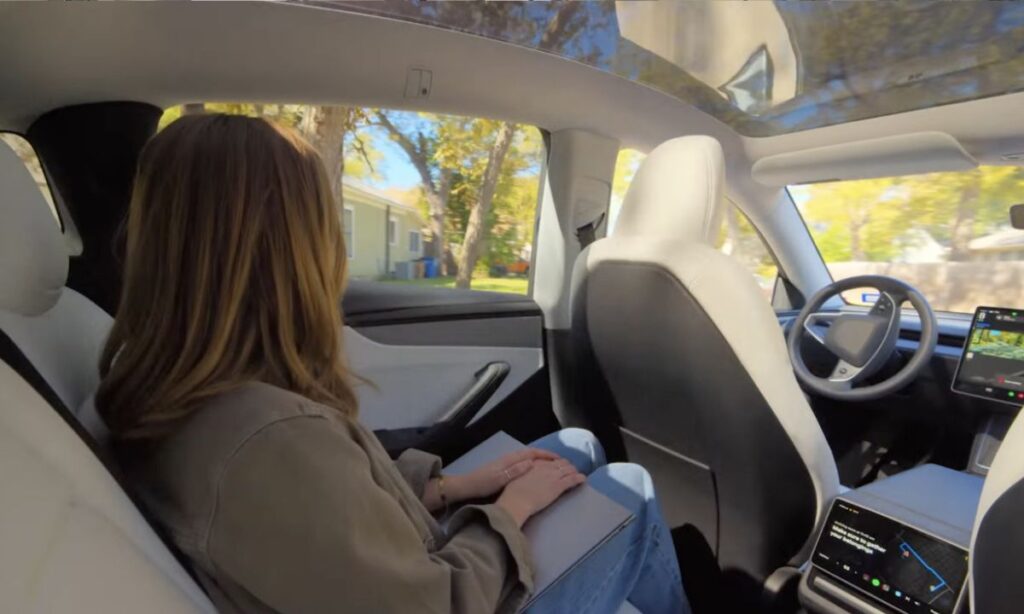
Tesla has begun operating its robotaxi fleet with no human assistant inside the vehicle. This marks the first real transition from supervised tests and remote teleoperation to genuine unsupervised autonomous rides that regular passengers can book.
The move ends years of gradual promises and finally puts AI in full control of every moment from pickup to drop-off.
How Tesla reached unsupervised autonomy
The journey took over a decade of steady layering:
- 2014 — basic Autopilot with lane-keeping and adaptive cruise
- 2016–2019 — Hardware 2 → Hardware 3, massive fleet data collection
- 2020–2023 — Full Self-Driving beta with steadily decreasing interventions
- 2024–2025 — rollout of city-wide unsupervised driving in selected geofences
Tesla stuck to a vision-only philosophy. No LiDAR, no radar arrays — only cameras feeding neural networks trained on billions of real customer-driven kilometres.
Core technical pieces:
- end-to-end neural network mapping pixels directly to steering, throttle and brake outputs
- Dojo supercomputer built for video-scale training
- frequent OTA updates fixing edge cases almost weekly
- eight external cameras + ultrasonics for parking and very close objects
Thanks to this the car manages unprotected lefts, construction zones, emergency vehicles and unpredictable human drivers without any human fallback.
What the ride feels like for passengers
Open the Tesla app → request ride → empty car arrives. Phone unlock → doors open. Inside you get:
- no steering wheel or pedals
- noticeably more spacious cabin layout
- large central touchscreen + pleasant ambient lighting
- voice + touch controls to adjust route or add stops
The system runs probabilistic trajectory planning — every fraction of a second it simulates many possible futures and picks the safest + smoothest path. It reads subtle cues (pedestrian shoulder turn, cyclist weight shift, micro vehicle movements) more reliably than the average human driver.
Early service runs in carefully mapped urban zones where millions of fully autonomous kilometres have already been driven.
Main advantages of no onboard human
Removing the person creates several hard-to-beat upsides:
- 24/7 operation without driver breaks or shift handovers
- perfectly consistent behaviour (zero fatigue, distraction, emotion)
- much lower cost per driven kilometre
- realistic independent mobility for elderly, visually impaired and non-licensed people
- higher vehicle utilisation → fewer total cars needed in the city
- safety statistics still showing autonomous kilometres safer than human-driven ones in comparable conditions
AI-coordinated routing also flattens traffic waves and cuts phantom congestion.
Remaining challenges
Several real hurdles are still there:
- approval rules differ wildly from city to city and country to country
- noticeably weaker performance in heavy snow, thick fog, extreme glare, dirty windshields
- ongoing need to harden cybersecurity on always-connected cars
- public trust damaged by years of optimistic-but-delayed autonomy announcements
- unavoidable moral programming questions in genuine no-win crash scenarios
Tesla counters with phased geographic expansion, constant retraining on new edge cases, transparent incident reporting and direct rider feedback loops.
Wider impact on cities and industry
This forces the entire AV sector to accelerate. Players still using safety drivers or multi-sensor stacks now face brutal pressure on both speed-to-market and unit economics.
Legacy carmakers speed up their software-defined transition. Cities start rewriting parking rules, kerbside regulations and lane designs for dense robotaxi flows.
Longer-term shifts include:
- real decline in personal car ownership in dense areas
- growth of mobility-as-a-service platforms
- changing property values along high-quality mobility corridors
- transport jobs slowly moving toward software, fleet ops and infrastructure roles
Why it actually matters day-to-day
The missing driver’s seat is the clearest sign of a bigger change: trip time stops being lost time. People read, work, rest or just look out the window instead of gripping the wheel in traffic.
Kids move independently earlier. Older adults stay connected longer. Tourists navigate without stress. As the network grows and gets more reliable, the mental line between “at home” and “on the way” starts to fade.
Tesla’s robotaxi is no longer a demo or a waitlist experiment. It’s now normal people opening an app and stepping into an empty car that quietly drives them exactly where they need to go — trip after trip after trip.