GM shifts Buick compact crossover production from China to the US
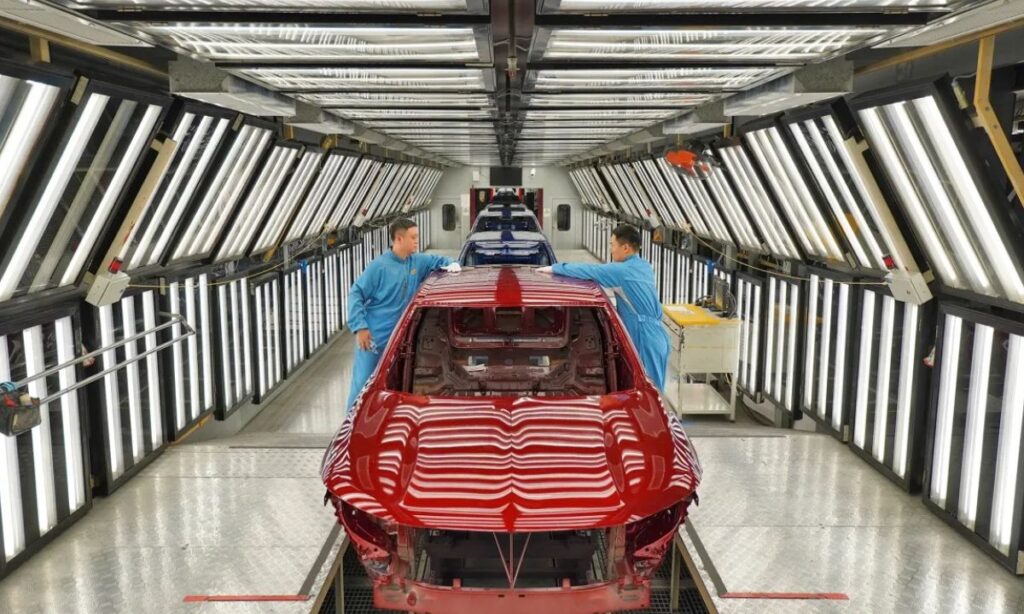
General Motors has announced plans to relocate production of its next-generation Buick compact crossover — the successor to the current Envision — from China to the United States. Starting in 2028, the vehicle will be built at the company’s Fairfax Assembly plant in Kansas City, Kansas, marking a significant step in reshoring for the Buick brand.
For years the Buick Envision has been the only Chinese-built model sold in the American market. Assembled through the SAIC-GM joint venture in Jinqiao, Shanghai, it has faced a 25% import tariff since 2018. That duty increased the sticker price and limited sales volume in a highly competitive compact crossover segment. By moving future production onshore GM aims to eliminate those extra costs, improve pricing competitiveness, and align better with domestic manufacturing priorities.
Why the shift makes strategic sense now
Several converging factors explain the timing of this decision:
- Persistent tariffs on Chinese imports continue to pressure margins for vehicles built overseas
- Rising geopolitical and supply-chain risks have pushed many automakers to diversify away from single-country reliance
- Strong demand for US-built vehicles among buyers who prefer domestic assembly
- Opportunity to utilize existing capacity at Fairfax Assembly, which currently produces the Chevrolet Malibu and Cadillac XT4
- Alignment with broader industry trends toward nearshoring and friend-shoring in North America
GM emphasized that current Envision imports from China will continue until the new model launches in 2028. After that point the US-market version will be fully American-made, while production in China may persist for other markets.
Impact on the Fairfax plant and US jobs
The move secures and potentially expands production at Fairfax Assembly. The plant, which has undergone several retooling cycles in recent years, gains a high-volume crossover to replace or supplement declining sedan output. This transition supports blue-collar jobs in Kansas and the surrounding supply chain.
UAW representatives welcomed the announcement as a win for American workers, especially amid ongoing discussions about trade policy and manufacturing footprints. Building the vehicle domestically also simplifies logistics, shortens lead times for dealers, and reduces exposure to ocean freight disruptions.
What the next Buick compact crossover might bring
While GM has not released official details on the successor model, several expectations are already circulating:
- Shared architecture with other GM compact crossovers to maximize platform efficiency
- Updated design language in line with Buick’s recent shift toward more premium, tech-forward styling
- Likely inclusion of advanced driver-assistance systems and connectivity features standard across the lineup
- Possible hybrid or plug-in hybrid variants to meet tightening fuel-economy and emissions rules
- Focus on quiet cabin refinement — a long-standing Buick strength
The name “Envision” may carry over, or GM could choose a fresh moniker to signal a new chapter for the model.
Broader implications for GM and the industry
This decision fits into GM’s larger North American manufacturing strategy. The company has steadily invested in US plants for trucks, SUVs, and electric vehicles while scaling back some overseas sourcing for mainstream models. By bringing the Buick crossover home GM reduces tariff exposure, strengthens its “Made in America” credentials, and positions Buick as a more patriotic choice in the luxury-leaning mainstream segment.
Competitors face similar pressures. Brands importing compact crossovers from Asia or Europe continue to navigate duties and currency fluctuations, while those with US production enjoy a cost and perception advantage. The move could accelerate similar reshoring announcements across Detroit and beyond.
For Buick buyers the change promises a more competitively priced compact crossover without the import penalty. For GM it represents a pragmatic response to trade realities, supply-chain caution, and the enduring value of building where you sell. Production begins in 2028 — until then the current China-built Envision remains on US dealer lots.