Tesla Cybercab production officially begins at Gigafactory Texas in april 2026
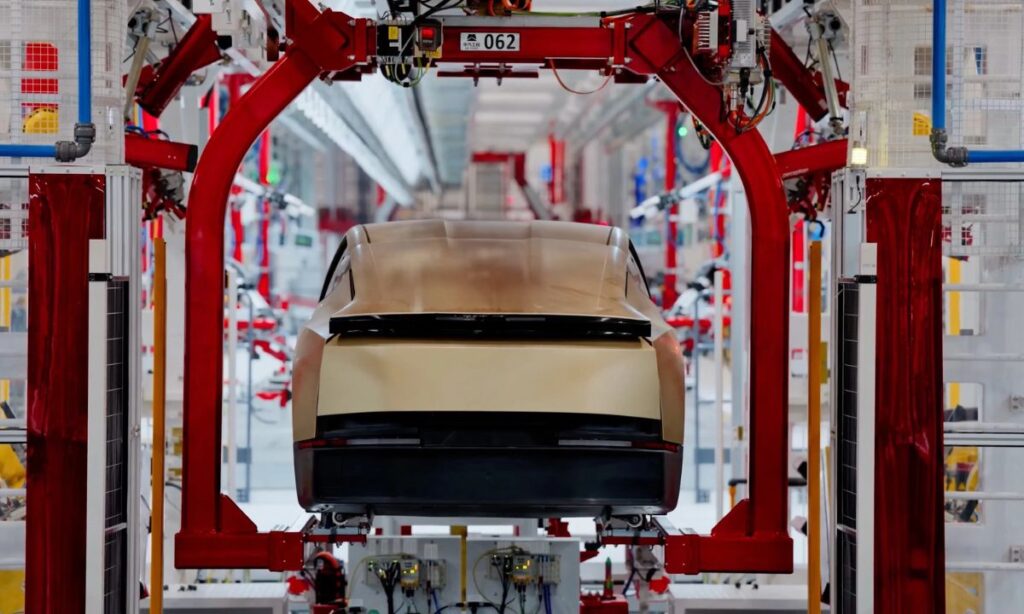
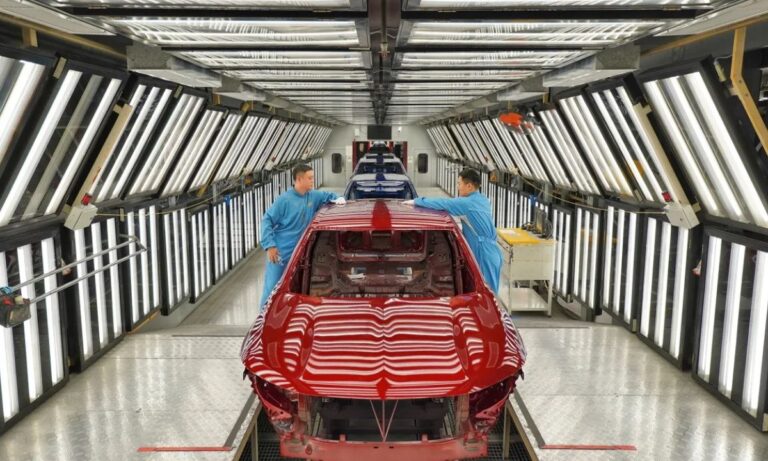
Tesla has started volume production of the Cybercab, its fully autonomous robotaxi without a steering wheel or pedals, at Gigafactory Texas in April 2026. This marks a critical milestone in the company’s plan to build a large-scale robotaxi network.
Early production ramp underway
The first production Cybercab rolled off the line in February 2026, about six weeks ahead of the original schedule. By mid-April, drone footage showed clusters of 50–60 finished and near-finished Cybercabs at the factory’s outbound lot and crash testing area. Some units were seen driving around the campus and charging at Superchargers, confirming active manufacturing and initial validation testing.
Tesla is currently in the early ramp phase. The company expects slow initial output, following the classic S-curve pattern of new vehicle launches, before scaling to hundreds of units per week.
Design without compromise
The Cybercab is a compact two-seater designed exclusively for autonomous operation. It features:
- No steering wheel and no pedals
- Butterfly doors for easy passenger access
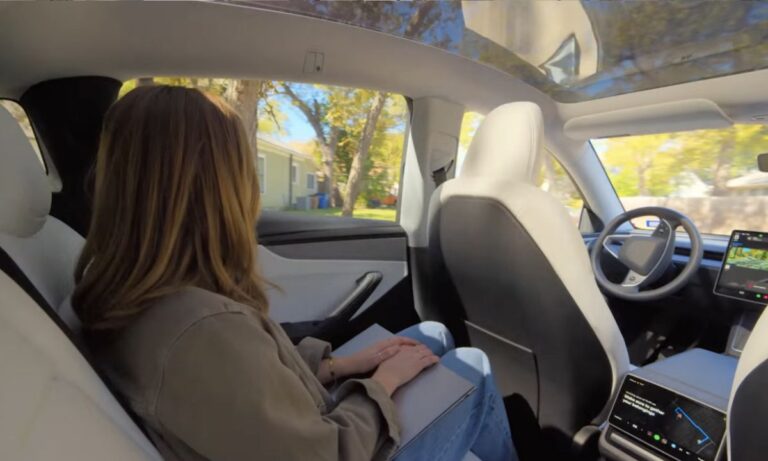
- A minimalist interior focused entirely on rider comfort
- Inductive charging capability
- Low-drag body optimized for fleet efficiency
The vehicle relies completely on Tesla’s latest Full Self-Driving hardware and software. Production versions spotted at the factory appear to maintain the wheel-less design, although Tesla has kept the option to add controls if required by regulators.
Manufacturing advantages
The Cybercab uses a simplified architecture with significantly fewer parts than traditional vehicles. This includes the removal of the entire driver control interface. Tesla plans to leverage its “unboxed” manufacturing process to achieve much higher production rates in the long term — potentially up to several million units annually across multiple factories.
The dedicated production line at Giga Texas is specifically built for this model, which should help drive down costs and support Tesla’s goal of making robotaxis affordable for widespread deployment.
Strategic importance for Tesla
The Cybercab is central to Tesla’s vision of transforming from a car manufacturer into a leader in autonomous transportation. Once scaled, the vehicles will first join Tesla’s own supervised and unsupervised robotaxi fleet. Later, private owners will be able to add their Cybercabs to the network and earn revenue from autonomous rides.
Successful production ramp-up in 2026 will be a key factor in Tesla’s future valuation and its ability to compete in the growing robotaxi market against players like Waymo and Zoox.
April 2026 production start puts Tesla on track with its publicly stated timeline. The coming months will show how quickly the company can increase output, pass final regulatory hurdles, and move these driverless vehicles from the factory floor onto public roads.