Toyota 1JZ-GE & 1JZ-GTE 2.5L Engine: Complete guide to the legendary inline-six
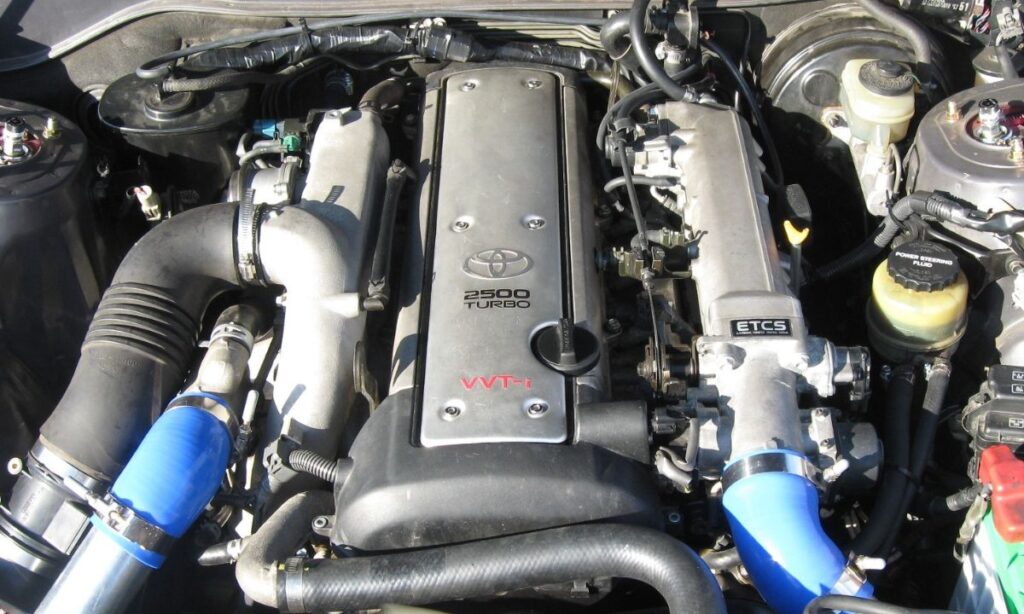
The Toyota 1JZ is one of the most respected and tunable inline-six engines ever produced by Toyota. Introduced in 1990 as part of the JZ family (alongside its bigger brother, the 3.0L 2JZ), the 2.5-liter 1JZ was designed for a balance of smooth performance, reliability, and efficiency. It powered a wide range of iconic JDM performance sedans and coupes, including the Toyota Chaser, Cresta, Mark II, Soarer, and Crown.
Available in two main versions — the naturally aspirated 1JZ-GE and the turbocharged 1JZ-GTE — this engine became a favorite among enthusiasts worldwide thanks to its strong bottom end, smooth power delivery, and huge aftermarket support. Even today, well-maintained 1JZ engines regularly exceed 300,000–500,000 km with proper care.
Technical specifications
Common specs for both versions:
- Type: Inline-6, DOHC, 24 valves (4 valves per cylinder)
- Displacement: 2,492 cc (2.5 L)
- Bore × Stroke: 86.0 mm × 71.5 mm
- Cylinder block: Cast iron
- Cylinder head: Aluminum
- Fuel system: Multi-point fuel injection
- Weight: ~200–210 kg (dry)
1JZ-GE (Naturally Aspirated)
- Compression ratio: 10.0:1 (early non-VVT-i) / 10.5:1 (VVT-i version)
- Power:
- 1990–1995 (non-VVT-i): 170 PS (125 kW / 168 hp) @ 6,000 rpm
- 1996–2007 (VVT-i): 200 PS (147 kW / 197 hp) @ 6,000 rpm
- Torque:
- Early: 235 Nm (173 lb-ft) @ 4,800 rpm
- VVT-i: 251 Nm (185 lb-ft) @ 4,000 rpm
- Redline: ~7,000–7,500 rpm
1JZ-GTE (Twin-Turbo / Single-Turbo)
- Compression ratio: 8.5:1 (Gen 1) / 9.0:1 (Gen 2 with VVT-i)
- Power: 280 PS (206 kW / 276 hp) @ 6,200 rpm (official Japanese Gentleman’s Agreement limit)
- Torque:
- Gen 1 (twin turbo): 363 Nm (268 lb-ft) @ 4,800 rpm
- Gen 2 (single turbo + VVT-i): 379 Nm (280 lb-ft) @ 2,400 rpm
- Turbo setup:
- 1st Gen (1990–1996): Twin CT12A turbos in parallel + front-mount intercooler
- 2nd Gen (1996–2007): Single CT15B turbo + VVT-i (much better low-end response)
Key differences between 1JZ-GE and 1JZ-GTE
- Block & Internals: The short block (crank, rods, pistons) is very similar, but the GTE has oil squirters for piston cooling, different pistons (lower compression), and reinforced components for boost.
- Cylinder Head: Different intake/exhaust ports and camshafts. The GTE head flows better for forced induction.
- Intake & Exhaust: Completely different manifolds and turbo setup on the GTE.
- Performance Character: The GE is smooth, rev-happy, and efficient for daily driving. The GTE delivers massive low-end torque and is a tuning monster.
Reliability & Common Issues
The 1JZ is widely regarded as one of Toyota’s most reliable performance engines when properly maintained.
Strengths:
- Extremely strong cast-iron block
- Excellent oiling system
- Can handle 500+ hp with basic bolt-ons (especially the GTE)
- Smooth and refined inline-6 character
Common Problems:
- Valve stem seals — Classic JZ issue. Causes blue smoke on startup or acceleration after high mileage. Easy and relatively cheap to fix (often done with the head off).
- Water pump — Short-lived part; replace every 80–100k km.
- VVT-i system (on later models) — Can fail and cause rough idle or knocking. Not as durable as modern systems.
- Twin turbos (1st Gen GTE) — Ceramic wheels can fail at higher boost. Many owners upgrade to a single turbo setup.
- Oil leaks — Valve cover gaskets and rear main seal are common leak points on high-mileage engines.
- ECU capacitors — Old capacitors can leak and cause idle or starting issues.
With regular oil changes (every 7,000–10,000 km using quality 5W-30 or 10W-40), timing belt service every 100,000 km, and cooling system maintenance, these engines easily last 400,000+ km.
Tuning potential
The 1JZ (especially the GTE) is a tuning legend:
- Stock internals — Safe up to ~450–500 hp on the GTE.
- Built bottom end — Can support 700–800+ hp.
- Popular mods: Single turbo conversion, upgraded fuel system, ECU tune (AEM, Haltech, Link), larger intercooler, exhaust, and intake.
- Many drift cars, drag builds, and street monsters run 1JZ platforms because of the great power-to-weight ratio and parts availability.
Applications
The 1JZ-GE and GTE were installed in:
- Toyota Chaser / Cresta / Mark II (JZX80, JZX90, JZX100, JZX110)
- Toyota Soarer (Z30)
- Toyota Crown (JZS171)
- Toyota Supra (early JZA70, some export models)
The engine is also extremely popular for engine swaps into lighter chassis (AE86, 240SX, IS300, etc.).
Whether you’re looking for a smooth daily driver (1JZ-GE) or a high-performance turbo monster (1JZ-GTE), the 2.5L JZ remains one of the best inline-six engines Toyota ever built — combining bulletproof reliability with serious tuning potential even 35+ years after its debut.
If you’re buying or building one, always check compression, look for smoke on cold start, and verify service history. With proper care, a 1JZ will reward you with hundreds of thousands of trouble-free kilometers and endless smile-per-mile.