Toyota Corolla E120 Fuses Guide 2000-2007
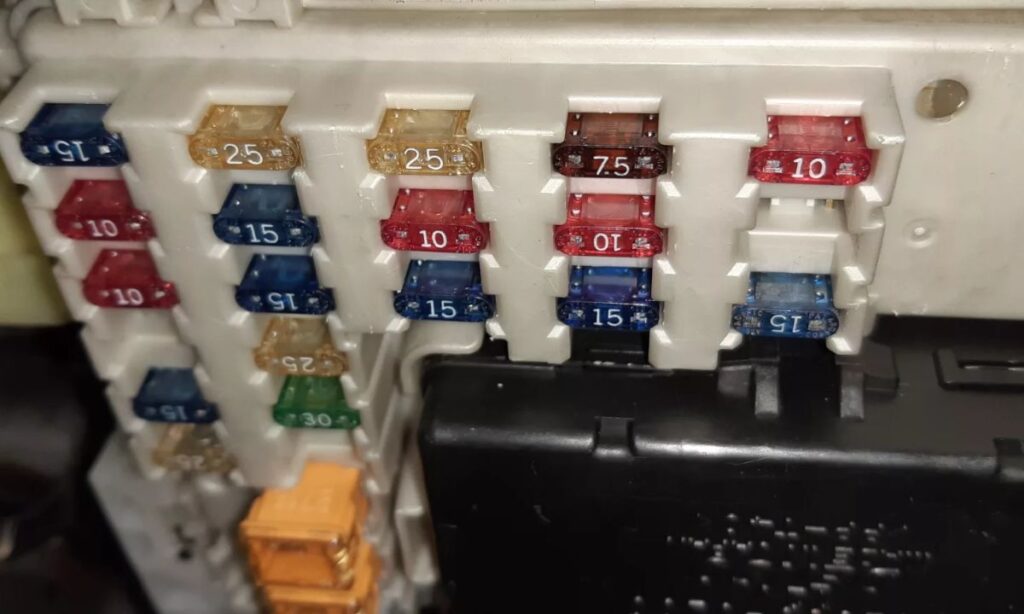
The Toyota Corolla E120 generation, produced from 2000 to 2007, uses two main fuse boxes to protect all electrical circuits in the vehicle. Understanding the fuse layout is essential for diagnosing electrical faults, replacing blown fuses correctly, and avoiding damage to sensitive components. This guide covers every fuse in both the engine compartment fuse box and the interior passenger compartment fuse box, with exact amperage ratings and functions as specified for the E120 platform.
Engine Compartment Fuse Box – Toyota Corolla E120
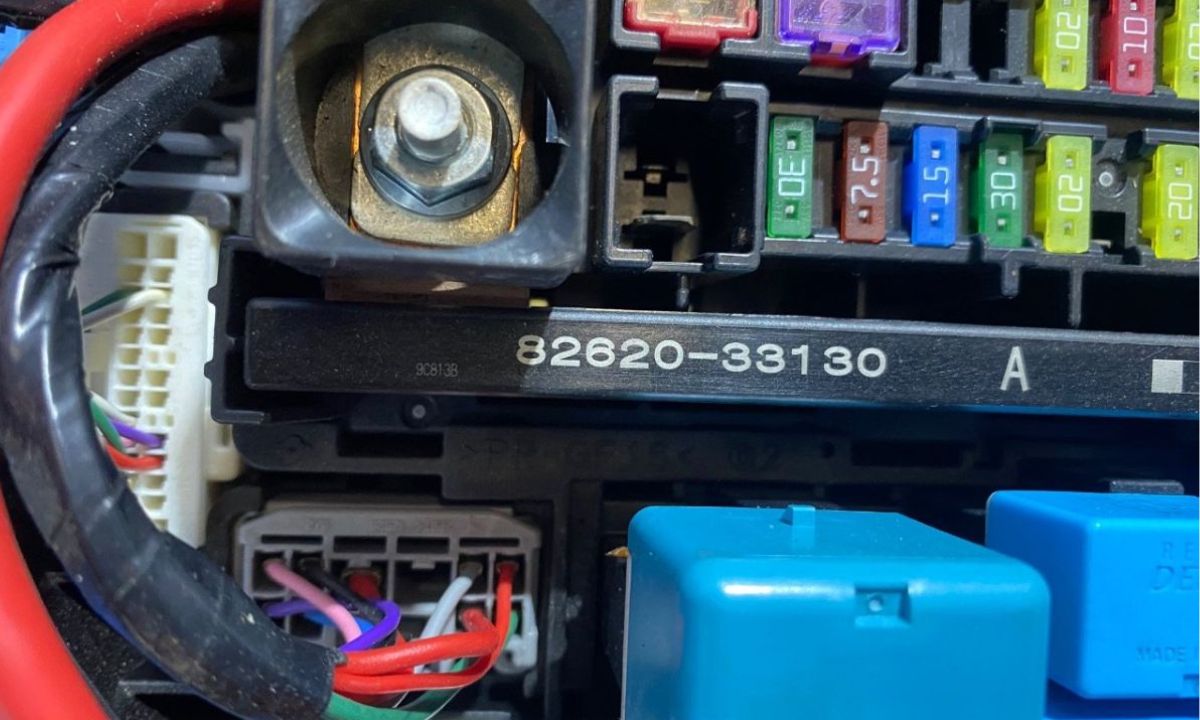
The engine bay fuse and relay box is located on the left side of the engine compartment, near the battery. It contains high-amperage fuses that protect major systems. Always disconnect the battery negative terminal before inspecting or replacing fuses in this box.
- ALT Fuse 120A – Alternator charge circuit
- AM1 Fuse 80A – Main power supply fuse (ignition switch, body ECU)
- AM2 Fuse 40A – Secondary main power supply fuse
- EFI Fuse 15A – Electronic fuel injection system
- ETCS Fuse 10A – Electronic throttle control system
- IGN Fuse 30A – Ignition system main feed
- HORN Fuse 15A – Horn relay and circuit
- COOLING FAN Fuse 30A – Radiator and condenser cooling fans
- H-LP LH Fuse 15A – Left headlamp (low/high beam)
- H-LP RH Fuse 15A – Right headlamp (low/high beam)
- ABS No.1 Fuse 40A – ABS actuator motor and pump
- ABS No.2 Fuse 15A – ABS control module power supply
- WINDSHIELD WIPER Fuse 30A – Front wiper motor circuit
- A/C Fuse 30A – Air conditioning compressor clutch and blower
- DEF Fuse 25A – Rear window defogger element
- AM-P Fuse 7.5A – Multiplex communication network (CAN)
- ECU-B Fuse 10A – Engine control unit battery-direct supply
- STARTER Relay – Engine starter motor engagement
- MAIN Relay – Main engine relay (EFI main relay)
- COOLING FAN Relay No.1 – Radiator fan low speed operation
- COOLING FAN Relay No.2 – Radiator fan high speed operation
- A/C Relay – Air conditioning magnetic clutch
Interior Passenger Compartment Fuse Box – Toyota Corolla E120
The interior fuse box is located on the driver’s side lower dashboard, behind a removable plastic cover. It houses smaller blade fuses protecting cabin and auxiliary electrical systems. The box is accessible without tools by pressing the cover latch.
- Fuse 1 – 15A – Power windows (front left)
- Fuse 2 – 15A – Power windows (front right)
- Fuse 3 – 10A – Door lock actuators
- Fuse 4 – 10A – Interior lights, map light, courtesy lights
- Fuse 5 – 10A – Instrument cluster illumination and gauges
- Fuse 6 – 10A – Combination meter, speedometer
- Fuse 7 – 15A – Audio system, radio, CD player
- Fuse 8 – 10A – Cigarette lighter / accessory socket
- Fuse 9 – 15A – Heated rear window (defogger switch circuit)
- Fuse 10 – 10A – Air conditioning control panel and blower switch
- Fuse 11 – 10A – Hazard warning lights and turn signal relay
- Fuse 12 – 10A – Stop lights (brake lights) circuit
- Fuse 13 – 10A – Reverse lights and backup lamp circuit
- Fuse 14 – 10A – Tail lights, parking lights, side marker lights
- Fuse 15 – 10A – License plate lights
- Fuse 16 – 10A – Daytime running lights (DRL, where fitted)
- Fuse 17 – 15A – Rear wiper motor (wagon/estate variants)
- Fuse 18 – 10A – Fog lights front (where fitted)
- Fuse 19 – 20A – Sunroof/moonroof motor (where fitted)
- Fuse 20 – 10A – SRS airbag control module power
- Fuse 21 – 10A – Seat belt warning system
- Fuse 22 – 10A – Anti-theft system / immobiliser ECU
- Fuse 23 – 7.5A – Multiplex (BEAN) body network communication
- Fuse 24 – 10A – Power mirror adjustment motor
- Fuse 25 – 15A – Power seat adjustment (where fitted)
Fuse Types and Replacement Specifications
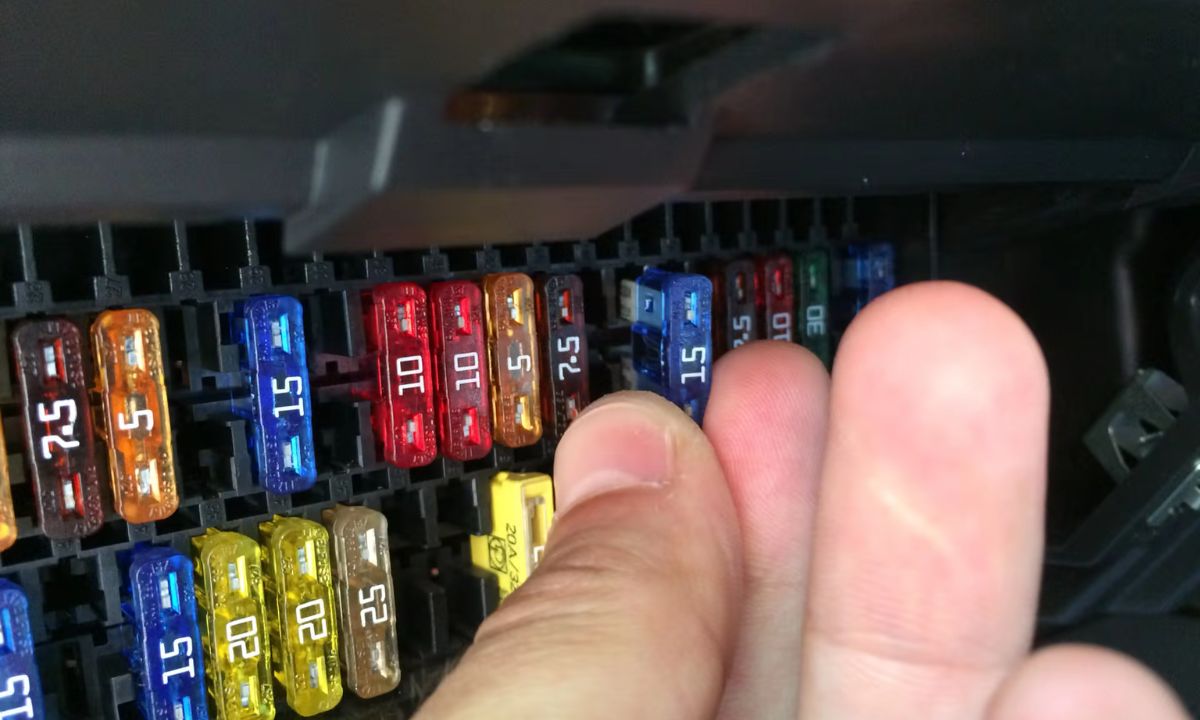
The Toyota Corolla E120 uses standard blade-type (ATC/ATO) fuses throughout the interior fuse panel and mini blade fuses (ATM) in selected positions. The engine compartment uses high-current MIDI and bolt-down fusible links for the 40A–120A positions. Always replace with a fuse of identical amperage — never fit a higher-rated fuse as a substitute, as this can cause wiring harness damage or fire.
- Mini blade (low-profile) – 7.5A, 10A, 15A positions in cabin
- Standard blade ATO – 10A to 30A engine bay auxiliary positions
- Fusible link / high-current blade – 40A, 80A, 120A battery and alternator circuits
- Spare fuses location – A small set of spare 10A and 15A mini blade fuses is clipped inside the interior fuse box cover on most E120 builds
How to Diagnose a Blown Fuse on the Corolla E120
When an electrical component stops working on the E120 Corolla, a blown fuse is the first thing to check. Use the following process for accurate diagnosis:
- Turn the ignition off before inspecting any fuse
- Locate the correct fuse box using the diagram printed on the inside of each cover
- Pull the suspect fuse using the plastic fuse puller tool stored inside the interior fuse box
- Inspect the fuse element visually — a broken wire inside the transparent body indicates a blown fuse
- Use a 12V test light or multimeter to verify both terminals of the fuse socket have continuity with a replacement fuse installed
- If the same fuse blows repeatedly, there is an underlying short circuit — do not keep replacing fuses without finding the root cause
- Check wiring harness routing near door hinges and firewall grommets, as chafing in these areas is a common cause of shorts on E120 vehicles over 10 years old
Common Electrical Issues Related to Fuses on the E120
- EFI fuse blowing – Often caused by a failing fuel pump drawing excess current; test fuel pump resistance before replacing the fuse
- Interior light fuse failure – Door jamb switches can short to ground if corroded; clean or replace the switch
- Audio fuse blown – Aftermarket stereo installation with incorrect wire gauge is a frequent cause
- ABS fuse failure – ABS pump motor seizure due to long periods of inactivity; check wheel speed sensors and pump operation
- Power window fuse – Window regulator motor overload, especially in cold climates where seals stiffen