Toyota Highlander XU40 2007-2013 Fuses: Complete Guide
The Toyota Highlander XU40 generation, produced from 2007 to 2013, uses multiple fuse boxes to protect its electrical circuits. Knowing the exact location, amperage, and function of every fuse is essential for diagnosing electrical faults, replacing blown fuses safely, and avoiding unnecessary trips to the dealer. This guide covers every fuse in every box of the XU40 Highlander, including the engine compartment fuse block, the instrument panel fuse block, and the additional relay and fusible link information.
Fuse Box Locations on the Toyota Highlander XU40
The XU40 Highlander has three main fuse and relay centers:
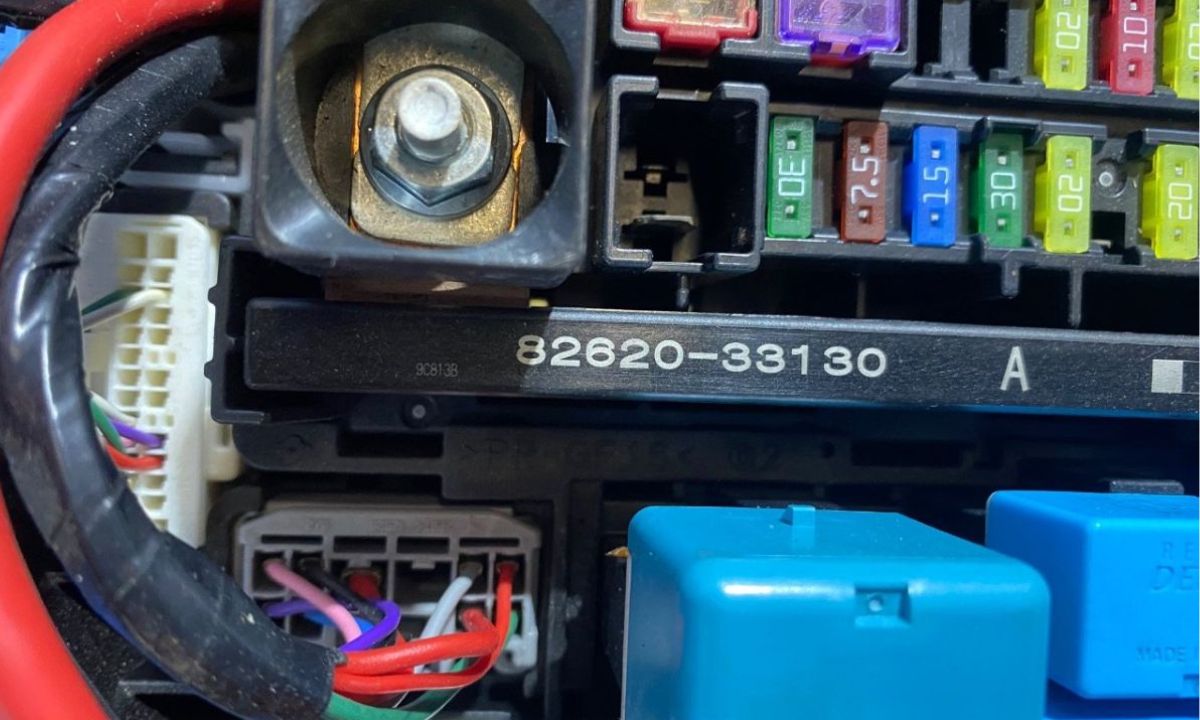
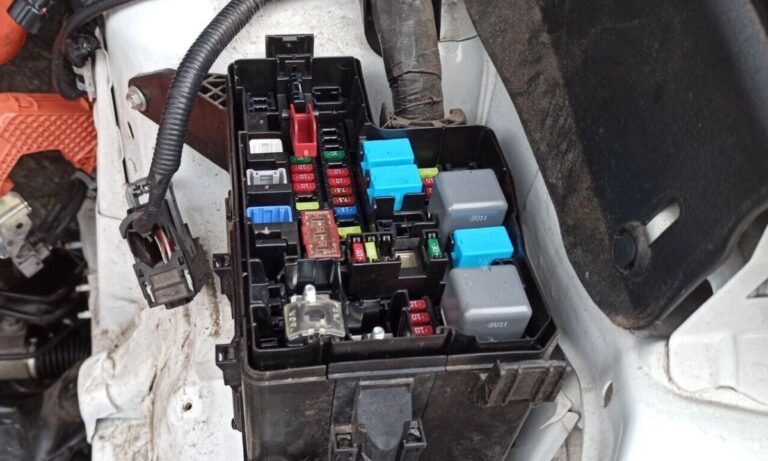
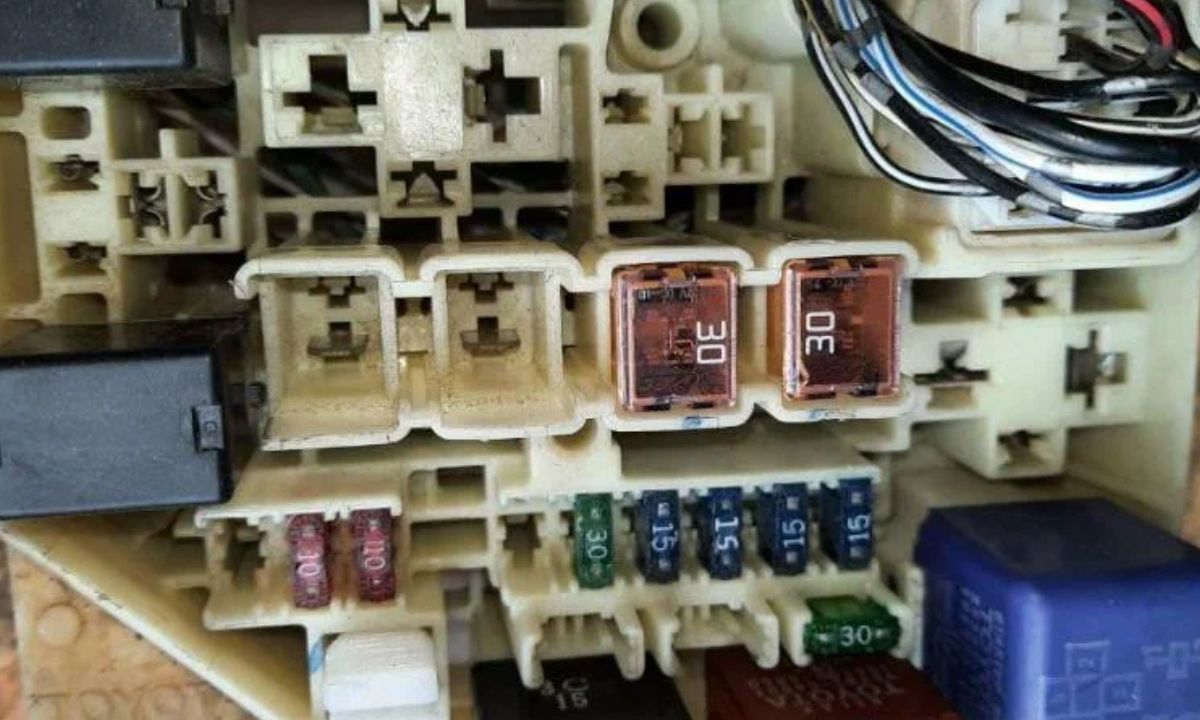
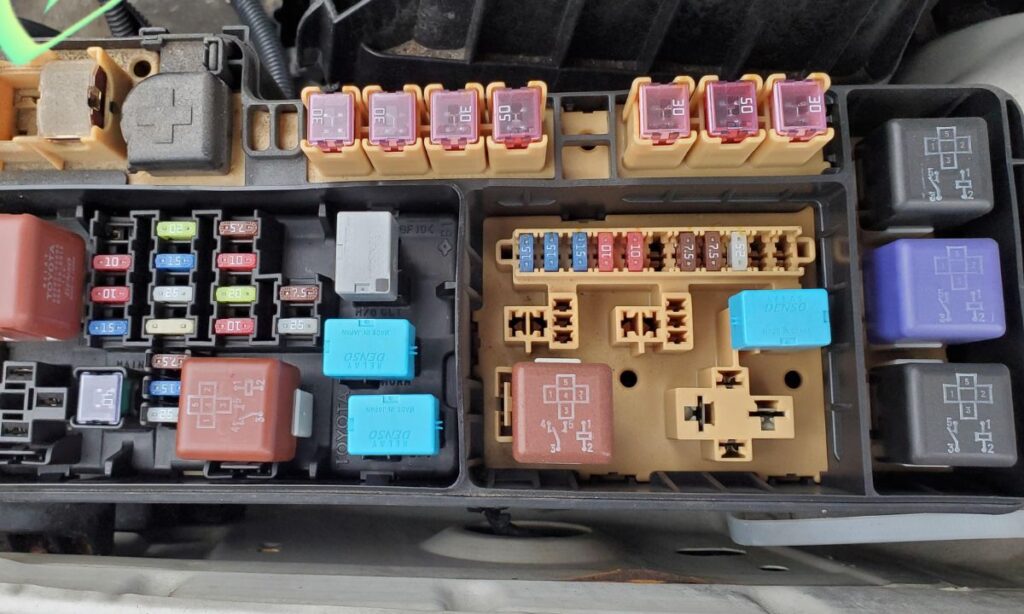
- Engine Compartment Fuse Block – located on the left side of the engine bay, near the battery
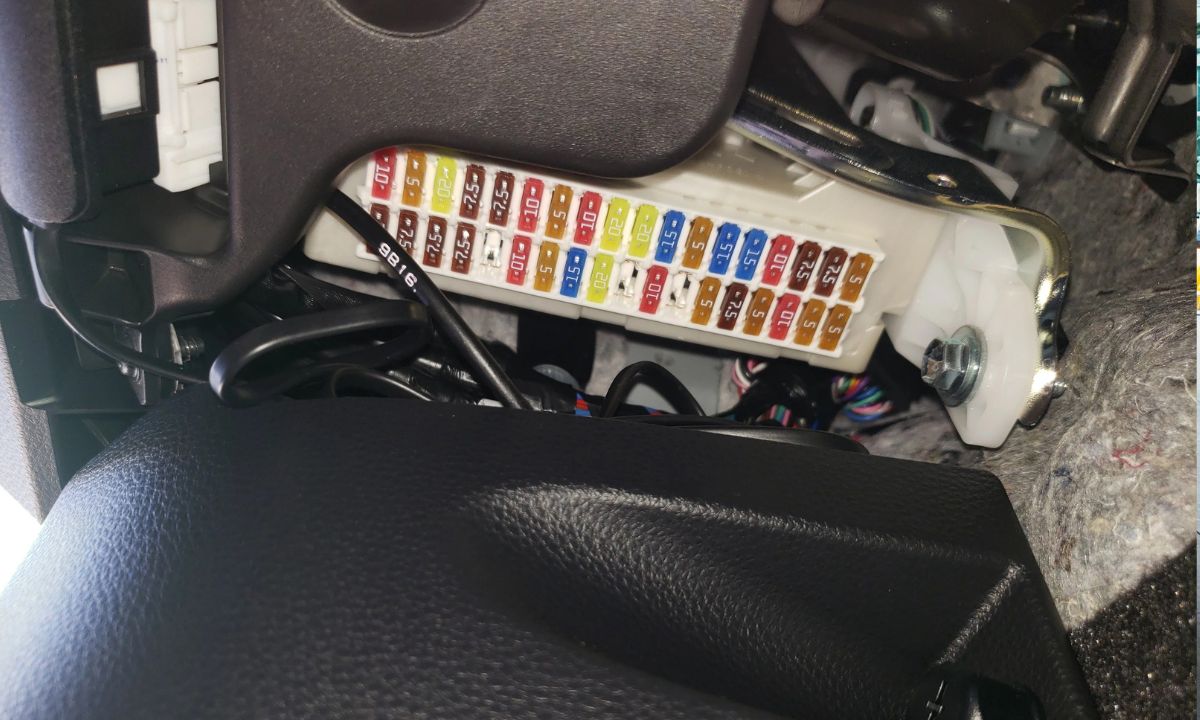
- Instrument Panel Fuse Block (Driver Side) – located under the dashboard on the driver’s side, behind a removable cover
- Engine Room Relay Block No. 2 – also referred to as the under-hood relay/fuse block, sometimes mounted near the ABS unit or firewall depending on trim
Engine Compartment Fuse Block – Complete Fuse List
- MAIN – 120A – Main battery fusible link
- EFI – 30A – Engine fuel injection system
- IGNI – 30A – Ignition system power
- AM2 – 40A – Power to AM2 circuit
- ALT – 120A – Alternator output fusible link
- HTR – 40A – Heater blower motor
- RDI FAN – 40A – Radiator cooling fan motor
- A/C – 30A – Air conditioning compressor clutch and controls
- ABS – 30A – Anti-lock brake system motor
- ST – 30A – Starter motor relay circuit
- ECU-B – 10A – ECU battery backup and memory
- DOME – 10A – Interior dome and courtesy lights
- EFI No.2 – 15A – Secondary EFI relay circuit
- OBD – 7.5A – OBD-II diagnostic port power
- STOP – 15A – Brake light switch and stop lamps
- HORN – 15A – Horn relay and horn
- ETCS – 10A – Electronic throttle control system
- TRAC – 10A – Traction control system
- EPS – 10A – Electric power steering ECU
- 4WD – 15A – Four-wheel drive transfer case control
- FUEL PUMP – 15A – Fuel pump relay and fuel pump
- WIPER – 20A – Front windshield wiper motor
- DEF – 30A – Rear window defogger
- TAIL – 15A – Tail lights, parking lights, license plate lights
- HEAD LH – 15A – Left headlight low beam
- HEAD RH – 15A – Right headlight low beam
- FOG – 15A – Front fog lights (if equipped)
Instrument Panel Fuse Block – Complete Fuse List
- CIG – 15A – Cigarette lighter / accessory power outlet
- AUDIO – 10A – Audio and infotainment system
- METER – 7.5A – Instrument cluster and gauges
- ECU-IG – 10A – ECU ignition-switched power
- SRS – 10A – Supplemental restraint system (airbags)
- DOOR – 10A – Door lock actuators and control
- POWER WINDOW – 30A – All power window motors
- P/W No.2 – 20A – Secondary power window circuit
- SEAT HTR – 20A – Heated seat elements (if equipped)
- MIRROR HTR – 10A – Heated side mirrors
- CRUISE – 10A – Cruise control system
- REVERSE – 10A – Reverse lights and backup camera (if equipped)
- TURN – 10A – Turn signal indicators and hazard lights
- PARK – 7.5A – Parking brake indicator and related
- VSC – 10A – Vehicle stability control system
- TPMS – 7.5A – Tire pressure monitoring system (if equipped)
- CAMERA – 7.5A – Backup camera module (if equipped)
- NAVI – 7.5A – Navigation system power (if equipped)
- SUNROOF – 20A – Power sunroof motor and controls
- REAR WIPER – 15A – Rear windshield wiper motor
- REAR BLOWER – 20A – Rear climate control blower (if equipped)
- ACC – 10A – Accessory relay and accessories
- INTERIOR LIGHT – 10A – All interior cabin lighting
- CLOCK – 7.5A – Clock and memory retention circuits
Fusible Links in the Engine Bay
In addition to standard blade fuses, the XU40 Highlander uses fusible links (high-current one-time fuses) in the engine compartment block. These protect the most critical circuits and cannot be simply replaced with a standard fuse – they require the exact OEM Toyota fusible link cartridge:
- MAIN 120A – protects entire electrical system from battery
- ALT 120A – protects alternator output wiring
- AM1 40A – protects always-hot supply to fuse block
- AM2 40A – secondary always-hot supply circuit
How to Identify and Replace a Blown Fuse
Always use the correct amperage replacement fuse. Never substitute a higher-amperage fuse to fix a repeatedly blowing circuit – this can cause wiring fires. The XU40 Highlander uses standard blade-type (ATO/ATC) fuses for most circuits, and mini blade fuses (ATM) for some instrument panel positions. A fuse puller is located inside the instrument panel fuse box cover. Pull the suspected fuse, hold it up to light, and check if the metal bridge inside is broken.
Common Electrical Problems by Fuse Circuit
- STOP fuse (15A) blowing repeatedly – check for shorted brake light socket or damaged wiring harness near rear hatch
- POWER WINDOW (30A) blown – often caused by a stiff or frozen window regulator drawing excess current
- EFI fuse blown – engine may not start; check fuel injector wiring and injector resistance
- SRS fuse blown – airbag warning light illuminated; do not attempt repair without proper diagnostic tool, SRS circuits carry stored energy
- TRAC or VSC fuse blown – stability and traction control warning lights active; check wheel speed sensor wiring
- 4WD fuse blown – transfer case will not engage four-wheel drive; inspect transfer case motor connector
Important Notes for XU40 Highlander Fuse Replacement
- Always turn the ignition OFF before replacing any fuse
- Disconnect the negative battery terminal before touching fusible links
- The 2010 facelift XU40 models may have slightly different fuse assignments for the backup camera and TPMS circuits compared to pre-facelift 2007–2009 models
- Hybrid versions (Highlander Hybrid) have additional fuse boxes in the rear of the vehicle associated with the high-voltage battery management system – these must only be serviced by a qualified Toyota hybrid technician
- Always refer to the specific fuse box lid diagram for your vehicle, as production variations exist between markets (North America, Japan, Australia, Europe)