Ford EcoBoost 1.0L I3 engine: overview, specifications, strengths, and problem areas
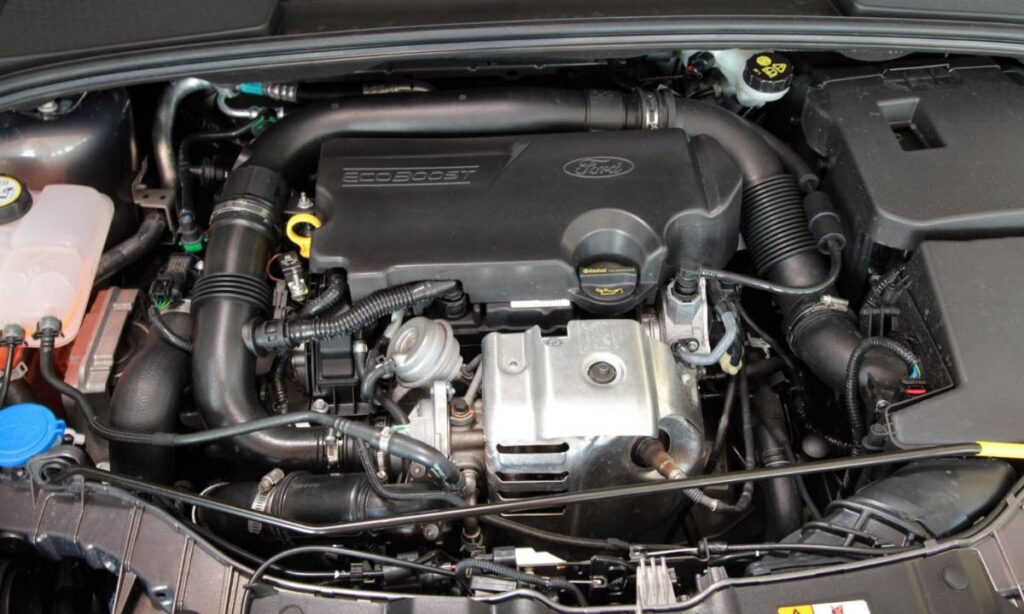
Ford’s EcoBoost 1.0L inline-three engine, often referred to as the Fox, represents a bold step in downsizing technology, packing turbocharged punch into a compact package. Debuted in 2012, this engine aimed to deliver four-cylinder performance with three-cylinder efficiency, aligning with global trends toward smaller, greener powertrains. Found in popular models like the Fiesta, Focus, and EcoSport, it has powered millions of vehicles worldwide, earning acclaim for innovation while facing scrutiny over long-term durability. This exploration covers its core specs, standout advantages, and recurring challenges, drawing from real-world applications and engineering insights.
History and development
The EcoBoost family emerged in 2009, but the 1.0L variant arrived in 2012 as Ford’s response to stringent emissions regulations and fuel economy demands. Developed in the UK for European markets initially, it emphasized turbocharging, direct injection, and lightweight design to maximize output from minimal displacement. Production began in Cologne, Germany, expanding to Romania and China to meet demand, with annual volumes reaching up to 1.5 million units. Early models focused on base power levels around 100 hp, evolving to include mild-hybrid integrations and cylinder deactivation by 2017 for better efficiency. In North America, it debuted in the 2014 Fiesta but saw limited adoption, discontinued in key models like the Focus by 2018 due to sales preferences for larger engines. Despite this, it remains active in global offerings, with updates addressing initial flaws like the wet timing belt system.
Technical specifications
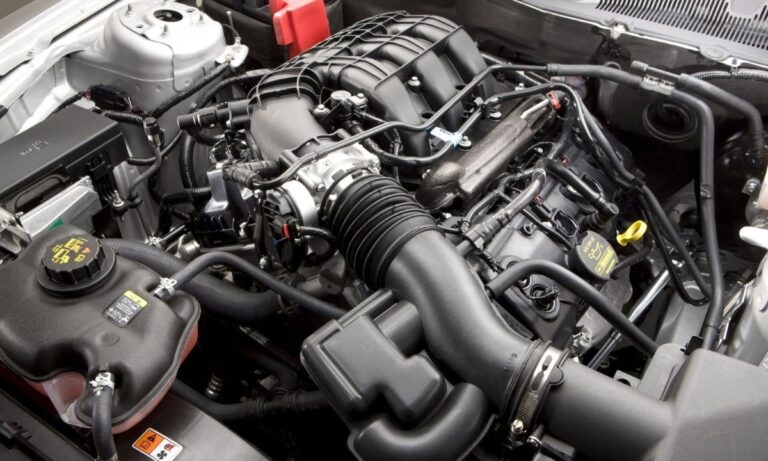
At its core, the 1.0L EcoBoost is an all-aluminum head atop a cast-iron block, balancing strength and quick warm-up times. Its compact footprint—roughly the size of an A4 sheet—allows seamless integration into subcompact vehicles.
- Displacement: 999 cc
- Configuration: Inline-3 (I3)
- Bore x stroke: 71.9 mm x 82.0 mm
- Compression ratio: 10.0:1 to 10.5:1
- Valvetrain: DOHC, 12 valves
- Fuel system: Direct injection
- Turbocharger: Single Continental radial-axial unit
- Oil system: Electronically controlled variable displacement pump
- Dry weight: Approximately 97 kg
- Timing system: Wet belt (oil-bathed), later variants with chain in some applications
These features enable rapid boost buildup and responsive throttle, with electronic controls optimizing performance across rev ranges.
Performance and variants
Power outputs vary by tuning and market, starting from naturally aspirated 65 hp versions to turbocharged peaks of 170 hp in sporty trims. Standard models deliver balanced everyday driveability, often paired with 6-speed manuals or automatics.
- Base variant (99 hp): 74 kW at 4500-6000 rpm, 170 Nm at 1400-4000 rpm – Used in early Focus Mk3 and Fiesta Mk6.
- Standard turbo (123 hp): 92 kW at 6000 rpm, 170 Nm at 1400-4500 rpm – Common in EcoSport and C-Max, offering quick acceleration in city driving.
- High-output (138 hp): 103 kW at 6000 rpm, 180 Nm at 1500-5000 rpm – Featured in Fiesta ST-Line for spirited handling.
- Mild-hybrid (mHEV) (125-155 hp): Up to 115 kW at 6000 rpm, 240 Nm at 2500 rpm with electric assist – Integrated in Puma and later Fiesta, adding regenerative braking and start-stop for urban efficiency.
- Performance peak (170 hp): 125 kW at 6000 rpm, 248 Nm at 3000 rpm – In Puma ST, blending hybrid tech with dynamic response.
Cylinder deactivation, introduced in 2017, shuts down one cylinder under light loads, reducing vibrations via dual-mass flywheels. In testing, it achieves 0-100 km/h in around 10-12 seconds depending on vehicle weight, with top speeds nearing 180 km/h.
Strengths
- Urban agility: Turbo torque provides eager low-speed pull without lag, making it ideal for city driving in compact cars like the Fiesta.
- Lightweight design: Enhances vehicle handling and nimbleness on twisty roads, contributing to a fun-to-drive experience.
- Fuel efficiency: Achieves impressive real-world figures of 15-20 km/L on highways, especially in mild-hybrid variants with start-stop and regenerative braking.
- Refinement: Surprising smoothness for a three-cylinder engine, with minimal vibrations in updated models thanks to balance shafts and engineering tweaks.
- Award-winning innovation: Multiple International Engine of the Year wins highlight its blend of power, economy, and compact size.
- Electrification support: Mild-hybrid versions offer seamless electric assist, improving throttle response and reducing emissions.
- Maintenance accessibility: Routine servicing remains straightforward for basic components, and the small size aids in vehicle packaging for more interior space.
Problem areas
- Wet timing belt degradation: In pre-2018 models, the oil-bathed belt can break down if oil changes are skipped, leading to oil starvation, seized pistons, or bearing damage—often requiring engine replacement.
- Coolant leaks: Nylon pipes crack under heat, or cylinder heads warp, causing overheating and potential gasket failures.
- Carbon buildup: Direct injection leads to deposits on intake valves, restricting airflow and causing power loss or rough idling—mitigated by periodic cleanings like walnut blasting every 80,000-100,000 km.
- Turbocharger failures: From oil starvation or heat stress, resulting in whining sounds or lost boost.
- Thermal stress issues: Early rapid warm-up can exacerbate gasket and component wear in high-mileage units.
- Fuel pressure drops: Injector pump wear over 150,000 km hampers performance.
- Early warning noises: Rattling from belt tensioner failure signals impending issues, addressed in later models with improved materials.
Ford EcoBoost 1.0L I3 engine embodies innovative engineering, offering peppy performance in a tiny footprint, yet demands vigilant upkeep to avoid costly pitfalls in longevity.