Ford Cyclone V6 Duratec 3.0–3.7L engine: Complete overview – history, specs, advantages and common problems
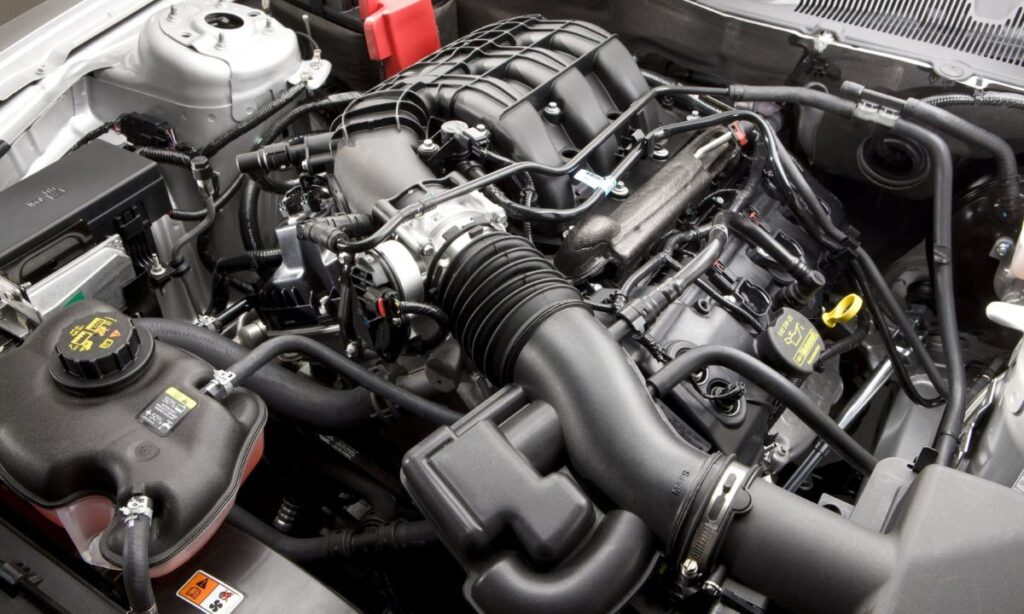
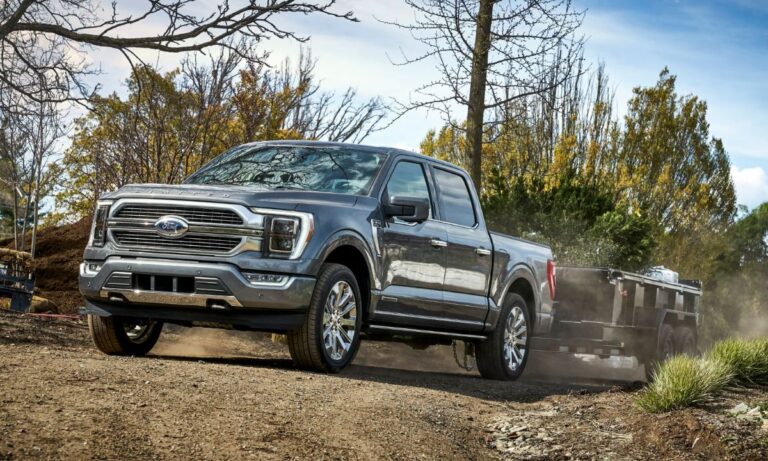
Ford’s Cyclone V6 family, still widely known as Duratec, became one of the most common V6 engines in American vehicles from the mid-2000s to the late 2010s. It powered Tauruses, Explorers, Edges, Flex models, Mustangs and various Lincoln vehicles. This overview delivers exactly what buyers and owners need: a short history, clear technical specifications, genuine advantages, and the real problem areas that affect long-term ownership.
Short history of the Cyclone V6
By the early 2000s Ford needed a modern, cleaner and more efficient V6 to meet stricter emissions and fuel-economy standards. The old Essex pushrod engine and the first-generation 3.0L Duratec were becoming outdated. In 2006 Ford introduced the completely new 3.5-liter Cyclone — a clean-sheet 60-degree aluminum V6 designed for both front-wheel-drive transverse and rear-wheel-drive longitudinal installations. The 3.7-liter version arrived shortly after with increased displacement for more torque in SUVs and the Mustang. The earlier 3.0L Duratec from 1996 is often grouped together with the Cyclone family because service procedures are similar. These naturally aspirated engines remained in production until around 2019, when turbocharged EcoBoost units gradually replaced them.
Technical specifications by version
All engines share the same basic architecture: 60-degree aluminum block with cast-iron liners, dual overhead cams, four valves per cylinder, chain-driven valvetrain and sequential multiport fuel injection.
- 3.0L Duratec (1996–2008)
Displacement: 2,967 cc
Bore × stroke: 89.0 × 79.5 mm
Power: 200–240 hp
Torque: 190–220 lb-ft
Compression ratio: 10.0:1
Used in Taurus, Sable, Mazda6 and some Jaguar models. Simple and very durable design. - 3.5L Cyclone (2006–2019)
Displacement: 3,496 cc
Bore × stroke: 92.5 × 86.7 mm
Power: 260 hp (early) up to 290 hp (2011+ with Ti-VCT)
Torque: 250–275 lb-ft
The most widespread version, found in Edge, Flex, Taurus, Explorer and Lincoln MKX/MKZ. - 3.7L Duratec 37 (2008–2017)
Displacement: 3,726 cc
Bore × stroke: 95.5 × 86.7 mm
Power: 268–305 hp
Torque: 275–280 lb-ft
Featured a forged crankshaft, piston oil squirters and stronger six-bolt main bearings. Popular in the 2011+ Mustang and police vehicles.
Later 3.5L and 3.7L models added Twin Independent Variable Cam Timing (Ti-VCT) on both intake and exhaust cams, improving low-rpm torque and efficiency.
Real advantages
The Cyclone V6 offers excellent refinement thanks to its perfect 60-degree balance — it feels smoother than many modern turbo four-cylinders. Strong mid-range torque makes highway merging and passing effortless without constant downshifting. Fuel economy is respectable for its size: real-world figures often reach 18–20 mpg city and 26–30 mpg highway in sedans and crossovers. Longevity is impressive — the 3.0L frequently exceeds 300,000 miles in fleet use, while 3.5L and 3.7L versions commonly reach 200,000–250,000 miles with original internals. Parts are inexpensive and widely available because millions of these engines were produced. The Mustang variant also delivers a pleasant exhaust note that enthusiasts appreciate.
Common problems and weak points
The most serious issue is the internal water pump found in all front-wheel-drive and AWD models (Edge, Flex, Taurus, Explorer, MKX, MKZ). Mounted inside the timing cover and driven by the timing chain, it typically fails between 90,000 and 150,000 miles. Coolant leaks directly into the crankcase, creating milky oil that can destroy bearings quickly. Repair costs usually range from $1,200 to $2,200 because the entire front of the engine must be disassembled. Rear-wheel-drive Mustangs use a conventional external pump and avoid this problem entirely.
Timing chain stretch and worn plastic guides are also frequent after 100,000 miles, especially if oil changes are neglected. Symptoms include a cold-start rattle and eventual cam-crank correlation codes. Dirty oil can stick VCT solenoids and phasers, causing rough idle and reduced power.
Some 2006–2012 3.5L engines show higher oil consumption (up to a quart every 1,000–2,000 miles) due to piston ring glazing. Other occasional issues include stuck intake manifold runner control flaps and seized spark plugs if maintenance was skipped.
The 3.0L is the simplest and most reliable overall. The 3.7L in rear-wheel-drive applications tends to have fewer issues than front-drive 3.5L versions.
Summary
The Ford Cyclone V6 Duratec 3.0–3.7L is a refined, torquey and long-lasting engine that performs well in everyday driving. It rewards owners who stay ahead of the timing service and water pump replacement on front-drive vehicles. With proper care these engines deliver smooth power and high mileage at reasonable cost, making them one of Ford’s most practical modern V6 designs.