Common Ford OBD-II error codes: decoding and potential fixes
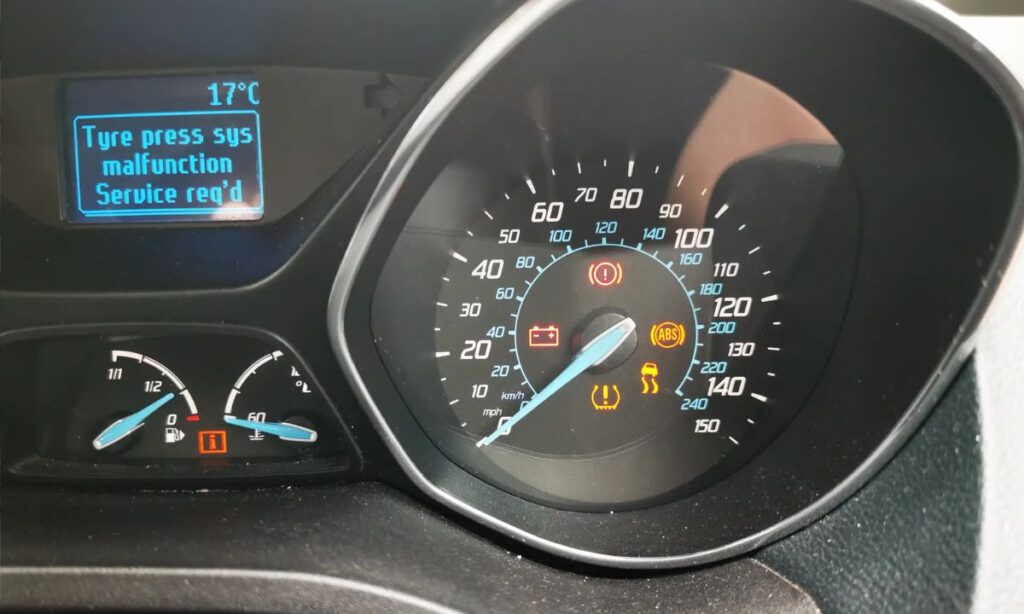
Owning a Ford vehicle means enjoying reliable performance, but like any modern car, it can throw error codes that leave you scratching your head. OBD-II, or On-Board Diagnostics II, is the standard system in vehicles since the mid-1990s that monitors engine, transmission, and emissions performance. When something goes awry, your Ford’s check engine light illuminates, signaling a diagnostic trouble code (DTC). These codes are alphanumeric strings starting with a letter (P for powertrain, B for body, C for chassis, U for network) followed by four digits. Understanding them isn’t just for mechanics—it’s empowering for any driver who wants to tackle issues proactively.
Ford vehicles, from the rugged F-150 to the sleek Mustang, often share common OBD-II codes with other brands, but some are manufacturer-specific, especially in the P1xxx range. Decoding these can save time and frustration, pointing to issues like faulty sensors, wiring problems, or component failures. In this deep dive, we’ll explore how to interpret these codes, why they matter, and practical steps to resolve them. We’ll cover at least 70 popular ones, focusing on powertrain codes since they’re the most frequent culprits in Ford diagnostics.
How OBD-II codes work in Ford vehicles
Before jumping into the list, let’s break down the basics. OBD-II scanners plug into your Ford’s diagnostic port, usually under the dashboard near the steering wheel. Affordable handheld scanners or Bluetooth adapters paired with apps like Torque Pro can read these codes in minutes. Once retrieved, a code like P0300 indicates a random misfire, but it’s the context—symptoms like rough idling or poor acceleration—that helps pinpoint the root cause.
Ford’s system is sophisticated, integrating with modules like the Powertrain Control Module (PCM). Generic codes (P0xxx) apply universally, while enhanced codes (P1xxx) offer Ford-specific insights. Always note if the code is pending (intermittent) or confirmed (persistent). Clearing codes without fixing the issue might temporarily turn off the light, but it’ll return if the problem lingers. Pro tip: Document mileage and conditions when the code appears for better troubleshooting.
Decoding popular Ford OBD-II codes with solutions
Here, we’ll detail over 70 common codes seen in Ford models like Explorers, Focuses, and Transits. Each includes a brief explanation, potential causes, and step-by-step fixes. Remember, while these are expert insights based on common patterns, professional diagnosis with tools like Ford’s IDS software is ideal for complex cases. We’ve grouped them loosely by system for easier navigation, but they’re all powertrain-focused.
Fuel and air system codes
These often relate to mixtures, injectors, or intake issues, affecting efficiency and emissions.
- P0001: Fuel Volume Regulator Control Circuit/Open. This points to issues in the fuel pressure regulator solenoid. Causes include wiring faults or a failed solenoid. Inspect harness for damage, test solenoid resistance, and replace if needed.
- P0002: Fuel Volume Regulator Control Circuit Range/Performance. Similar to P0001 but with erratic signals. Check for vacuum leaks or contaminated fuel; clean connections and recalibrate if possible.
- P0003: Fuel Volume Regulator Control Circuit Low. Low voltage in the circuit. Potential short to ground—trace wiring and use a multimeter to verify.
- P0004: Fuel Volume Regulator Control Circuit High. High voltage issue, possibly a short to power. Disconnect battery, inspect fuses, and repair shorts.
- P0087: Fuel Rail/System Pressure Too Low. Common in diesels like Power Stroke engines. Clogged fuel filter or weak pump; replace filter and test pump pressure.
- P0088: Fuel Rail/System Pressure Too High. Overpressure from a stuck regulator. Bleed the system and inspect for restrictions.
- P0100: Mass or Volume Air Flow Circuit Malfunction. Dirty MAF sensor in models like the Fusion. Clean with MAF cleaner spray and check for intake leaks.
- P0101: Mass or Volume Air Flow Circuit Range/Performance Problem. Sensor out of spec; calibrate or replace after verifying air filter condition.
- P0102: Mass or Volume Air Flow Circuit Low Input. Wiring issue or failed sensor. Test voltage at sensor pins.
- P0103: Mass or Volume Air Flow Circuit High Input. Short in wiring; isolate and repair.
- P0171: System Too Lean (Bank 1). Vacuum leaks or faulty oxygen sensor. Use smoke test for leaks and replace O2 sensor if readings are off.
- P0172: System Too Rich (Bank 1). Clogged injectors or bad fuel pressure. Clean injectors ultrasonically.
- P0174: System Too Lean (Bank 2). Mirror of P0171 for the other bank; symmetric checks apply.
- P0175: System Too Rich (Bank 2). Similar to P0172; focus on bank-specific components.
Ignition and misfire codes
Misfires can cause shaking and reduced power, often from spark or compression problems.
- P0300: Random/Multiple Cylinder Misfire Detected. Worn spark plugs in EcoBoost engines. Swap coils to isolate; replace plugs every 100k miles.
- P0301: Cylinder 1 Misfire Detected. Specific to cylinder 1; check plug, wire, and injector.
- P0302: Cylinder 2 Misfire Detected. As above, but for cylinder 2.
- P0303: Cylinder 3 Misfire Detected.
- P0304: Cylinder 4 Misfire Detected.
- P0305: Cylinder 5 Misfire Detected (common in V6/V8 Fords).
- P0306: Cylinder 6 Misfire Detected.
- P0307: Cylinder 7 Misfire Detected (V8 specific).
- P0308: Cylinder 8 Misfire Detected.
- P0316: Misfire Detected on Startup (First 1000 Revolutions). Cold start issues; test battery and starter.
- P0351: Ignition Coil A Primary/Secondary Circuit Malfunction. Faulty coil pack; resistance test and replace.
- P0352: Ignition Coil B Primary/Secondary Circuit.
- P0353: Ignition Coil C.
- P0354: Ignition Coil D.
- P0355: Ignition Coil E.
- P0356: Ignition Coil F.
Emission control codes
These tie into catalytic converters and EVAP systems, crucial for passing inspections.
- P0400: Exhaust Gas Recirculation Flow Malfunction. Clogged EGR valve in older Fords. Clean or replace valve and passages.
- P0401: EGR Flow Insufficient Detected. Vacuum hose leak; inspect and seal.
- P0402: EGR Flow Excessive Detected. Stuck valve; disassemble and lubricate.
- P0420: Catalyst System Efficiency Below Threshold (Bank 1). Worn catalytic converter; monitor O2 sensors pre- and post-cat.
- P0430: Catalyst System Efficiency Below Threshold (Bank 2). Similar; often requires converter replacement after confirming no upstream issues.
- P0440: Evaporative Emission Control System Malfunction. Loose gas cap—tighten and reset.
- P0441: EVAP Incorrect Purge Flow. Faulty purge valve; test solenoid operation.
- P0442: EVAP Small Leak Detected. Cracked hose; use smoke machine to find.
- P0443: EVAP Purge Control Valve Circuit Malfunction. Wiring fault; check continuity.
- P0455: EVAP Large Leak Detected. Damaged filler neck; inspect visually.
- P0456: EVAP Very Small Leak Detected. Subtle issues like o-ring failure.
Sensor and circuit codes
Sensors monitor everything from temperature to pressure, and failures here are frequent.
- P0110: Intake Air Temperature Circuit Malfunction. Bad IAT sensor; replace and clear code.
- P0115: Engine Coolant Temperature Circuit Malfunction. Thermostat stuck; test coolant flow.
- P0120: Throttle/Pedal Position Sensor/Switch A Circuit Malfunction. Dirty throttle body in Focus models; clean and recalibrate.
- P0121: Throttle/Pedal Position Sensor/Switch A Circuit Range/Performance.
- P0122: Throttle/Pedal Position Sensor/Switch A Circuit Low Input.
- P0123: Throttle/Pedal Position Sensor/Switch A Circuit High Input.
- P0130: O2 Sensor Circuit Malfunction (Bank 1 Sensor 1). Upstream sensor failure; replace with OEM for accuracy.
- P0131: O2 Sensor Circuit Low Voltage (Bank 1 Sensor 1).
- P0132: O2 Sensor Circuit High Voltage (Bank 1 Sensor 1).
- P0133: O2 Sensor Circuit Slow Response (Bank 1 Sensor 1).
- P0134: O2 Sensor Circuit No Activity Detected (Bank 1 Sensor 1).
- P0135: O2 Sensor Heater Circuit Malfunction (Bank 1 Sensor 1). Heater element burned out.
- P0141: O2 Sensor Heater Circuit Malfunction (Bank 1 Sensor 2). Downstream heater issue.
- P0150: O2 Sensor Circuit Malfunction (Bank 2 Sensor 1). Bank 2 equivalent.
- P0155: O2 Sensor Heater Circuit Malfunction (Bank 2 Sensor 1).
Transmission and drivetrain codes
Ford transmissions, like in the Explorer, can trigger these for shifting woes.
- P0700: Transmission Control System Malfunction. Generic TCM issue; scan for sub-codes.
- P0705: Transmission Range Sensor Circuit Malfunction (PRNDL Input). Faulty neutral safety switch.
- P0715: Input/Turbine Speed Sensor Circuit Malfunction. Sensor debris; clean or replace.
- P0720: Output Speed Sensor Circuit Malfunction. Similar; affects speedometer too.
- P0730: Incorrect Gear Ratio. Slipping clutches; fluid change first.
- P0740: Torque Converter Clutch Circuit Malfunction. Solenoid failure; test pressure.
- P0750: Shift Solenoid A Malfunction.
- P0755: Shift Solenoid B Malfunction.
- P0760: Shift Solenoid C Malfunction.
Ford-specific codes (P1xxx range)
These are enhanced for deeper Ford diagnostics.
- P1000: OBD Systems Readiness Test Not Complete. Appears after battery disconnect; drive cycles to clear.
- P1131: Lack of HO2S11 Switches – Sensor Indicates Lean. Upstream O2 stuck lean; check for exhaust leaks.
- P1132: Lack of HO2S11 Switches – Sensor Indicates Rich.
- P1151: Lack of HO2S21 Switches – Sensor Indicates Lean.
- P1233: Fuel Pump Driver Module Offline. Common in Super Duty; replace module.
- P1260: Theft Detected – Vehicle Immobilized. PATS system issue; reprogram key.
- P1289: Cylinder Head Temperature Sensor Circuit High Input. Overheating sensor; verify coolant levels.
- P1299: Cylinder Head Overtemperature Protection Active. Urgent overheating; stop and cool engine.
- P1400: DPFE Circuit Low Input. EGR feedback sensor; clean or replace.
- P1401: DPFE Circuit High Input.
- P1450: Unable to Bleed Up Fuel Tank Vacuum. EVAP canister vent solenoid stuck.
- P1504: Idle Air Control Circuit Malfunction. IAC valve dirty; clean ports.
- P1506: Idle Air Control Overspeed Error.
- P1633: Keep Alive Power Voltage Too Low. Battery drain; check alternator.
That’s over 70 codes, each with insights drawn from real-world Ford repairs. Spotting patterns—like multiple O2 sensor codes—can indicate broader issues like contaminated fuel.
Advanced tips for Ford owners
To make diagnostics engaging, think like a detective: Log codes with Freeze Frame data, which captures engine parameters at fault time. For intermittent issues, monitor live data streams. Ford’s variable cam timing in EcoBoost can trigger unique codes, so update PCM software via dealer tools. Regular maintenance, like changing air filters and using quality fuel, prevents many of these. If you’re hands-on, invest in a quality scanner—it’s like having a mechanic in your glovebox. By addressing codes early, you keep your Ford running smoothly, turning potential breakdowns into quick fixes.