What antifreeze to use in Chevrolet vehicles: Expert guide by generation, engine, and model
Choosing the correct antifreeze for a Chevrolet vehicle is critical for protecting the engine from overheating, corrosion, and premature failure. General Motors developed a specific extended-life coolant formulation that has been the standard for most Chevrolet models for over three decades. Using the wrong type can lead to sludge formation, water pump damage, radiator clogging, or reduced heat transfer efficiency, resulting in expensive repairs.
Dex-Cool: the primary antifreeze for modern Chevrolet vehicles
Dex-Cool is the factory-recommended Organic Acid Technology (OAT) antifreeze for nearly all Chevrolet vehicles from 1995 onward. This orange-to-pink tinted coolant is silicate-free, phosphate-free, borate-free, and nitrite-free. It uses carboxylate additives that provide long-term corrosion protection for aluminum components, cast iron, steel, solder, and copper without forming abrasive deposits.
Dex-Cool was introduced in late 1995 models and became standard across the lineup for 1996. It offers superior high-temperature protection and is designed for GM’s aluminum-intensive engines. The recommended service interval is typically 5 years or 150,000 miles, with some 2023–2026 models extending this to 6 years under normal conditions. Always use a 50/50 premixed version or mix concentrated Dex-Cool exclusively with distilled or deionized water.
Dex-Cool provides freeze protection down to approximately -34°F (-37°C) and boil-over protection above 265°F (129°C) in a properly pressurized system. It is suitable for both gasoline and Duramax diesel engines.
Traditional green IAT antifreeze for pre-1995 models
Before the widespread adoption of Dex-Cool, Chevrolet vehicles used conventional Inorganic Additive Technology (IAT) antifreeze, commonly known as green coolant. This silicate-based formula was standard in all pre-1995 Chevrolets, including C/K trucks, early Caprice, Camaro (C4), Corvette (C4), and S-10 models with traditional iron-block engines.
Green IAT coolant relies on inorganic additives for corrosion inhibition and requires more frequent changes — typically every 2–3 years or 30,000–50,000 miles. It is not compatible with Dex-Cool systems; mixing the two can create a gel-like sludge that restricts coolant flow.
Coolant requirements by generation
Pre-1995 Chevrolet Vehicles
Most models before 1995 require traditional green IAT coolant. This includes classic trucks and cars with older sealing materials and radiators not optimized for OAT chemistry. Service every 2–3 years or 30,000–50,000 miles.
1995–2005 Generation (Early Dex-Cool Era)
Late 1995 and all 1996+ models switched to Dex-Cool. This covers the GMT800 Silverado/Sierra (1999–2006), first-generation Tahoe/Suburban (1995–2000), Camaro/Firebird (1997–2002), and many passenger cars with Vortec V6/V8 engines (4.3L, 5.3L, 5.7L, 6.0L) and early Duramax LB7 diesels (2001–2004).
Use Dex-Cool exclusively. Many technicians recommend flushing around 100,000 miles due to early formulation characteristics in high-mileage applications.
2006–2013 Generation
This era includes GMT900 trucks (2007–2013 Silverado/Sierra), second- and third-generation Tahoe/Suburban, first- and second-generation Equinox, Colorado/Canyon, and LS-powered Camaro/Corvette (C6).
Dex-Cool remains the required antifreeze. It performs well in 4.8L/5.3L/6.0L/6.2L Vortec and LS V8 engines as well as early Duramax LMM/LML diesels. These vehicles often see heavy towing, making proper bleeding after service essential.
2014–2018 Generation
K2XX platform trucks (2014–2018 Silverado/Sierra), fourth-generation Tahoe/Suburban, third-generation Equinox/Traverse, and C7 Corvette continue to specify Dex-Cool.
Engines include EcoTec3 V6 and V8 (5.3L, 6.2L direct injection) and Duramax LML transitioning to L5P. Dex-Cool supports improved thermal management in direct-injection and stop-start systems.
2019–2026 Generation (Current T1XX and Newer Platforms)
The latest Silverado/Sierra (2019+), fifth-generation Tahoe/Suburban (2021+), Blazer, Traverse, Equinox, and refreshed performance models all require Dex-Cool.
This includes L5P Duramax diesels and newer inline-6 gasoline engines. Many 2024–2026 owner’s manuals list up to 6 years or 150,000 miles for Dex-Cool under normal driving. Severe service (frequent towing or extreme temperatures) may call for earlier replacement.
Model-specific antifreeze recommendations
- Silverado and Sierra (1999–2026): Dex-Cool for all gas V8s and Duramax diesels. Heavy-duty models (2500HD/3500HD) benefit from strict adherence due to higher thermal loads.
- Tahoe, Suburban, and Yukon (1995–2026): Dex-Cool across all generations for reliable protection during highway and occasional off-road use.
- Equinox, Traverse, and Blazer: Dex-Cool for turbocharged and naturally aspirated four-cylinder and V6 engines.
- Camaro and Corvette: Dex-Cool for LS, LT, and high-output engines. Track or performance use requires diligent monitoring.
- Colorado and Canyon: Dex-Cool for both gasoline and Duramax variants.
- Malibu, Cruze, and Sonic: Dex-Cool, with older 1.4L turbo Cruze engines being especially sensitive to low or contaminated coolant.
Critical warnings and best practices
Never mix Dex-Cool with green IAT coolant or other hybrid formulations unless the product explicitly states full compatibility. Mixing often results in deposits that clog cooling passages.
Preferred products that meet GM specifications include:
- ACDelco GM Original Equipment Dex-Cool (factory fill)
- Prestone Dex-Cool 50/50 premix
- PEAK Dex-Cool
- Valvoline Zerex Dex-Cool
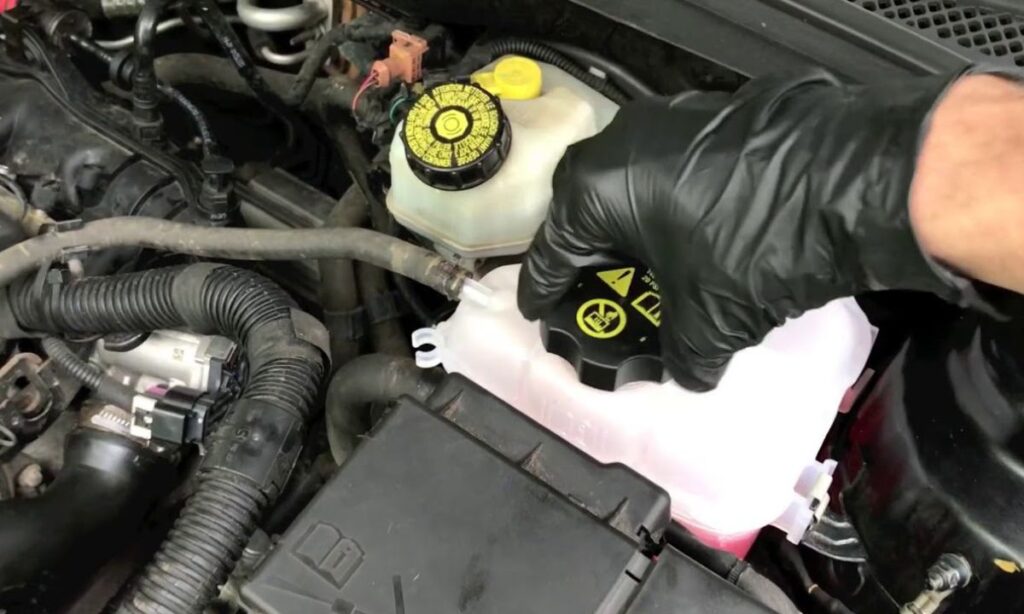
For a complete service, perform a thorough flush if the existing coolant is discolored or contaminated. Replace the thermostat, radiator cap, and hoses if they show age. Bleed air from the system carefully, as many modern Chevrolets have specific procedures.
Inspect coolant level and condition during every oil change. Healthy Dex-Cool stays relatively clear and orange/pink. Brown sludge, particles, or a sweet smell inside the cabin indicates immediate attention.
In real-world use, properly maintained Dex-Cool systems deliver excellent longevity, with many high-mileage Silverados, Tahoes, and Duramax trucks retaining original water pumps and radiators when serviced on schedule. Early concerns from the late 1990s were largely tied to neglected maintenance rather than the chemistry itself.
By selecting the appropriate antifreeze — traditional green IAT for pre-1995 models or Dex-Cool OAT for 1995 and newer — and following GM guidelines, Chevrolet owners can ensure optimal engine cooling, corrosion protection, and long-term reliability across daily driving, towing, and performance applications. Always consult the specific owner’s manual for your vehicle to confirm the exact requirement.