Ford F-150 9th Gen (1992–1996): Overview, Specifications, Strengths & Weaknesses
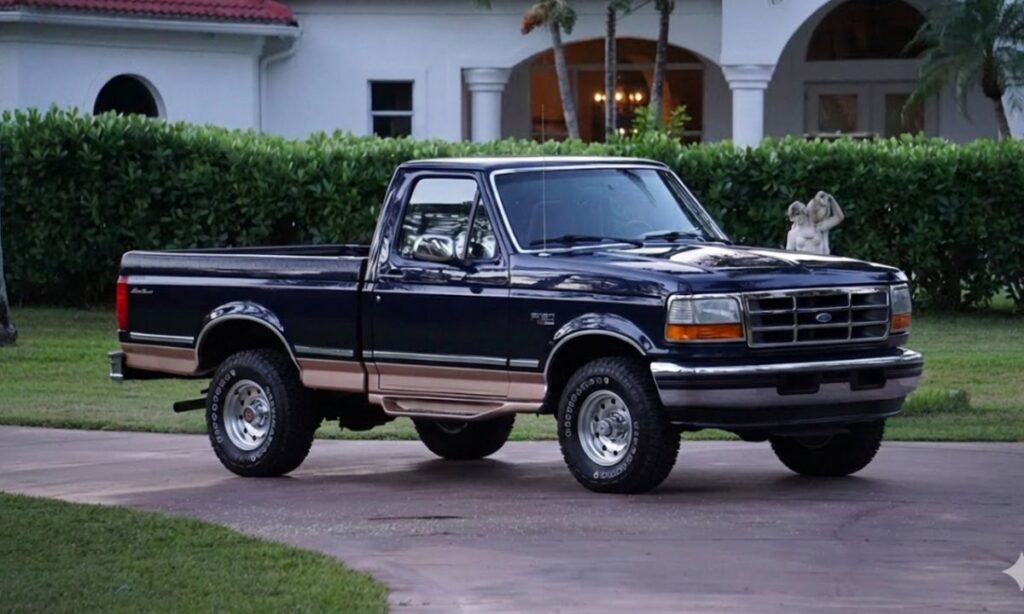
The ninth generation Ford F-150, produced from 1992 to 1996 (with some transitional 1997 models), marked a significant evolution in Ford’s bestselling pickup truck line. Known internally as the PN-96 platform, it introduced more aerodynamic styling while retaining the rugged, body-on-frame construction that made the F-Series legendary. This era’s F-150 bridged the gap between classic work trucks and modern refinements, offering improved ride quality, safety features, and engine efficiency. Often called the “Aeronose” or “OBS” (Old Body Style) by enthusiasts, it’s now a collectible classic appreciated for its simplicity and durability.
Brief Overview and History
Ford launched the ninth-gen F-150 in late 1991 for the 1992 model year, replacing the boxier eighth generation. The redesign focused on aerodynamics with a sloped hood and rounded edges, reducing drag and improving fuel economy slightly. It was available in regular cab, SuperCab (extended cab), and chassis cab configurations, with bed lengths from 6.5 to 8 feet.
Key milestones:
- 1992: Introduction with electronic fuel injection across all engines.
- 1993: Addition of the SVT Lightning performance variant (with a 5.8L V8).
- 1994: Driver-side airbag became standard; minor interior updates.
- 1995: Introduction of the Eddie Bauer luxury trim; some models got OBD-II diagnostics.
- 1996: Final full year; transitional 1997 models carried over the design before the tenth-gen redesign.
This generation sold over 750,000 units annually at its peak, solidifying the F-150’s dominance in the full-size truck market. It was built primarily in the U.S. (e.g., Norfolk, VA; Kansas City, MO) and emphasized work-duty capability over luxury.
Key Specifications
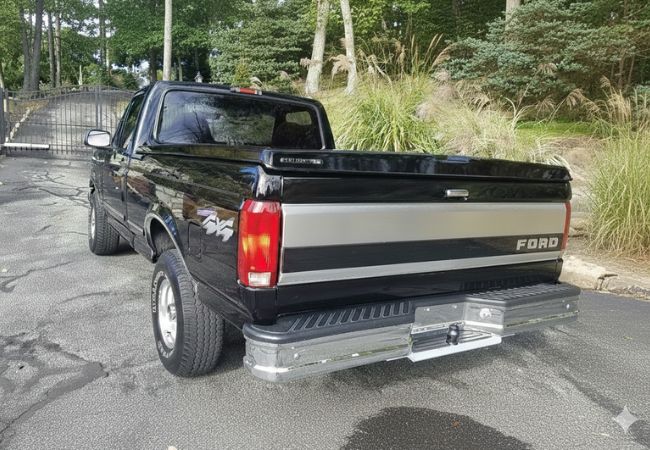
- Body Styles: Regular Cab (2-door), SuperCab (extended cab with rear-hinged doors), Crew Cab (limited availability via aftermarket or fleet).
- Drivetrain: Rear-wheel drive (2WD) standard; part-time 4WD optional (manual or electronic shift).
- Suspension: Twin I-Beam front (2WD) or solid axle (4WD); leaf-spring rear.
- Dimensions (approximate, varies by config):
- Wheelbase: 116.8–155 inches.
- Length: 197–235 inches.
- Curb Weight: 3,800–5,200 lbs.
- Towing Capacity: Up to 7,500 lbs (depending on engine/axle ratio).
- Payload: 1,500–2,500 lbs.
- Engines (all with electronic fuel injection):
- 4.9L Inline-6 (300 cid): 145–150 hp @ 3,400 rpm, 265 lb-ft @ 2,000 rpm. Unkillable workhorse, standard in base models.
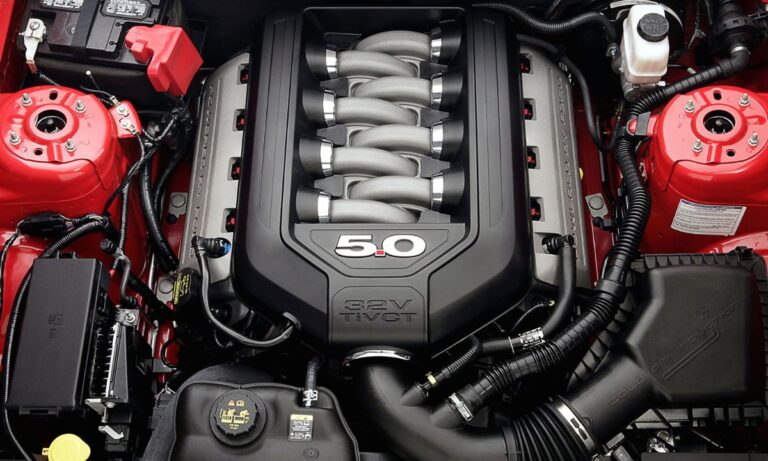
- 5.0L V8 (302 cid): 195–205 hp @ 4,200 rpm, 270–275 lb-ft @ 3,000 rpm. Balanced for daily use.
- 5.8L V8 (351 cid Windsor): 210 hp @ 3,600 rpm, 315–325 lb-ft @ 3,300 rpm. Top option for heavy towing.
- Rare: 7.3L Power Stroke diesel (introduced late, but more common in heavier F-Series).
- Transmissions: 4-speed automatic (E4OD or 4R70W), 5-speed manual (M5OD or ZF S5-42).
- Fuel Economy: 12–15 mpg city, 16–20 mpg highway (I6 best; V8s thirstier).
- Safety Features: Driver airbag (from 1994), ABS on rear wheels (optional all-wheel from mid-gen), three-point seatbelts.
- Trims: XL (base work truck), XLT (mid-level with options like A/C, power windows), Eddie Bauer (luxury with leather, wood trim), SVT Lightning (performance with lowered suspension, 240 hp 5.8L).
Strong Points
- Exceptional Durability: The iron-block engines, especially the 4.9L I6, are legendary for longevity—many examples surpass 300,000–500,000 miles with basic maintenance. The frame and body are built to last, making it ideal for work or off-road use.
- Simple Mechanics: Easy to work on with basic tools; no complex electronics or turbochargers. Aftermarket parts are abundant and affordable.
- Versatile Performance: Strong low-end torque from all engines suits towing and hauling. The SVT Lightning variant offers muscle-car-like acceleration for its time.
- Comfortable Ride: Improved aerodynamics and suspension tuning provide a smoother highway experience than predecessors, with good handling for a full-size truck.
- Collectible Appeal: Clean examples are rising in value among enthusiasts for their classic styling and reliability. It’s often called “Ford’s most collectible classic pickup” due to its blend of old-school toughness and modern refinements.
- Fuel Injection Reliability: All engines featured EFI, ensuring consistent starts and better efficiency than carbureted predecessors.
Weak Points
- Rust Susceptibility: Frames, rockers, cab corners, and beds rust badly in salt-belt regions. Underbody corrosion can lead to structural issues if not addressed.
- Transmission Problems: The E4OD automatic is prone to overheating and failure under heavy loads; rebuilds are common around 150,000 miles. Manuals are more reliable but rarer.
- Electrical Gremlins: Aging wiring harnesses cause issues like faulty gauges, intermittent lights, or power window failures. The multi-function switch (turn signals/wipers) often fails.
- Braking Limitations: Rear-wheel ABS only (early models); stopping power feels inadequate with heavy loads compared to modern trucks.
- Fuel Economy: Even the I6 struggles in city driving; V8s average under 15 mpg combined, making it inefficient by today’s standards.
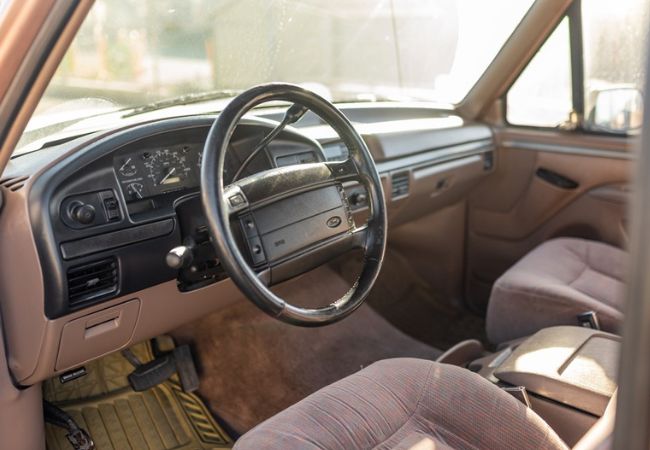
- Interior Wear: Plastics crack, seats sag, and dashboards warp over time, especially in high-mileage examples. Noise insulation is minimal.
- Outdated Safety: No passenger airbag until later years; crash test ratings are poor by modern metrics, with limited side-impact protection.
Final Thoughts
The ninth-generation Ford F-150 remains a benchmark for dependable, no-frills trucks that prioritize function over flash. Its robust engines, straightforward design, and proven track record make it a favorite for farmers, contractors, and collectors alike. While rust and transmission woes can be drawbacks, proactive maintenance keeps most running strong decades later. If you’re shopping for a classic workhorse or a base for modifications, the 1992–1996 F-150 offers timeless value in the used market.