Toyota Tacoma N220 Fuses: Complete Guide 2004-2015
The Toyota Tacoma N220 generation, produced from 2004 to 2015, uses a multi-box fuse system to protect every electrical circuit in the vehicle. Understanding the exact location, amperage, and function of each fuse is essential for diagnosing electrical failures, replacing blown fuses correctly, and avoiding damage to sensitive components. This guide covers every fuse box location and every individual fuse for the N220 Tacoma with complete detail.
Fuse Box Locations on the Toyota Tacoma N220
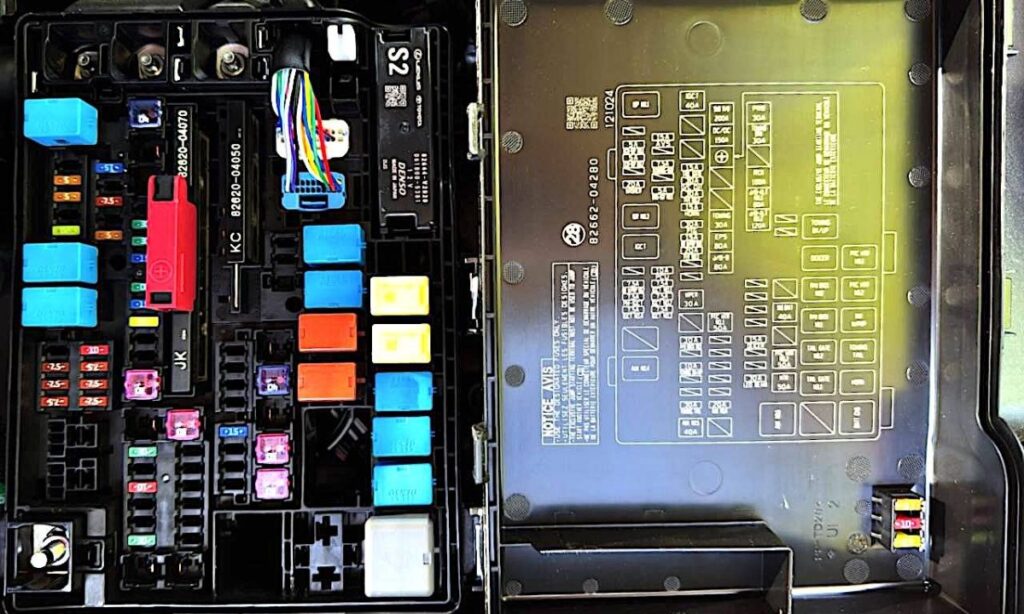
The N220 Tacoma has three main fuse and relay centers:
- Instrument Panel Fuse Box – Located under the driver-side dashboard, accessible without tools by pulling the trim panel cover.
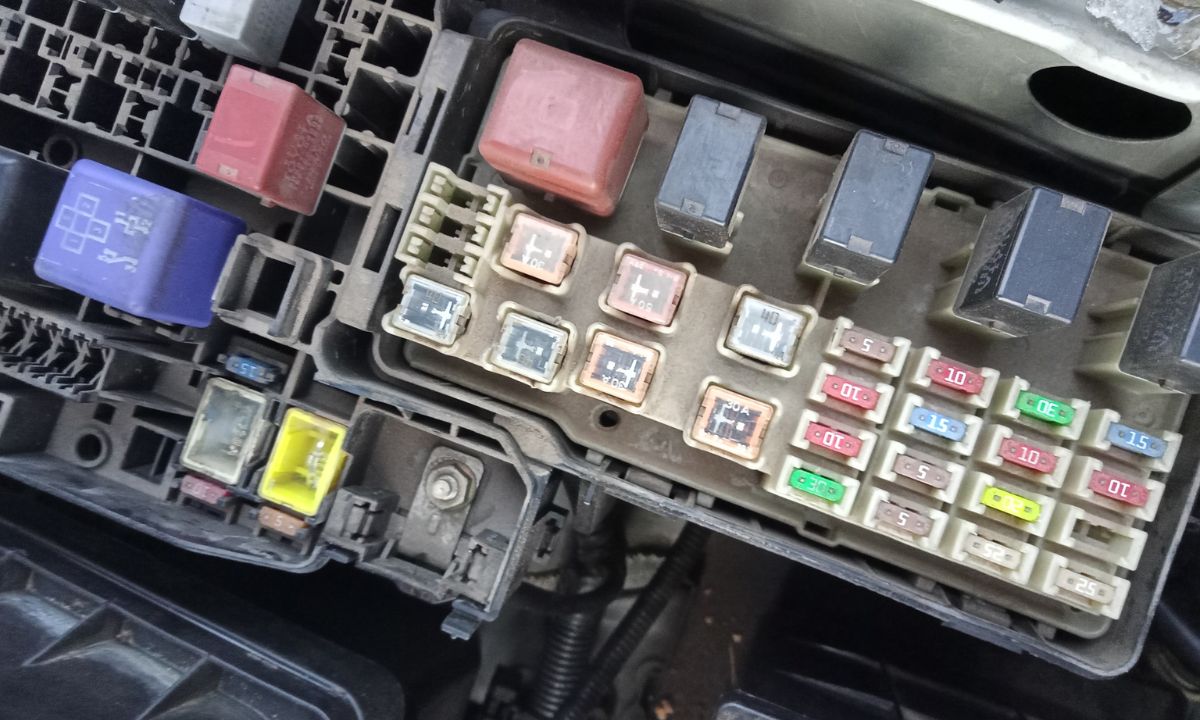
- Engine Compartment Fuse Box (Main Fuse Box) – Located on the left side of the engine bay near the battery. Contains high-amperage fuses and relays.
- Engine Compartment Relay Box – Located adjacent to the main fuse box, housing additional relays and maxi-fuses for major circuits.
Instrument Panel (Interior) Fuse Box – Full Fuse List
This box is behind a removable cover on the lower left side of the dashboard. The fuses listed below apply to the majority of N220 Tacoma models from 2004 to 2015, with minor variations by trim and market year.
- Fuse 1 – 10A – Tail lights, parking lights, instrument cluster illumination
- Fuse 2 – 10A – Backup lights, park/neutral position switch
- Fuse 3 – 20A – Power windows (driver and passenger)
- Fuse 4 – 15A – Instrument cluster, combination meter
- Fuse 5 – 10A – Hazard flasher, turn signal lights
- Fuse 6 – 15A – Cigarette lighter / accessory socket
- Fuse 7 – 10A – Interior dome lights, overhead console
- Fuse 8 – 15A – Air conditioning blower motor control
- Fuse 9 – 10A – Radio / audio system
- Fuse 10 – 10A – ECU-B (engine control unit battery feed, always live)
- Fuse 11 – 10A – Mirror defogger, power mirror control
- Fuse 12 – 15A – Power locks / door lock actuators
- Fuse 13 – 10A – Airbag supplemental restraint system (SRS)
- Fuse 14 – 10A – Anti-lock brake system (ABS) control module
- Fuse 15 – 10A – Stop lights (brake lights)
- Fuse 16 – 20A – Heater / HVAC control unit
- Fuse 17 – 10A – Fuel injectors, engine management (IGN feed)
- Fuse 18 – 10A – 4WD system control module, transfer case actuator
- Fuse 19 – 15A – Trailer wiring connector (if equipped)
- Fuse 20 – 10A – Horn relay feed
- Fuse 21 – 10A – Cruise control system
- Fuse 22 – 10A – VSC / TRAC system module
- Fuse 23 – 10A – OBD-II diagnostic port (DLC3), always live
- Fuse 24 – 20A – Rear window defroster (Access Cab and Double Cab)
- Fuse 25 – 10A – Windshield wiper motor and washer pump
Engine Compartment Fuse Box – Full Fuse List
This box sits in the engine bay, driver’s side, next to the battery. It contains high-current fuses protecting the major electrical systems and the alternator circuit.
- FL Main – 120A – Main battery fusible link to entire vehicle electrical system
- FL ALT – 100A – Alternator output fusible link
- FL EFI – 30A – Electronic fuel injection main relay and ECU power supply
- FL HORN – 15A – Horn circuit
- FL A/C – 30A – Air conditioning compressor clutch and condenser fan
- FL WIPER – 30A – Wiper motor primary power supply
- FL HTR – 40A – HVAC blower motor high-current supply
- FL RDI – 40A – Radiator cooling fan motor
- FL ABS – 40A – ABS pump motor and hydraulic control unit
- FL IGN – 30A – Ignition switch main feed
- FL POWER – 40A – Power window master circuit
- Fuse 1 – 15A – Cooling fan relay control circuit
- Fuse 2 – 10A – Starter motor relay control
- Fuse 3 – 20A – Transmission control module (A/T models)
- Fuse 4 – 15A – Fuel pump relay and fuel pump motor
- Fuse 5 – 10A – O2 sensor heater, EVAP system solenoids
- Fuse 6 – 10A – VVT-i oil control valve, variable valve timing solenoid
- Fuse 7 – 15A – Trailer tow package relay (if equipped)
Important Notes on Fuse Replacement for the N220 Tacoma
- Always use Toyota-specified blade fuses with the exact amperage rating printed on the fuse body and the fuse box cover diagram.
- Never install a higher-amperage fuse to fix a recurring blown fuse – this indicates a short circuit or overload that must be diagnosed first.
- The N220 Tacoma uses standard (ATC/ATO) blade fuses in the interior box and mini blade fuses in select positions – check each position before purchasing replacements.
- Fusible links in the engine bay are bolt-type cartridge fuses and require a screwdriver or 10mm socket for removal.
- After replacing any fuse related to the ECU, ABS, SRS, or 4WD system, a diagnostic scan with a Toyota-compatible OBD-II tool is recommended to clear any stored fault codes.
- The ECU-B fuse (Fuse 10, 10A) in the interior box is always live regardless of ignition position – disconnecting it briefly resets the ECU memory, which may affect idle learn procedure and audio presets.
- On 2005–2015 models with factory security, pulling the ECU-B or DOME fuse may trigger the immobilizer – always have your ignition key available before resetting.
- A spare fuse kit is located inside the interior fuse box cover on most N220 Tacoma models – Toyota includes two spare fuses for the most common amperage ratings (10A and 15A).
Common Electrical Issues Traced to Fuses on the N220 Tacoma
- No backup camera image – Check Fuse 2 (backup lights) and the IGN fuse in the engine bay.
- Power windows not working – Check Fuse 3 (interior, 20A) and FL POWER (engine bay, 40A).
- No air conditioning – Check FL A/C (30A) in engine bay and Fuse 8 (15A) in interior box.
- ABS warning light on with no braking power – Inspect FL ABS (40A) in the engine bay immediately.
- No crank / no start – Verify FL IGN (30A), Fuse 4 (fuel pump, 15A), and the starter relay fuse (Fuse 2 engine bay, 10A).
- 4WD system not engaging – Check Fuse 18 (interior, 10A) for the 4WD control module.
- Cigarette lighter / USB adapter not working – Check Fuse 6 (interior, 15A).