Ford F-150 11th generation: overview, specifications, strengths, and weaknesses
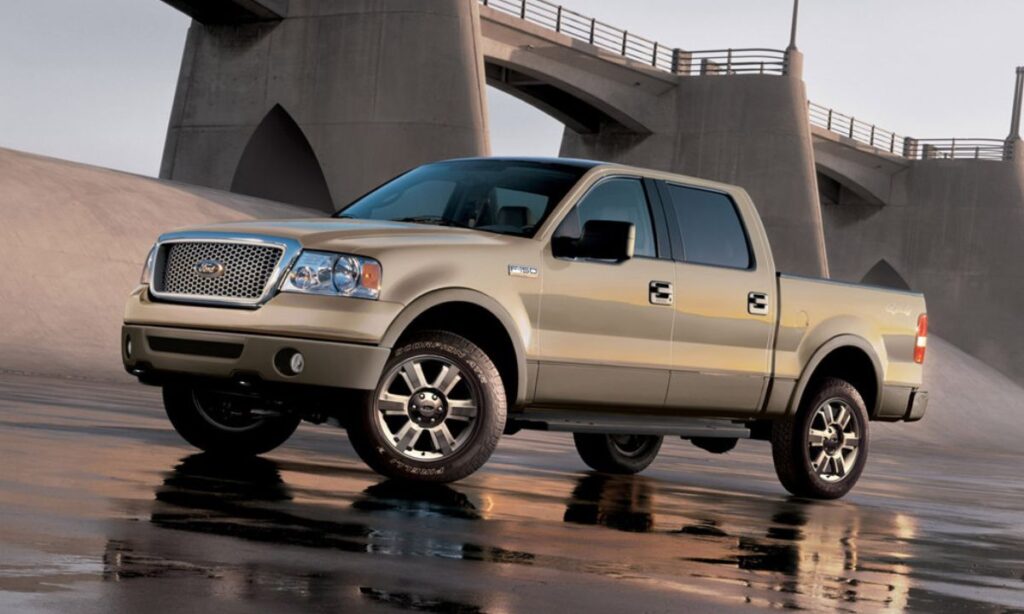
The Ford F-150 11th generation, spanning 2004 to 2008, marked a pivotal evolution in America’s bestselling truck, blending rugged capability with refined styling to appeal to both workhorse users and everyday drivers. Debuting at the 2003 North American International Auto Show, this iteration introduced sharper aesthetics and advanced engine technology, including the three-valve V8, while building on a fully redesigned chassis for improved handling and payload. Over its run, it sold millions, solidifying the F-150’s dominance, but it also garnered criticism for reliability hiccups, particularly in early models. This detailed look examines its core attributes, from engineering feats to real-world pitfalls, offering insights for enthusiasts and potential buyers navigating the used market.
History and development
Ford unveiled the 11th-generation F-150 as a 2004 model, emphasizing a bolder, more angular profile to distance itself from the softer curves of the prior generation. Development focused on enhancing structural rigidity with a new hydroformed frame that increased torsional stiffness by 9%, allowing for better towing and off-road prowess. Produced primarily at Ford’s Dearborn and Kansas City plants, it incorporated feedback from fleet operators and consumers, leading to expanded cab options and luxury trims. The introduction of the three-valve-per-cylinder 5.4L Triton V8 aimed to boost power without sacrificing efficiency, though it brought unforeseen challenges. Mid-cycle updates in 2006 included minor styling tweaks, like a revised grille, and enhanced safety features amid rising competition from GM and Dodge. By 2008, sales remained strong, but accumulating complaints prompted Ford to refine subsequent generations. A luxury variant, the Lincoln Mark LT, shared the platform, targeting upscale buyers with premium interiors.
Technical specifications
This generation prioritized versatility, offering configurations for everything from basic work trucks to loaded haulers. Its ladder-frame construction provided a solid foundation, with independent front suspension and a live rear axle on leaf springs ensuring durability under load.
- Engines: 4.2L Essex V6 (202 hp, 260 lb-ft torque); 4.6L Modular V8 (231 hp, 293 lb-ft); 5.4L Triton V8 (300 hp, 365 lb-ft with three-valve design).
- Transmissions: Four-speed automatic (standard on most); five-speed manual (available on base V6 models).
- Drivetrain: Rear-wheel drive standard; optional four-wheel drive with electronic shift-on-the-fly.
- Dimensions: Length ranging from 211 inches (regular cab, short bed) to 248 inches (SuperCrew, long bed); wheelbase 126-163 inches; curb weight 4,700-5,700 lbs.
- Towing capacity: Up to 9,500 lbs when properly equipped (V8 models); payload up to 3,060 lbs.
- Fuel economy: 14-18 mpg city, 18-23 mpg highway (V6 models best; V8s thirstier at 13-17 combined).
- Suspension: Independent coil-over-shock front; solid axle with leaf springs rear; optional off-road packages with skid plates.
- Brakes: Four-wheel disc with ABS; electronic brakeforce distribution added later.
- Wheels and tires: 17-20 inch options; all-terrain tires on FX4 trims.
These specs enabled the truck to handle diverse tasks, from urban commuting to heavy-duty towing, with electronic aids like trailer sway control emerging in later years.
Performance and variants
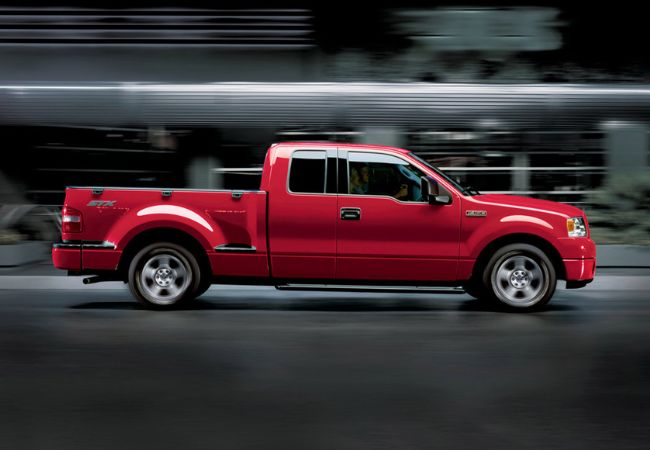
Performance varied by powertrain, with the base V6 suiting light duties and the V8s delivering robust acceleration for a full-size truck. The 5.4L Triton, with its variable cam timing, offered smooth power delivery, achieving 0-60 mph in about 8-9 seconds for lighter configurations. Variants catered to different needs: the XL for fleets, STX for sporty appeal, XLT for mainstream buyers, FX4 for off-roaders with locking differential, Lariat for luxury with leather, and King Ranch for Western-themed opulence. Special editions like the Harley-Davidson (supercharged V8 in some) and Saleen added flair with unique styling and performance tweaks. Fuel-injected across the board, the trucks balanced torque for trailering, though manuals were rare and phased out early. In testing, the FX4 models shone on rough terrain, while SuperCrew cabs provided family-friendly versatility without compromising capability.
Exterior design and styling
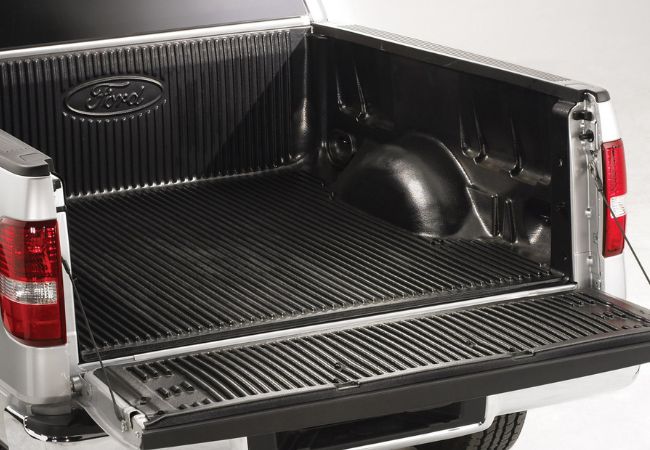
The 11th-generation F-150 adopted a more aggressive stance with squared-off fenders, a prominent three-bar chrome grille, and stacked headlights for a commanding presence. Measuring larger than its predecessor, it featured flared wheel arches that accommodated bigger tires, enhancing its muscular profile. Bed lengths ranged from 5.5 to 8 feet, with innovative side steps and tailgate assists improving accessibility. Available in regular, SuperCab (extended), and SuperCrew (four full doors) cabs, it offered flexibility for passengers or cargo. Paint options included bold hues like Arizona Beige and Dark Shadow Grey, with chrome accents on higher trims. The FX4 package added skid plates and all-terrain tires for rugged appeal, while the overall design prioritized aerodynamics for better highway stability, making it a standout in parking lots and job sites alike.
Interior features and space
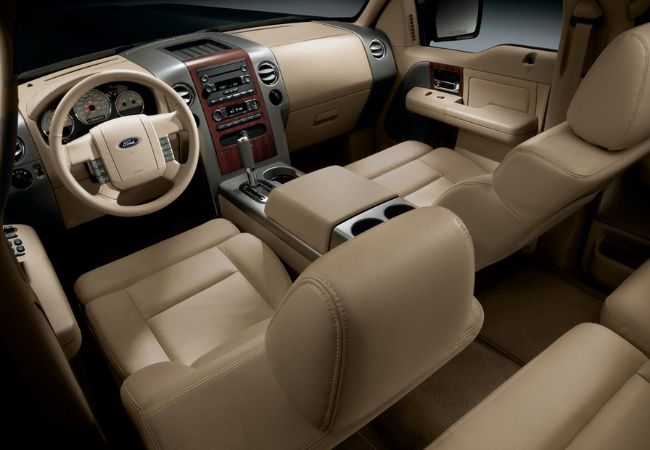
Inside, the F-150 emphasized comfort and utility, with seating for up to six in bench configurations or captain’s chairs in premium models. The SuperCrew cab provided limo-like rear legroom at 39 inches, ideal for long hauls. Materials ranged from durable vinyl in work trucks to supple leather in Lariats, with woodgrain accents elevating the King Ranch. Key features included optional power-adjustable pedals, a flip-up center console for laptop storage, and a rear power-sliding window. Audio systems evolved from basic AM/FM to premium setups with CD changers and satellite radio. Storage abounded with under-seat compartments and door pockets, while safety elements like side airbags became available. Noise insulation improved over prior gens, creating a quieter cabin, though base models felt spartan compared to rivals.
Strengths
- Versatile configurations: Extensive options for cabs, beds, and trims allow customization for work, family, or off-road use.
- Powerful V8 performance: The 5.4L Triton delivers strong torque for towing and acceleration, making heavy loads feel manageable.
- Durable chassis: Hydroformed frame enhances rigidity, improving handling and longevity under stress.
- Spacious interior: SuperCrew models offer ample room for passengers, with clever storage solutions for tools or gear.
- Good fuel economy for class: V6 variants achieve respectable mileage, balancing efficiency with capability.
- Affordable maintenance: Parts availability remains high, keeping repair costs reasonable for routine services.
- Strong resale value: Proven reliability in well-maintained examples holds value in the used market.
Problem areas
- Spark plug issues: In 5.4L engines, two-piece plugs often break during removal, requiring special tools and potentially costly repairs.
- Cam phaser and timing chain failures: Rattling noises signal wear, leading to chain stretch, oil starvation, and possible engine damage if ignored.
- Exhaust manifold cracks: Studs break, causing leaks and ticking sounds; drilling and replacement can be labor-intensive.
- Airbag system faults: Random deployments or warning lights from steering wheel grounding; recalls affected many units.
- Blend door actuator failure: Climate control malfunctions, preventing temperature changes; replacement is straightforward but common.
- Window regulator breakdowns: Cables snap prematurely, causing windows to stick; aftermarket parts vary in quality.
- Rust on frame and body: Prone to corrosion in salt-prone areas, compromising structural integrity over time.
- Transmission glitches: Overdrive failures in 4R75E units trigger codes; debris cleanup needed during fixes.
- Fuel pump module wear: Leads to no-start conditions; accessible but recurs every few years.
The Ford F-150 11th generation remains a capable workhorse that rewards diligent ownership, blending traditional truck virtues with modern refinements despite its share of mechanical quirks.