Ford EcoBoost I4 1.5L and 2.0L engines: Complete technical guide, specifications, and real-world performance
Ford’s EcoBoost family represents one of the most successful downsizing strategies in modern automotive engineering. Launched in 2009, these turbocharged, direct-injection gasoline engines deliver the power and torque of larger naturally aspirated engines while offering improved fuel efficiency and lower emissions. The 1.5L and 2.0L inline-four (I4) variants have become particularly widespread, powering everything from compact crossovers like the Ford Escape and Bronco Sport to midsize SUVs, sedans, and even performance-oriented models.
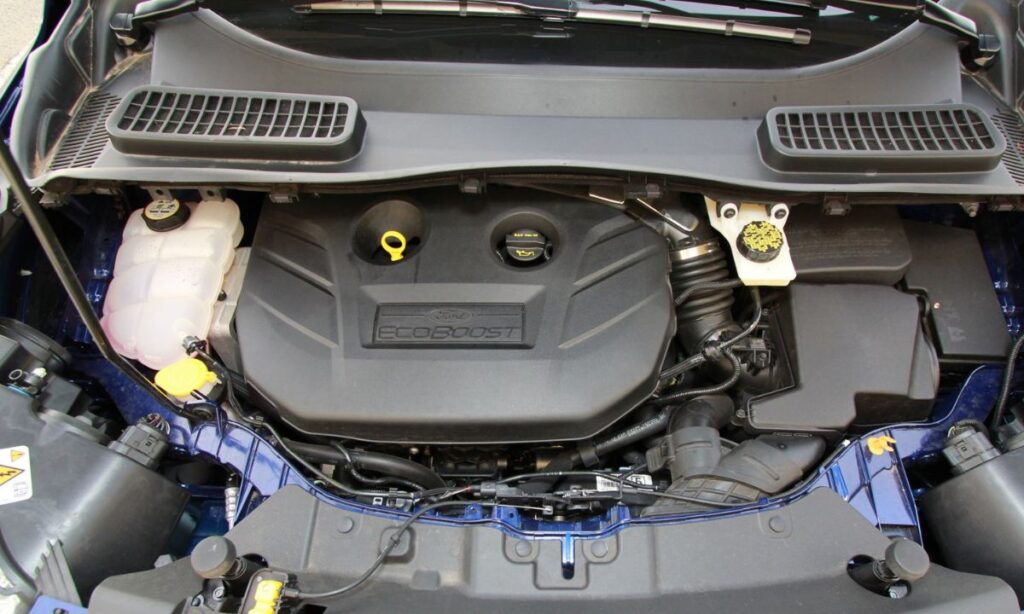
Both engines share core EcoBoost technologies: turbocharging, direct fuel injection (GTDI), and Twin Independent Variable Camshaft Timing (Ti-VCT). Over the years, Ford has refined these powerplants through multiple generations, addressing early reliability concerns and incorporating dual-injection systems and other efficiency upgrades.
Core technologies behind EcoBoost engines
EcoBoost engines combine several advanced features to balance performance and efficiency:
- Turbocharging — A single turbocharger (often twin-scroll on later versions) forces more air into the cylinders, enabling strong low-end torque and responsive acceleration.
- Direct Fuel Injection (GTDI) — Fuel is injected directly into the combustion chamber at high pressure for precise control, better atomization, and improved combustion efficiency. Later iterations added port fuel injection in some applications to reduce carbon buildup on intake valves.
- Ti-VCT — Dual independent variable camshaft timing optimizes valve events for power, efficiency, and emissions across the rev range.
- Aluminum Construction — Lightweight aluminum block and cylinder head reduce overall vehicle weight and improve thermal management.
- Integrated Exhaust Manifold — Helps the turbo spool faster and reduces warm-up time.
These technologies allow a small-displacement engine to mimic the feel of a larger V6 while delivering better real-world fuel economy.
Ford EcoBoost 1.5L I4: specifications and evolution
The 1.5L EcoBoost debuted in 2014, initially as a downsized version of the 1.6L unit to meet tax regulations in certain markets (particularly China). Early versions were based on the Sigma architecture with an integrated exhaust manifold and electronically controlled water pump clutch for faster warm-up.
Key Technical Specifications (typical mid-cycle values):
- Displacement: 1,500 cc (92 cu in)
- Configuration: Inline-4, DOHC, 16 valves
- Bore x Stroke: Approximately 79.0 mm x 76.4 mm
- Compression Ratio: 10.0:1 to 10.8:1 (varies by tune and generation)
- Turbocharger: Single turbo with wastegate
- Power Output: 150–197 hp (depending on application and market)
- Torque: 177–214 lb-ft, with strong delivery from as low as 1,600 rpm
- Fuel System: Direct injection (some later versions feature dual port + direct injection)
Applications and Performance:
- Commonly found in the Ford Fusion (2014–2020), Escape (pre-2020 models), Focus, and some international models.
- In the 2015 Fusion, it produced around 181 hp and 185 lb-ft.
- Real-world behavior: Quick spool-up provides responsive city driving and confident highway merging. Paired with an 8-speed automatic in later vehicles, it delivers smooth shifts and respectable fuel economy — often in the mid-20s to low-30s mpg combined.
A notable evolution occurred around 2018–2020 when Ford transitioned some 1.5L applications to a related 1.5L Dragon three-cylinder variant (1,497 cc). This version features cylinder deactivation technology for better efficiency and a distinctive three-cylinder exhaust note. In models like the Bronco Sport and later Escape, the 1.5L I3 produces approximately 181 hp and 190 lb-ft, offering adequate performance for daily driving with strong low-end torque.
Ford EcoBoost 2.0L I4: specifications and evolution
The 2.0L EcoBoost has been a workhorse since its introduction around 2010. It started as a derivative of the naturally aspirated Duratec 2.0L but was thoroughly redesigned for the second generation (around 2015–2016) with a higher compression ratio, twin-scroll turbocharger, and upgraded fuel and oil systems.
Key Technical Specifications (Gen 2 and later):
- Displacement: 1,999 cc (122 cu in)
- Configuration: Inline-4, DOHC, 16 valves
- Bore x Stroke: 87.5 mm x 83.1 mm
- Compression Ratio: 9.2:1 (early) to 10.0:1 or higher (later generations)
- Turbocharger: Twin-scroll turbo for reduced lag and broader torque band
- Power Output: 200–252 hp (up to 250+ hp in recent tunes)
- Torque: 221–280 lb-ft, with peak torque often available from 3,000 rpm or lower
- Fuel System: Direct injection; newer 2025+ versions incorporate dual port + direct injection to minimize carbon buildup
Applications and Performance:
- Widely used in the Ford Escape, Edge, Fusion, Explorer, Maverick (optional or standard in higher trims), Bronco Sport Badlands, and various Lincoln models (Corsair, Nautilus).
- In recent applications like the Escape or Maverick, the 2.0L delivers around 240–250 hp and 270–280 lb-ft, providing noticeably stronger acceleration and better towing capability (up to light trailer duties) compared to the 1.5L.
- Driving character: The extra displacement and refined turbo deliver smoother power delivery and more reserve for passing or loaded conditions. Fuel economy typically ranges from the low-20s to high-20s mpg combined, depending on vehicle weight and driving style.
For 2025 and beyond, Ford introduced significant updates to the 2.0L EcoBoost, including the addition of port fuel injection alongside direct injection. This change helps keep intake valves cleaner, reduces the need for aftermarket oil catch cans, and improves long-term reliability.
1.5L vs 2.0L EcoBoost: direct comparison
Here’s how the two engines stack up in key areas:
- Power and Performance — The 2.0L offers noticeably more horsepower and torque, making it feel stronger during acceleration, towing, or when the vehicle is loaded. The 1.5L (especially the I3 version) provides adequate everyday performance with quicker throttle response in lighter vehicles.
- Fuel Efficiency — The 1.5L generally edges out the 2.0L in city and highway mpg, especially with cylinder deactivation in some variants.
- Refinement — The 2.0L inline-four tends to feel smoother and quieter under load. The 1.5L three-cylinder can exhibit a characteristic “throaty” exhaust note and some vibration or boominess when cylinder deactivation engages.
- Applications — 1.5L suits compact, efficiency-focused models; 2.0L appears in vehicles where extra capability is desired.
Reliability, common issues, and maintenance
Early EcoBoost engines (particularly 2014–2019 1.5L I4 and 2.0L versions) faced criticism for coolant intrusion into the cylinders, often linked to head gasket or engine block design issues. This could lead to misfires, overheating, or engine failure. Ford issued technical service bulletins (TSBs) and extended warranties in some cases.
Other noted concerns across the family include:
- Carbon buildup on intake valves (primarily with pure direct-injection engines)
- Occasional spark plug issues or fuel system sensitivity
Newer generations (2020+) and especially the 2025+ updates with dual injection and internal reinforcements have shown marked improvements. Many owners report trouble-free operation well beyond 150,000–200,000 miles when following recommended maintenance: regular oil changes with the correct synthetic specification, timely coolant flushes, and using quality fuel.
Maintenance Tips for Longevity:
- Use Ford-specified motor oil and change it at recommended intervals (often 5,000–10,000 miles depending on conditions).
- Monitor coolant levels closely, especially on pre-2020 models.
- Consider periodic intake valve cleaning or walnut blasting on older direct-injection-only units.
- Allow the turbo to cool down after spirited driving.
With proper care, modern 1.5L and 2.0L EcoBoost engines deliver an excellent blend of performance, efficiency, and everyday usability. They continue to evolve, incorporating hybrid assistance in some applications and further refinements for emissions compliance.