What do the icons on the Ford dashboard mean: a complete guide to warnings and indicators for safe driving
Icons on the Ford dashboard help drivers instantly understand the vehicle’s condition and prevent serious breakdowns. These symbols are divided by color: red ones require an immediate stop, yellow or orange signal the need for a check in the near future, while green and blue simply confirm that systems are working. Knowing their meanings allows you to respond quickly to any changes and keep models like the Ford Explorer, Focus, Kuga, Mustang, or Ranger in excellent condition. Modern Ford vehicles are equipped with dozens of sensors that monitor the engine, brakes, tires, and electronics, turning the dashboard into a real assistant. Regular attention to indicators reduces the risk of unexpected stops on the road and extends the life of your car.
Colors of icons and their general meaning
Ford uses a clear color system similar to a traffic light. Red almost always indicates a critical issue that can threaten safety or lead to expensive repairs. Yellow or orange is a warning: the system is operating with deviations, but you can continue driving carefully until service. Green and blue are informational: they show that headlights, cruise control, or other functions are active. This gradation helps you quickly assess the situation without being distracted from the road.
Main warning icons and what to do with them
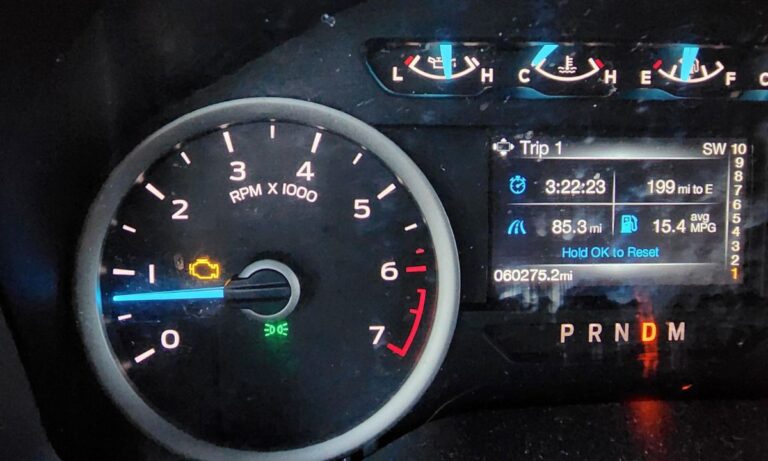
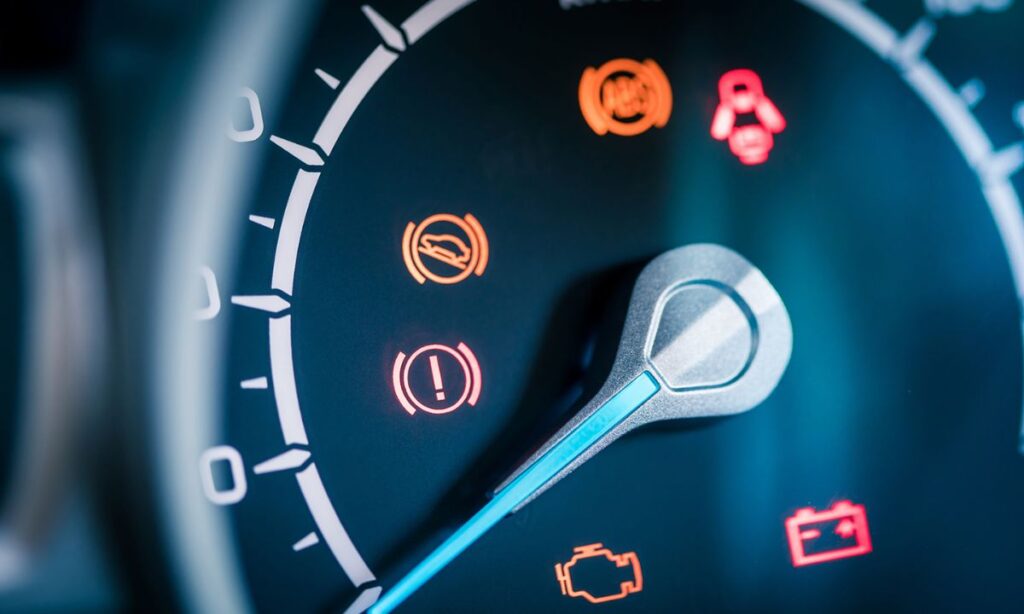
- Check engine (engine icon) — lights up when the system detects a malfunction in the engine or exhaust system. The cause can range from a loose fuel cap to serious catalytic converter problems. If it flashes, immediately reduce speed and visit a service center.
- Oil pressure (oil can with a drop) — red signal of low oil pressure. Continuing to drive is dangerous as the engine may seize. Check the oil level and top up if necessary.
- Engine overheating (thermometer or temperature icon) — red light indicates excessive coolant temperature. Stop the car, let the engine cool, and check the antifreeze level, belt, or radiator.
- Battery (battery icon) — charging problem: the alternator or wiring is faulty. The car may stall within a few kilometers.
- Brake system (exclamation mark in a circle or BRAKE) — often means the parking brake is engaged, low brake fluid, or worn pads. Red color requires immediate inspection.
- ABS (ABS letters in a circle) — malfunction of the anti-lock braking system. Main brakes work, but control on slippery roads is reduced.
- Tire pressure (tire icon with exclamation mark) — TPMS warns of low pressure in one or more wheels. Check and inflate the tires to save fuel and improve safety.
Safety and stability system icons
- Airbags (person with airbag) — if it stays on constantly, the SRS system may not deploy in an accident. Requires diagnostics.
- ESC or stability control (car with skid marks) — flashes when activated on slippery surfaces. Constant illumination means a fault.
- Collision warning or Pre-Collision Assist — helps avoid accidents; reduce speed when it activates.
Active system indicators (green and blue)
- High beam (blue headlight) — high beams are on.
- Fog lights (green icon with lines) — front or rear fog lights are working.
- Cruise control (speedometer or CRUISE) — speed maintenance system is active.
- Eco mode (leaf) — economical driving style is enabled.
- 4WD all-wheel drive (4×4 icon) — shows all-wheel drive is engaged on models like Explorer or Ranger.
Additional useful icons
- Key or wrench (powertrain fault) — general transmission or engine issue. Often appears together with Check Engine.
- Low fuel (fuel tank icon) — little fuel remains.
- Open door or hood (car with open elements) — reminder to check closures.
- Service maintenance (wrench or Service) — time for scheduled maintenance.
These icons may vary slightly in appearance depending on the Ford model, but their core meanings remain standard. In digital dashboards of modern cars, information is often displayed as text on the screen, making it even easier to understand.
To always be prepared, periodically review the manual for your specific model and practice identifying the symbols. If several lights come on at once or the problem repeats, do not delay a visit to the service. Regular computer diagnostics detect hidden faults at an early stage and help avoid major repairs. Keep an eye on your Ford dashboard, and your vehicle will delight you with reliability for many years.