Toyota Land Cruiser 300 Series Fuses – Complete Guide 2021+
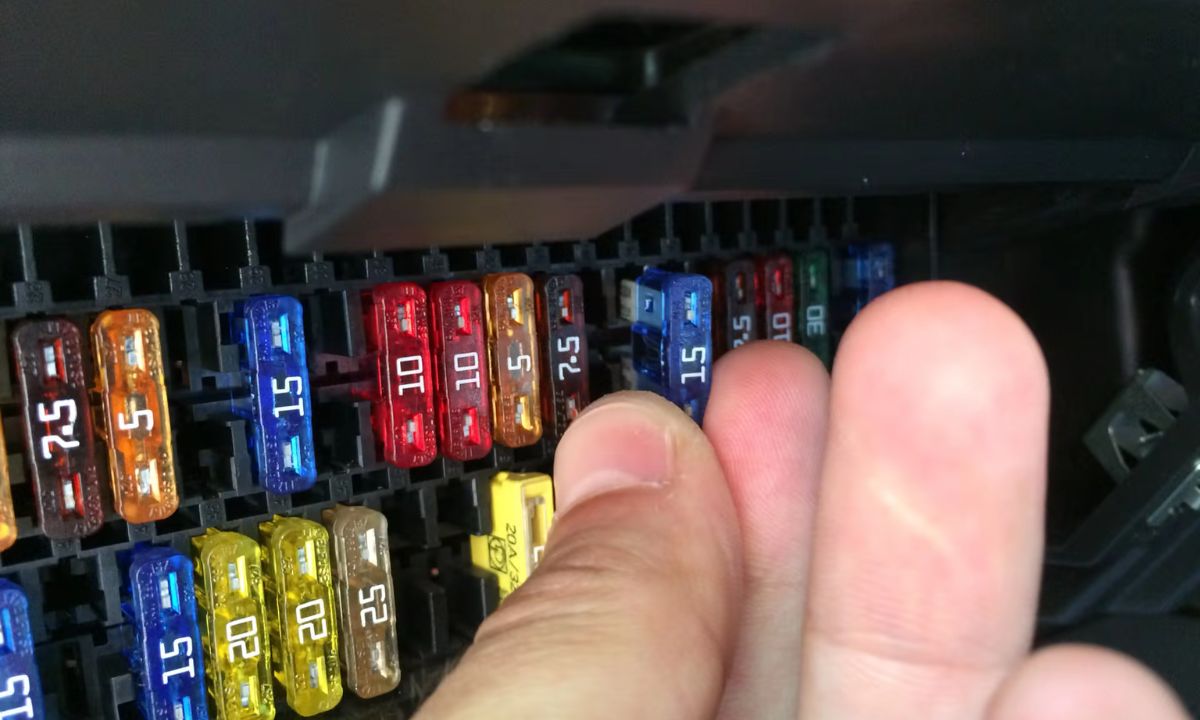
The Toyota Land Cruiser 300 series, introduced in 2021, features a sophisticated multi-box fuse and relay architecture designed to protect the vehicle’s complex electrical systems. Understanding the exact fuse layout is essential for diagnosing electrical faults, safely adding accessories, or replacing blown fuses without damaging sensitive electronics. This guide covers every fuse box location, fuse number, amperage, and circuit function for the 300 series Land Cruiser (J300), including the GR Sport, ZX, VX, and all regional variants sharing the same electrical platform.
Fuse Box Locations on the Toyota Land Cruiser 300 Series
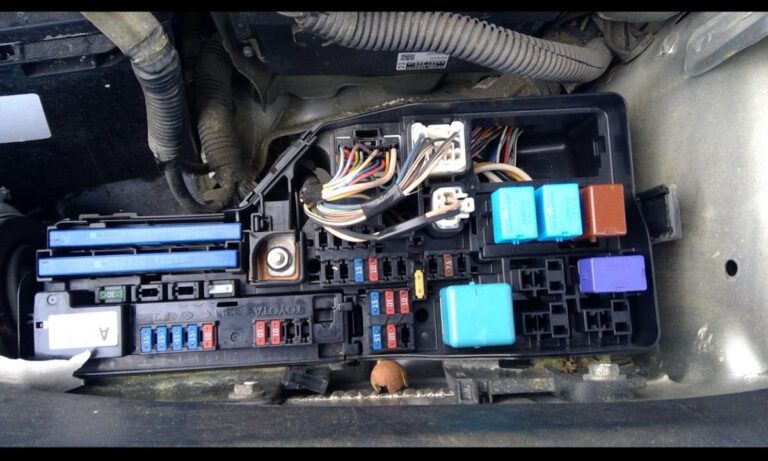
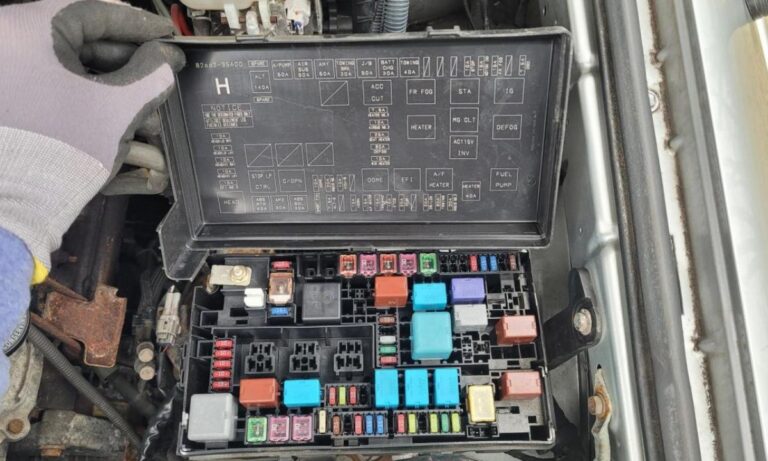
The Land Cruiser 300 series has three primary fuse and relay box locations:
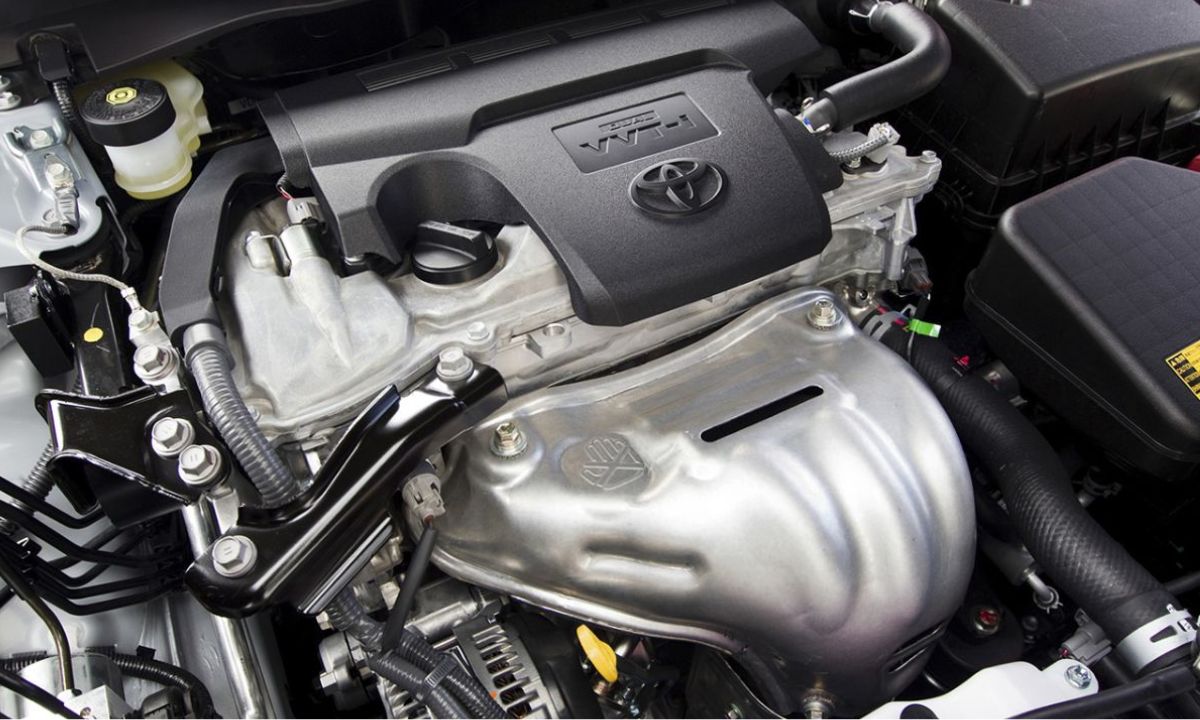
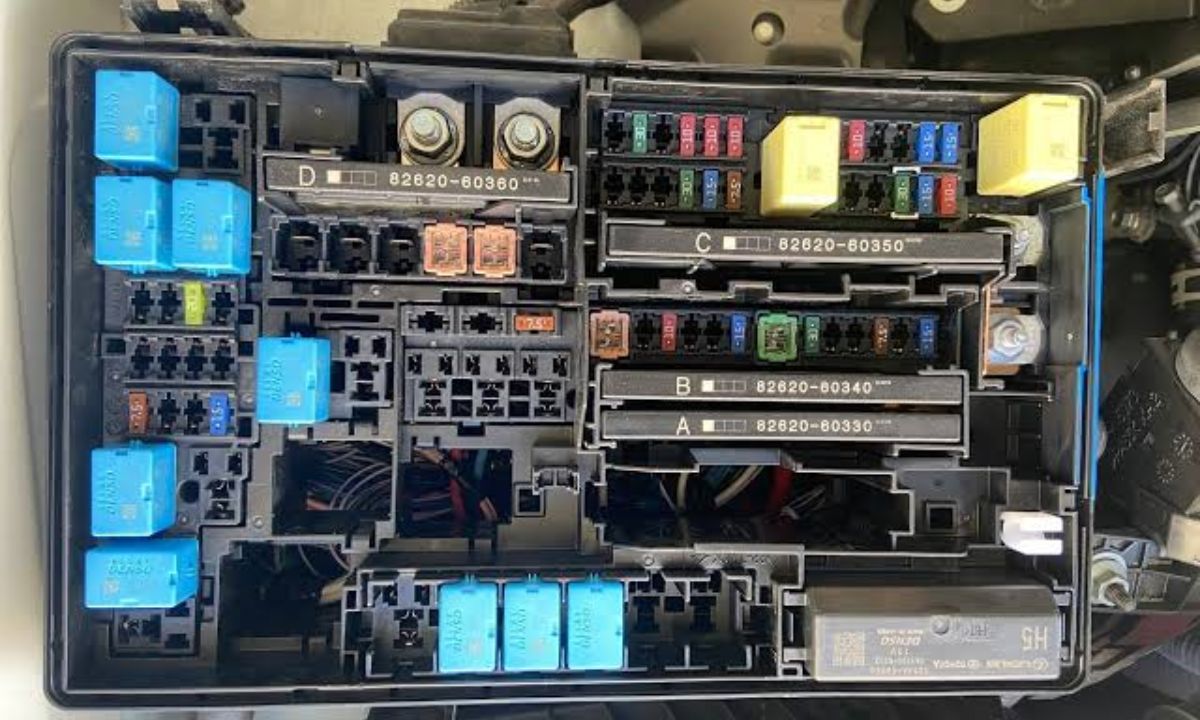
- Engine Bay Fuse Box (Main Relay Block) – located on the left side of the engine compartment, near the battery
- Instrument Panel Fuse Box (Driver’s Side) – located under the dashboard on the driver’s side, behind the lower trim panel
- Second Instrument Panel / Junction Block – located under the dashboard, passenger side or centre console area depending on market variant
Engine Bay Fuse Box – Full Fuse List
- 1 – 120A – Main Battery Fuse (ALT)
- 2 – 80A – EFI Main / Engine Control Module Power
- 3 – 60A – ABS / VSC Actuator Pump Motor
- 4 – 50A – Transmission Control Module (ECT)
- 5 – 40A – Cooling Fan Motor
- 6 – 40A – Blower Motor (HVAC)
- 7 – 30A – Power Steering (EPS)
- 8 – 30A – Rear Differential Lock Actuator
- 9 – 30A – Transfer Case Control (4WD ECU)
- 10 – 20A – Headlamp Washer Pump
- 11 – 20A – Horn
- 12 – 20A – Windshield Wiper Motor (Hi/Lo)
- 13 – 15A – ECU-B (Engine ECU Backup Power)
- 14 – 15A – Fuel Injectors
- 15 – 15A – Ignition Coils
- 16 – 10A – Oxygen Sensor / Air-Fuel Ratio Sensor Heater
- 17 – 10A – Variable Valve Timing (VVT-iE) Actuator
- 18 – 10A – Throttle Body / ETCS
- 19 – 10A – Starter Relay Control
- 20 – 10A – Alternator Voltage Regulation Signal
- 21 – 7.5A – Knock Sensor / Crankshaft Position Sensor
- 22 – 7.5A – Camshaft Position Sensor
- R1 – Relay – Main EFI Relay
- R2 – Relay – Cooling Fan Relay (High Speed)
- R3 – Relay – Cooling Fan Relay (Low Speed)
- R4 – Relay – Horn Relay
- R5 – Relay – ABS / VSC Pump Relay
Instrument Panel Fuse Box (Driver’s Side) – Full Fuse List
- 1 – 30A – Power Window Master Switch (Driver)
- 2 – 30A – Power Window Sub Switches (Rear)
- 3 – 25A – Rear Wiper Motor
- 4 – 20A – Cigarette Lighter / Accessory Socket (Front)
- 5 – 20A – USB Charging Ports (Front)
- 6 – 20A – OBD-II Diagnostic Port / DLC3 Power
- 7 – 20A – Electric Power Tailgate (Rear Door Actuator)
- 8 – 15A – Audio / Multimedia Head Unit
- 9 – 15A – Navigation System / Display Audio
- 10 – 15A – Telematics / DCM (Connected Services Module)
- 11 – 15A – Rear Camera / 360-Degree Panoramic View Monitor
- 12 – 15A – Blind Spot Monitor (BSM) Radar Units
- 13 – 15A – Pre-Collision System (PCS) / Toyota Safety Sense
- 14 – 10A – Instrument Cluster / Combination Meter
- 15 – 10A – Multi-Information Display (MID)
- 16 – 10A – Air Suspension Control ECU (Kinetic Dynamic Suspension System – KDSS)
- 17 – 10A – Adaptive Variable Suspension (AVS) ECU
- 18 – 10A – Drive Mode Select Switch (ECO/NORMAL/SPORT/CUSTOM)
- 19 – 10A – Power Door Lock Actuators
- 20 – 10A – Smart Entry / Push Button Start System
- 21 – 10A – Interior Lighting (Dome Lamp, Map Lamp)
- 22 – 10A – Vanity Mirror Lights / Sunvisor Illumination
- 23 – 7.5A – Hazard Warning Switch / Turn Signal Relay
- 24 – 7.5A – Clock / Memory Backup (Radio, HVAC settings)
- 25 – 7.5A – Parking Sensors / Ultrasonic Sensors (Front and Rear)
- 26 – 7.5A – Seat Memory / Power Seat Position Memory ECU
- 27 – 7.5A – Heated Steering Wheel
- 28 – 7.5A – Rain and Light Sensor (Auto Wipers / Auto Headlamps)
Passenger / Secondary Junction Block – Full Fuse List
- 1 – 30A – Rear Air Conditioning (Rear HVAC Blower and Controls)
- 2 – 20A – Third Row Power Seat (if equipped)
- 3 – 20A – Rear Accessory Socket / 12V Outlet (Cargo Area)
- 4 – 20A – USB Ports (Rear Passenger Rows)
- 5 – 15A – Rear Entertainment System / Screen Headrests
- 6 – 15A – Heated and Ventilated Front Seats
- 7 – 15A – Heated Rear Seats
- 8 – 15A – Moonroof / Sunroof Motor
- 9 – 10A – Passenger Power Seat Motor (Recline / Slide)
- 10 – 10A – Mirror Heaters (Defrost)
- 11 – 10A – Rear Window Defogger (Heater Grid)
- 12 – 10A – Head-Up Display (HUD) Unit
- 13 – 10A – Ambient Interior Lighting System
- 14 – 7.5A – Wireless Charging Pad (Qi Charger)
- 15 – 7.5A – Footwell Lighting
Important Notes for Land Cruiser 300 Series Fuse Replacement
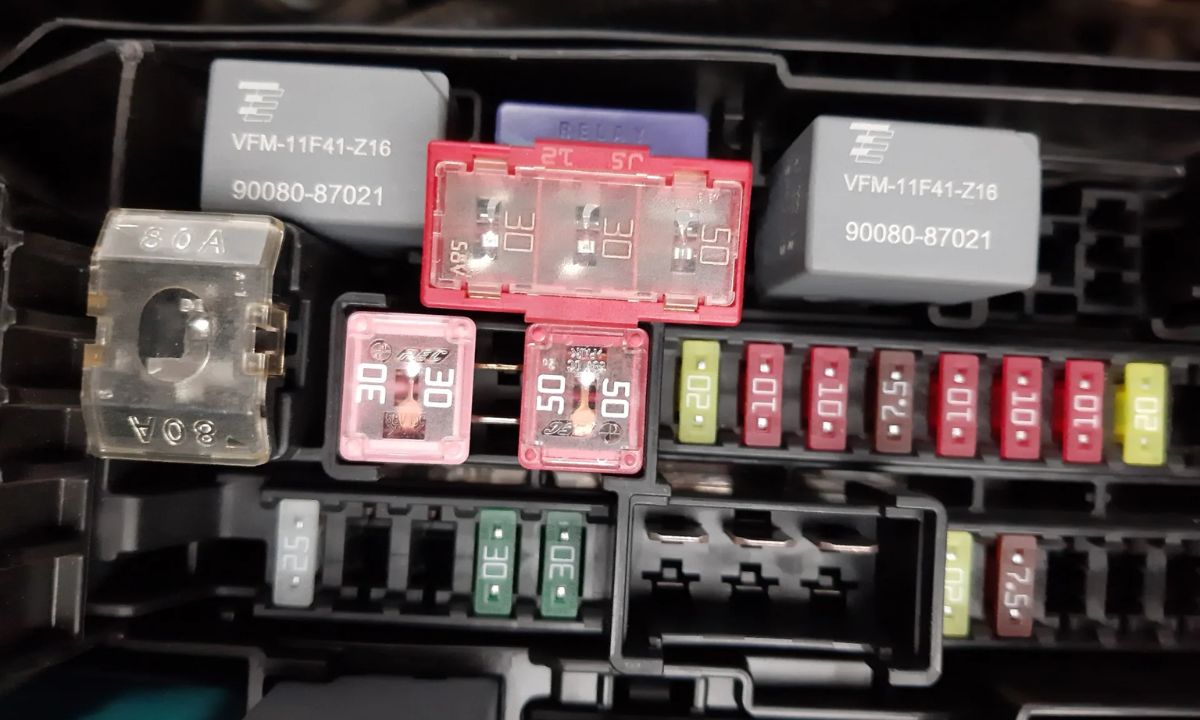
- Always use JIS (Japanese Industrial Standard) blade fuses – Toyota specifies genuine Toyota or equivalent rated fuses only
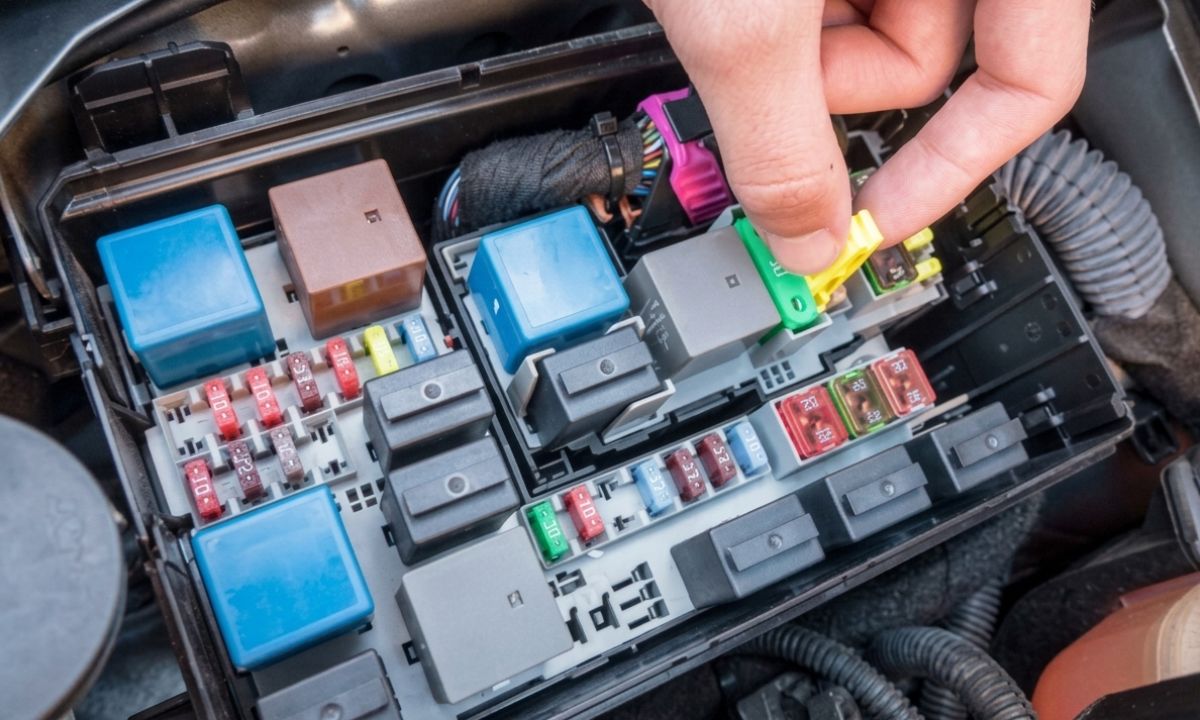
- The 300 series uses MINI blade, standard blade, and MAXI/bolt-down fuses depending on circuit amperage
- Never replace a blown fuse with a higher-rated fuse – this can cause wiring harness damage and fire risk
- When a fuse blows repeatedly, always diagnose the underlying short circuit before replacing again
- The 300 series features a Smart Fuse Box (Intelligent Power Distribution Module – IPDM) in some markets, which integrates relay and fuse functions electronically – check your market-specific wiring diagram
- Fuse box diagrams are printed on the inside of each fuse box cover lid – always cross-reference with the official Toyota Repair Manual (TIS) for your specific VIN and market build
- Battery disconnection on the 300 series may require re-initialisation of power windows, moonroof, and calibration of the Pre-Collision System