Toyota C-HR 2016 Fuses: Complete Guide to All Fuse Boxes
The Toyota C-HR 2016 uses a multi-box fuse and relay system to protect all electrical circuits across the vehicle. Understanding the exact location, amperage, and function of every fuse is essential for diagnosing electrical faults, replacing blown components, or performing aftermarket installations. This guide covers every fuse box in the 2016 Toyota C-HR, listing all circuits with their corresponding fuse ratings and protected functions.
Fuse Box Locations on the 2016 Toyota C-HR
The 2016 Toyota C-HR has three main fuse and relay boxes:
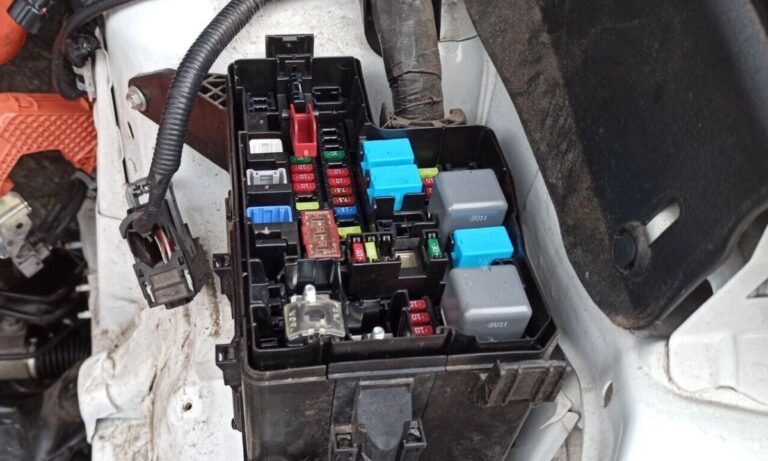
- Engine Compartment Fuse Box (Main Relay Box) – located on the left side of the engine bay, near the battery
- Instrument Panel Fuse Box (Driver’s Side) – located under the dashboard on the driver’s side, behind a cover panel
- Engine Room Junction Block – additional relays and high-amperage fuses integrated into the engine bay box
Engine Compartment Fuse Box – Full Fuse List
The engine compartment box handles high-current circuits for the powertrain, cooling, and primary electrical systems.
- FL1 – 120A – Main EFI fuse (engine control system)
- FL2 – 80A – ABS/VSC actuator pump motor
- FL3 – 60A – Alternator output charge circuit
- FL4 – 50A – Electric power steering (EPS) system
- FL5 – 40A – ABS/VSC main relay
- FL6 – 30A – Cooling fan motor (main)
- FL7 – 30A – Ignition switch main supply
- FL8 – 30A – Supplemental restraint system (SRS/airbag) main
- FL9 – 20A – Headlight relay supply (left)
- FL10 – 20A – Headlight relay supply (right)
- FL11 – 15A – Engine control module (ECM) main fuse
- FL12 – 15A – Radiator fan relay coil supply
- FL13 – 10A – Cruise control actuator
- FL14 – 10A – EVAP emission control system
- FL15 – 10A – Fuel injectors and ignition coils secondary
- FL16 – 10A – Transmission control module (TCM)
- R1 – Relay – Main EFI relay
- R2 – Relay – Fuel pump relay
- R3 – Relay – Cooling fan relay (high speed)
- R4 – Relay – Cooling fan relay (low speed)
- R5 – Relay – A/C compressor clutch relay
Instrument Panel Fuse Box – Full Fuse List
This box is located beneath the driver’s side dashboard. Remove the lower trim cover panel to access it. It handles interior electronics, lighting, comfort features, and safety systems.
- F1 – 30A – Power windows main relay feed
- F2 – 25A – Power window motor (driver’s side)
- F3 – 25A – Power window motor (passenger side)
- F4 – 20A – Heated seats (driver and passenger)
- F5 – 20A – Horn relay and horn
- F6 – 20A – Rear window defogger (heater grid)
- F7 – 20A – Cigarette lighter / 12V accessory socket
- F8 – 15A – Audio system / infotainment unit
- F9 – 15A – Instrument cluster and combination meter
- F10 – 15A – Reverse camera system
- F11 – 15A – Toyota Safety Sense (TSS) – pre-collision radar
- F12 – 15A – Lane departure alert system
- F13 – 15A – Adaptive cruise control module
- F14 – 10A – Interior dome lamp and map lights
- F15 – 10A – Central locking system and smart key ECU
- F16 – 10A – Windshield wiper motor and washer pump
- F17 – 10A – Turn signal lights and hazard warning lights
- F18 – 10A – Stop lamps (brake lights)
- F19 – 10A – Tail lights and licence plate lamp
- F20 – 10A – Daytime running lights (DRL) module
- F21 – 10A – OBD-II diagnostic port power supply
- F22 – 10A – USB charging port and multimedia interface
- F23 – 10A – Air conditioning control panel and blower relay
- F24 – 10A – Body control module (BCM / multiplex network)
- F25 – 7.5A – Immobiliser ECU and theft deterrent system
- F26 – 7.5A – SRS airbag ECU secondary supply
- F27 – 7.5A – Parking sensors (front and rear)
- F28 – 7.5A – Power mirror folding and adjustment motors
- F29 – 7.5A – Clock, radio memory and keep-alive memory circuits
- F30 – 7.5A – Door courtesy lamps and footwell lighting
How to Identify a Blown Fuse on the Toyota C-HR 2016
Always turn off the ignition before inspecting fuses. Use the fuse puller tool stored inside the instrument panel fuse box cover. A blown fuse has a visibly melted or broken metal strip inside the translucent plastic body. Always replace a fuse with the exact same amperage rating — never use a higher-rated fuse as a substitute, as this can cause wiring harness fires or permanent ECU damage.
Fuse Types Used in the 2016 Toyota C-HR
- Mini blade fuses (ATM) – used in the instrument panel box for low-amperage circuits (7.5A–20A)
- Standard blade fuses (ATC/ATO) – used throughout both boxes for mid-range circuits
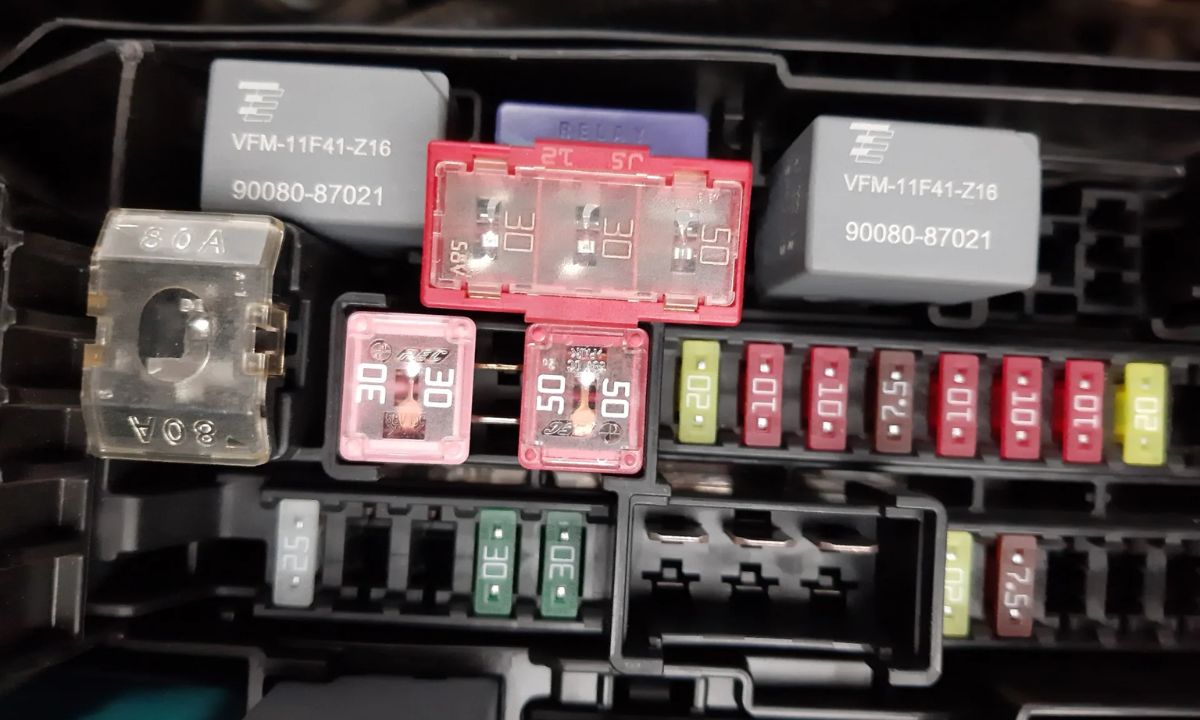
- Maxi blade fuses (APX) – used in the engine compartment box for high-amperage circuits (30A–80A)
- Fusible links / cartridge fuses – used for the battery feed and alternator circuits (100A+)
Important Notes for the 2016 Toyota C-HR Fuse System
- The 2016 C-HR uses a 1.2T petrol turbo engine (8NR-FTS) in European markets and a 1.8 hybrid (2ZR-FXE) in some regions — fuse configurations may differ slightly between powertrains
- Hybrid variants include additional fuses for the hybrid battery management unit, MG1/MG2 motor generators, and inverter cooling pump
- Always consult the fuse box lid diagram printed on the inside of each cover before replacing any fuse
- If a fuse blows repeatedly, do not continue replacing it — a short circuit in the protected wiring or component must be diagnosed first
- Toyota recommends using genuine Toyota fuses or equivalent ISO-rated blade fuses for all replacements