Toyota Prius XW50 Fuses 2015-2022: Complete Guide
The Toyota Prius XW50, produced from 2015 to 2022, features a complex electrical architecture that supports its hybrid drivetrain, advanced safety systems, and extensive electronics. Understanding the fuse layout is essential for diagnosing electrical faults, replacing blown fuses correctly, and avoiding damage to sensitive hybrid components. This guide covers every fuse box location, every fuse rating, and every circuit function for the fifth-generation Prius in complete detail.
Fuse Box Locations on the Toyota Prius XW50
The XW50 Prius has three main fuse and relay box locations:
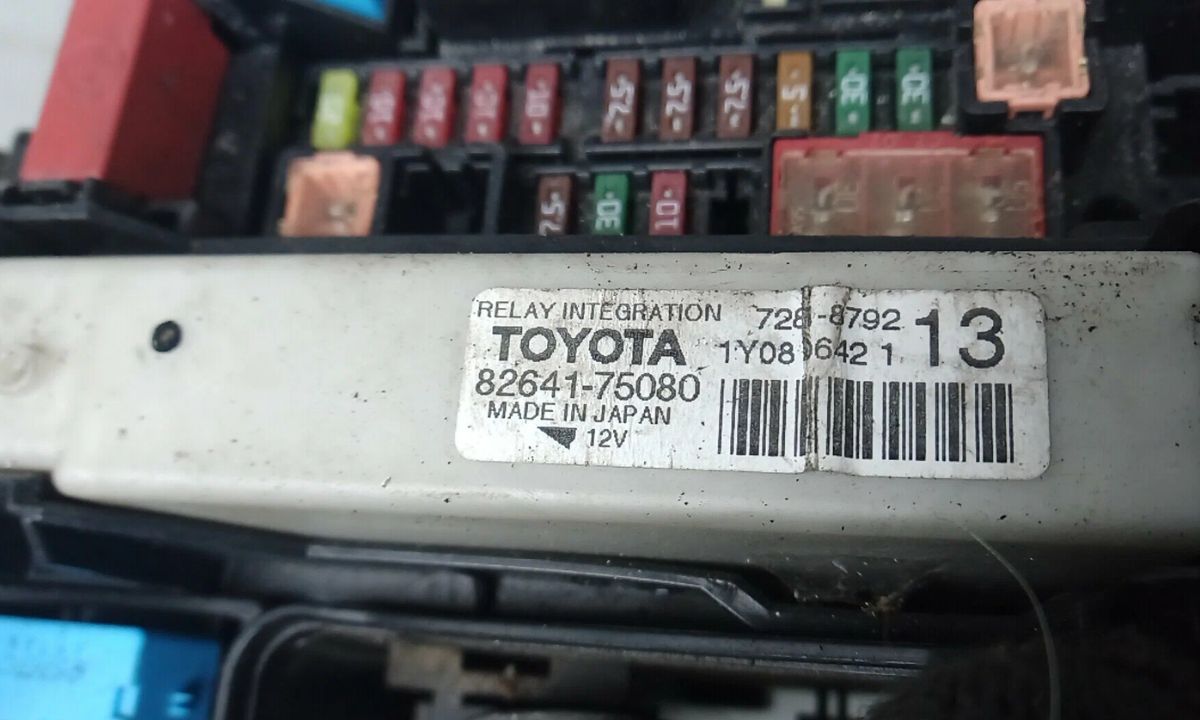
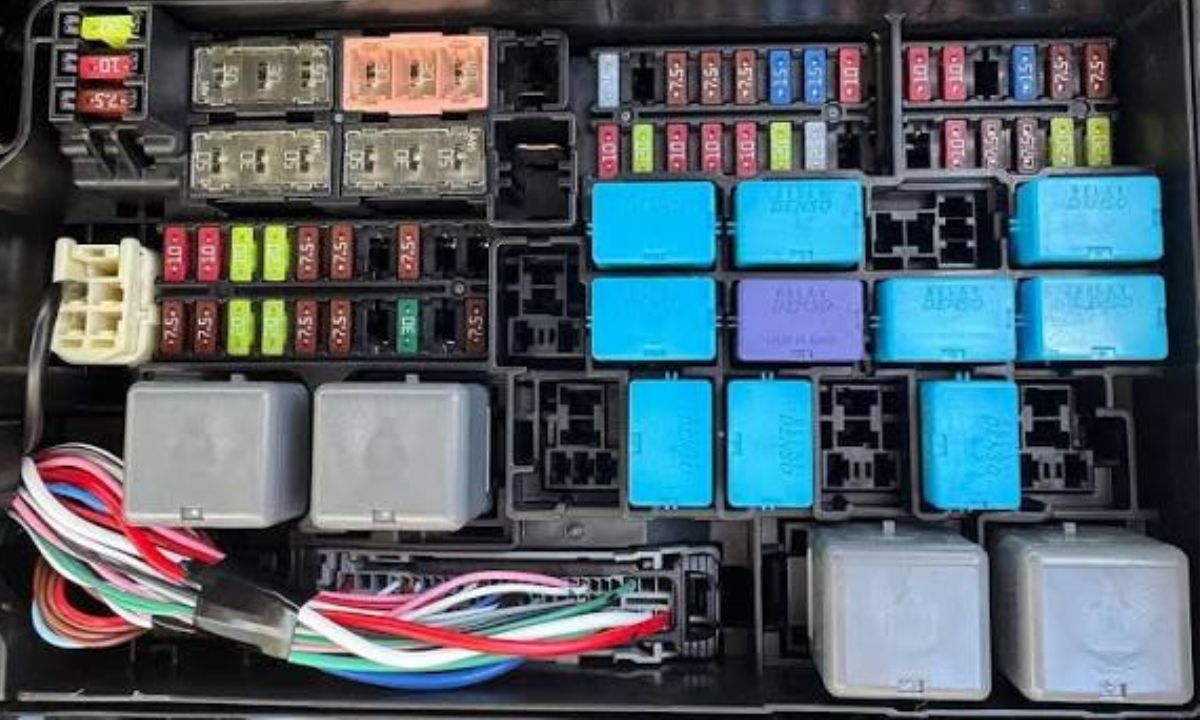
- Engine compartment fuse box – located on the left side of the engine bay, near the battery and brake fluid reservoir
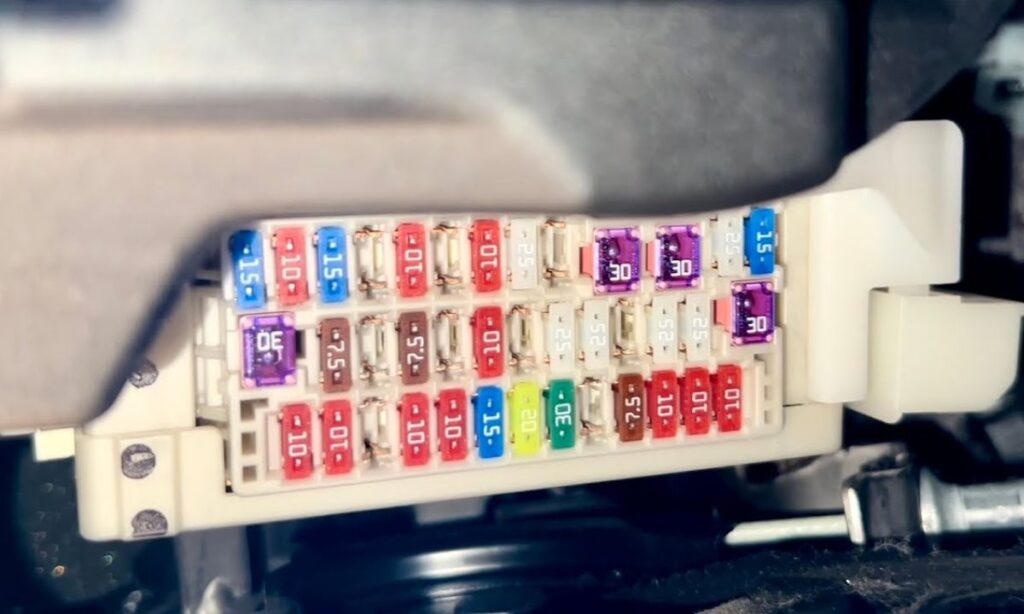
- Instrument panel fuse box (driver’s side) – located under the dashboard on the driver’s side, behind a removable cover
- Hybrid battery fuse / service plug – located in the hybrid battery pack in the rear of the vehicle, accessible under the rear seat
Engine Compartment Fuse Box – Complete Fuse List
The engine bay fuse box contains high-current fuses and relays that protect the primary vehicle systems. Below is the complete listing:
- FL1 – 120A – EPS (Electric Power Steering) system
- FL2 – 80A – Main body electrical supply
- FL3 – 60A – Engine room fuse block supply
- FL4 – 30A – Cooling fan motor
- FL5 – 30A – Air conditioning compressor
- FL6 – 30A – Electric power steering ECU
- FL7 – 20A – Headlight system (main supply)
- FL8 – 15A – Windshield wiper motor
- FL9 – 10A – Engine control module (ECM)
- FL10 – 10A – Transmission control / hybrid transaxle
- FL11 – 10A – Fuel pump and fuel system
- FL12 – 7.5A – Oxygen sensor heater
- FL13 – 7.5A – Ignition coil system
- FL14 – 15A – Radiator fan relay
- FL15 – 20A – ABS / VSC actuator motor
- FL16 – 10A – Hybrid vehicle (HV) ECU supply
- FL17 – 10A – Brake control ECU
- FL18 – 7.5A – Cruise control actuator
- FL19 – 7.5A – Engine room junction block sensors
- FL20 – 30A – Electric water pump (hybrid cooling circuit)
- FL21 – 20A – DC-DC converter circuit protection
- FL22 – 15A – Inverter cooling fan
- FL23 – 10A – OBD2 / DLC3 diagnostic port
- FL24 – 10A – Immobilizer and smart key ECU
Instrument Panel Fuse Box – Complete Fuse List
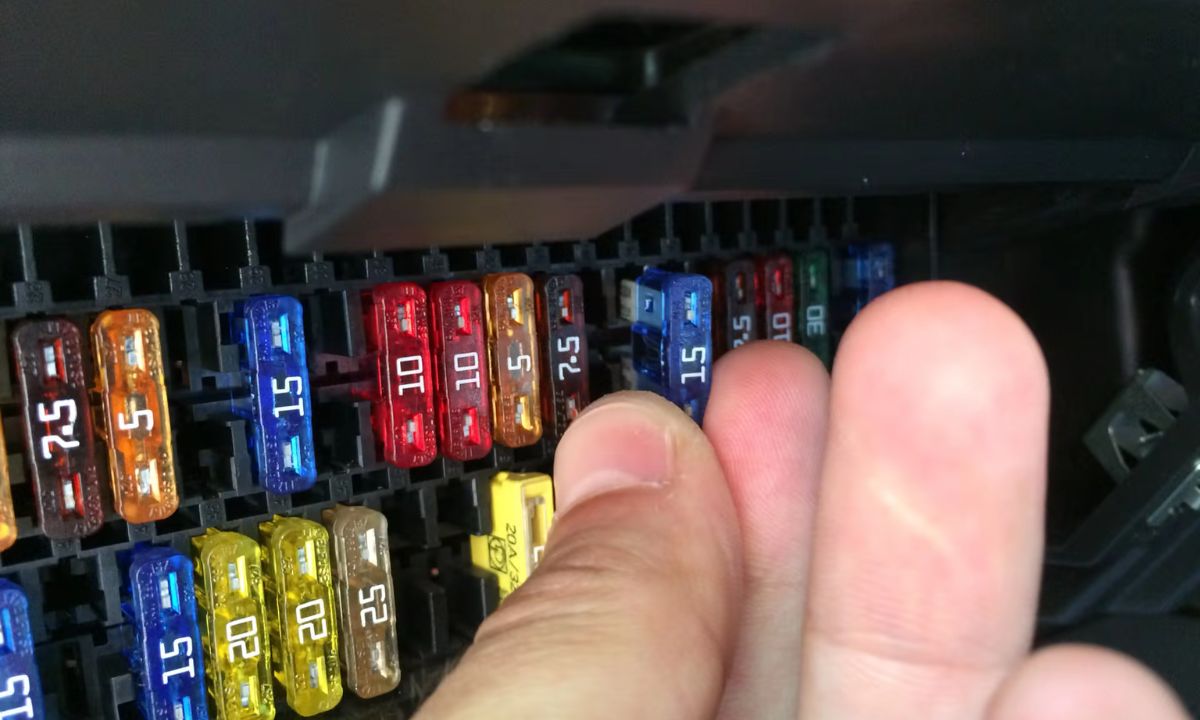
The interior fuse box is the most commonly accessed box for everyday electrical troubleshooting. It is located on the lower left of the dashboard. Remove the cover by pulling it outward. The complete fuse list is as follows:
- 1 – 7.5A – Combination meter / instrument cluster
- 2 – 10A – Door control ECU (power door locks)
- 3 – 15A – Power windows (driver’s side)
- 4 – 15A – Power windows (passenger side)
- 5 – 20A – Power seat (if equipped)
- 6 – 10A – Mirror defogger and adjustment
- 7 – 15A – Rear window defogger relay circuit
- 8 – 7.5A – Audio head unit / display audio
- 9 – 7.5A – Navigation system / Entune
- 10 – 10A – Reverse camera and parking sensors
- 11 – 10A – USB / 12V accessory socket (center console)
- 12 – 10A – 12V socket (rear cabin)
- 13 – 20A – Heated steering wheel
- 14 – 20A – Heated front seats
- 15 – 7.5A – Ambient lighting / interior illumination
- 16 – 7.5A – Clock and body control module (BCM) memory
- 17 – 10A – Horn relay and circuit
- 18 – 15A – Windshield washer pump
- 19 – 10A – Stop light switch and brake signal circuit
- 20 – 7.5A – Toyota Safety Sense (TSS) pre-collision system ECU
- 21 – 7.5A – Lane departure alert / radar cruise ECU
- 22 – 10A – Air conditioning control panel and blower relay
- 23 – 20A – Blower motor resistor / fan motor supply
- 24 – 15A – Tail lights and parking lights
- 25 – 10A – Daytime running lights (DRL) and position lamps
- 26 – 15A – Turn signals and hazard flasher unit
- 27 – 10A – Interior dome light and map lights
- 28 – 10A – Trunk release and luggage area light
- 29 – 7.5A – Smart key receiver and push-button start
- 30 – 10A – Multifunction switch (combination switch on steering column)
Hybrid System Fuse and Service Plug
The XW50 Prius uses a high-voltage (HV) system operating at approximately 207V DC. The high-voltage circuit is protected by a dedicated service plug fuse (also called the Manual Service Disconnect or MSD). This is located within the high-voltage battery assembly under the rear seat cushion.
- HV main fuse – 125A – High-voltage battery pack protection (isolates battery from inverter)
- HV service plug – Orange lever-type connector – must be removed before any hybrid system service
- SMR (System Main Relay) fuses – internal to the battery ECU, rated 40A each – protect individual battery module strings
Warning: Never attempt to access or replace any high-voltage fuse without Toyota hybrid safety training. Always remove the service plug and wait at least 5 minutes for capacitors to discharge before touching HV components.
12V Auxiliary Battery and Its Fuse
The XW50 Prius uses a small 12V auxiliary battery located in the rear cargo area on the right side. This battery powers all low-voltage circuits. It is protected by an 80A main fuse inline between the battery positive terminal and the body wiring harness. A blown auxiliary main fuse will result in a completely dead vehicle with no push-button start response.
How to Identify and Replace a Blown Fuse
- Turn the ignition to OFF and open the relevant fuse box cover
- Use the fuse puller tool stored inside the engine bay fuse box lid
- Inspect the fuse element visually – a broken wire filament or discolored window indicates a blown fuse
- Always replace with the exact same amperage rating – never upsize a fuse
- If the replacement fuse blows immediately, a short circuit exists in that circuit and must be diagnosed before replacing again
- Use standard blade (ATO/ATC) fuses for most positions; mini blade fuses for low-amperage slots
- High-current fuses (80A and above) are bolt-down cartridge type or fusible link style
Common Electrical Issues Related to Fuses on the XW50 Prius
- Blank infotainment screen – check fuses 8 and 9 in the instrument panel box (audio and navigation)
- No power to 12V accessory sockets – check fuses 11 and 12
- Power windows inoperative – check fuses 3 and 4
- Brake lights not working – check fuse 19 (stop light circuit)
- Vehicle not starting / no ready light – check HV service plug and auxiliary battery main fuse
- Toyota Safety Sense not available warning – check fuses 20 and 21
- Heated seats not functioning – check fuse 14