Toyota U880E Transmission: Aisin 8-Speed Complete Guide
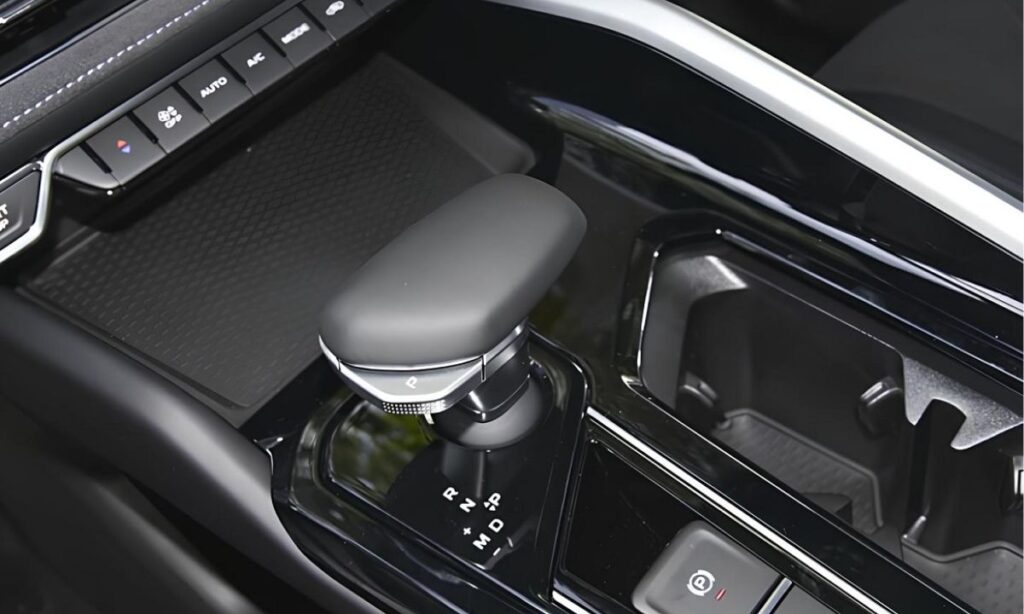
The Toyota U880E is an Aisin-manufactured 8-speed automatic transmission developed to meet modern demands for fuel efficiency, smooth gear transitions, and high torque capacity. Used across Toyota’s lineup in full-size trucks, SUVs, and performance-oriented vehicles, the U880E represents a significant engineering advancement over its 6-speed predecessors. This guide covers everything technicians, enthusiasts, and owners need to know about the U880E — from technical specifications and fluid requirements to common failure points and diagnostic codes.
U880E Transmission Overview and Applications
The U880E is built by Aisin Seiki, Toyota’s long-standing transmission partner, as part of the UA8 series of 8-speed automatic transmissions. It is a longitudinally mounted, rear-wheel-drive-based transmission designed for higher torque applications. Key vehicle applications include:
- Toyota Land Cruiser 300 Series (J300) — paired with the twin-turbo V6 3.5L engine (GR-FTV)
- Toyota Sequoia (4th generation, 2022+) — mated to the twin-turbo 3.5L V6 hybrid and non-hybrid powertrains
- Toyota Tundra (3rd generation, 2022+) — standard transmission for the i-FORCE and i-FORCE MAX powertrains
- Lexus LX 600 — premium application sharing the same base platform
Technical Specifications
- Type: 8-speed automatic, hydraulically controlled with electronic management
- Manufacturer: Aisin Seiki Co., Ltd.
- Series: UA8 / U880E designation
- Gear ratios:
- 1st: 4.596
- 2nd: 2.724
- 3rd: 1.863
- 4th: 1.452
- 5th: 1.154
- 6th: 0.859
- 7th: 0.686
- 8th: 0.636
- Reverse: 2.942
- Torque capacity: Up to approximately 700 Nm (516 lb-ft)
- Transmission weight: Approximately 92–96 kg depending on configuration
- Control type: Electronically controlled with adaptive shift logic (ECT-i)
- Lock-up torque converter: Yes, with flex lock-up damper
- Drive modes: Normal, Eco, Sport, Snow (vehicle-dependent)
- Paddle shifters: Supported in Sport and manual sequential modes
Transmission Fluid Specifications
Proper fluid maintenance is critical for the U880E’s hydraulic clutch packs and solenoid valve performance.
- Fluid type: Toyota Genuine ATF WS (World Standard) or equivalent Aisin-approved fluid
- Fluid capacity (total fill): Approximately 10.4–11.0 liters
- Fluid capacity (drain and refill): Approximately 4.5–5.5 liters
- Normal service interval: Inspect every 60,000 km; replace every 80,000–100,000 km under normal conditions
- Severe duty interval: Replace every 40,000–50,000 km for towing, off-road, or high-heat use
- Operating temperature range: -40°C to +160°C
- Fluid condition indicator: Not equipped with a dipstick on most applications; requires dealer-level check plug procedure
Solenoid Valve Configuration
- S1 solenoid: Linear solenoid — line pressure control
- S2 solenoid: Linear solenoid — torque converter clutch pressure control
- S3 solenoid: On/off solenoid — shift control (1-2, 2-3)
- S4 solenoid: On/off solenoid — shift control (3-4, 4-5)
- S5 solenoid: On/off solenoid — shift control (5-6, 6-7, 7-8)
- SLT solenoid: Linear solenoid — throttle pressure modulation
- SLC1 / SLC2 / SLC3: Clutch pressure linear solenoids for individual gear engagement control
Common Fault Codes (DTCs) for the U880E
- P0700 — Transmission Control System Malfunction: General TCM fault flag; check for secondary codes
- P0711 — Transmission Fluid Temperature Sensor A Circuit Range/Performance: Sensor signal out of expected range; check wiring and sensor resistance
- P0715 — Input/Turbine Speed Sensor A Circuit: Faulty input speed sensor or wiring; can cause harsh shifts or no-shift conditions
- P0720 — Output Speed Sensor Circuit: Failed output shaft speed sensor; affects speedometer and shift scheduling
- P0730 — Incorrect Gear Ratio: Clutch pack slippage or solenoid failure; confirm fluid condition first
- P0740 — Torque Converter Clutch Circuit Malfunction: TCC solenoid fault or mechanical failure in converter
- P0750 / P0755 / P0760 / P0765 — Shift Solenoid A/B/C/D Malfunction: Individual solenoid electrical or mechanical failure
- P0780 — Shift Malfunction: Multiple shift-related issues; requires live data analysis of all speed sensors
- P2714 — Pressure Control Solenoid D Performance/Stuck Off: Common on high-mileage units; associated with delayed engagement
- P2757 — Torque Converter Clutch Pressure Control Solenoid Performance: Shudder at highway speeds; often fluid-related first
- U0101 — Lost Communication With TCM: CAN bus issue; check TCM power supply and ground connections
Known Issues and Failure Points
- Torque converter shudder: Most commonly reported issue at speeds between 60–90 km/h; often resolved with ATF WS fluid flush and refill before mechanical intervention
- Delayed engagement from Park/Neutral to Drive or Reverse: Linked to SLC solenoid wear or degraded fluid causing slow pressure build-up
- Harsh 1-2 upshift under cold start: Normal adaptation behavior but can worsen with old fluid; adaptive value reset (ECT reset) recommended after fluid service
- Valve body contamination: Fine metallic particles from clutch pack wear can block solenoid screens; transmission pan inspection recommended at fluid service
- Overheating in heavy towing: The U880E benefits from auxiliary transmission coolers in sustained towing applications above rated capacity
TCM Adaptive Learning Reset Procedure
After any fluid service or internal repair, resetting the Transmission Control Module adaptive values is strongly recommended to allow the U880E to relearn optimal shift pressures and timing.
- Connect Toyota Techstream or compatible OBD2 scanner with Toyota ECU access
- Navigate to: Powertrain → Automatic Transmission → Utility → AT Learning Value Reset
- Confirm reset and perform a complete drive cycle including acceleration from stop, highway cruising, and deceleration
- Allow 80–150 km of mixed driving for full adaptation to complete
Towing and Performance Ratings
- Maximum towing capacity (Tundra 2022+): Up to 14,000 lbs (6,350 kg) with properly equipped package
- Tow/Haul mode: Alters shift points upward to reduce gear hunting under load; activates engine braking on downhill grades
- Transmission temperature monitoring: Available via driver information display on equipped models; critical during extended towing