Volkswagen EA888 2.0 TSI Engine: Complete Guide
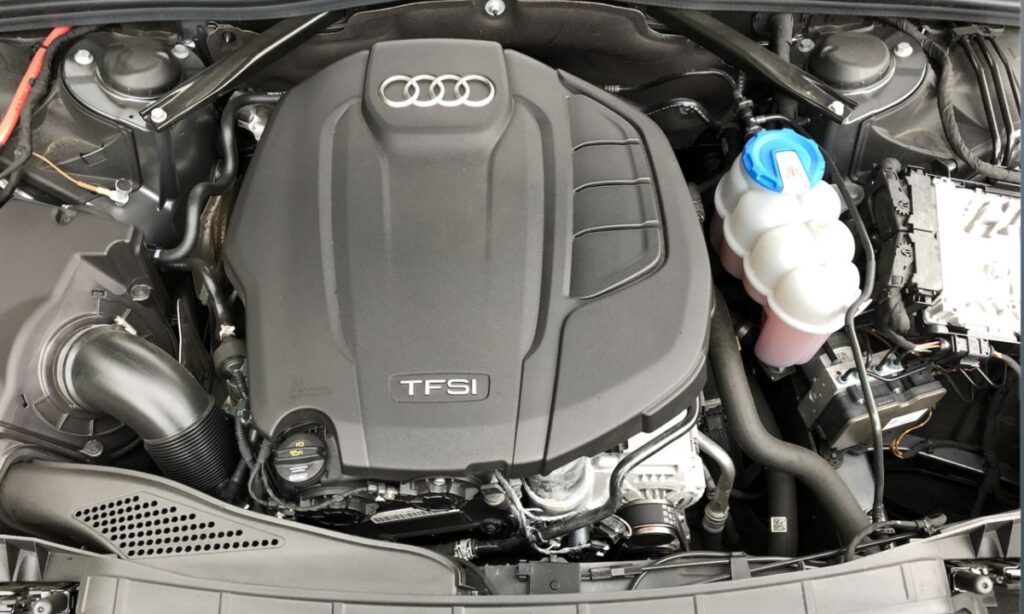
The Volkswagen EA888 2.0 TSI is one of the most significant turbocharged four-cylinder petrol engines ever produced by the Volkswagen Group. Introduced in 2006 and continuously refined through multiple generations, this engine powers a vast range of vehicles across the VW, Audi, SEAT, and Škoda brands. Its combination of performance, efficiency, and technological sophistication has made it a benchmark in the automotive industry, though it has also accumulated a well-documented history of known issues and owner concerns that any prospective buyer or technician should understand thoroughly.
EA888 Engine Generations and Variants
The EA888 family has evolved through distinct generations, each bringing meaningful engineering changes:
- Gen 1 (EA888/1) – 2006 to 2008: Displacement 1,984cc, iron block, aluminium cylinder head, chain-driven camshafts, single-scroll turbocharger, direct injection (FSI), power outputs ranging from 150 hp to 200 hp, torque 200–280 Nm. Found in early Audi A4 B8 and Passat B6.
- Gen 2 (EA888/2) – 2008 to 2012: Revised cylinder head, improved cooling, upgraded turbocharger mapping, port injection added on some variants alongside direct injection (creating a combined system on specific tunes), outputs from 155 hp to 211 hp, torque up to 300 Nm. Introduced in Golf Mk6 GTI, Audi A3 8P, Passat B7.
- Gen 3 (EA888/3) – 2012 to 2019: Major redesign. Aluminium block option introduced, variable valve timing on both intake and exhaust (dual VVT), revised intake manifold, electric wastegate actuator on some variants, improved oil consumption characteristics, outputs from 180 hp to 230 hp, torque 250–350 Nm. Standard in Golf Mk7 GTI, Audi TT 8S, Skoda Octavia vRS Mk3.
- Gen 3B (EA888/3B) – 2019 onwards: 48V mild hybrid compatibility, further emissions optimisation, Budack cycle (Atkinson-like cycle) on some detuned variants, particulate filter (OPF/GPF) on EU6d-TEMP and EU6d versions. Outputs maintained at 150 hp to 245 hp depending on tune. Found in Golf Mk8 GTI, Audi A3 8Y, Tiguan Mk2 facelift.
Technical Specifications by Variant
- Displacement: 1,984 cc (bore 82.5 mm × stroke 92.8 mm)
- Engine layout: Inline-4, transversely mounted
- Valvetrain: DOHC, 4 valves per cylinder, chain-driven
- Compression ratio: 9.6:1 (Gen 1/2), 9.8:1 (Gen 3), 10.5:1 (Gen 3B Atkinson)
- Fuel system: Direct injection (FSI/TFSI) Gen 1/2; Combined port + direct injection (MPI+FSI) Gen 3 and 3B
- Turbocharger: Single-scroll (Gen 1/2), twin-scroll (Gen 3/3B)
- Max power outputs available: 150 hp / 155 hp / 160 hp / 180 hp / 190 hp / 200 hp / 211 hp / 220 hp / 230 hp / 245 hp
- Max torque outputs available: 200 Nm / 250 Nm / 280 Nm / 300 Nm / 320 Nm / 350 Nm / 370 Nm
- Redline: 6,500–7,000 rpm depending on tune
- Oil capacity: 4.3–4.6 litres (with filter)
- Recommended oil spec: VW 504 00 / 507 00 (Gen 3/3B), VW 502 00 / 505 01 (Gen 1/2), 0W-30 or 5W-30 fully synthetic
- Oil change interval: Up to 30,000 km (Longlife) or 15,000 km (fixed interval recommended for performance use)
- Timing system: Chain-driven, no cambelt required
- Cooling system: Liquid-cooled, thermostat opens at 87°C (some variants 105°C map-controlled)
Common Engine Codes
- CDLG, CDLA – 200 hp Gen 1 (Audi A4/A5)
- CCZB, CCZA – 200 hp / 211 hp Gen 2 (Golf GTI Mk6, Audi S3 8P)
- CHHA, CHHB – 180 hp / 220 hp Gen 3 (Tiguan, Passat B8)
- CJXB, CJXA – 220 hp / 230 hp Gen 3 (Golf GTI Mk7, Audi A3 8V)
- DKZA, DKZB – 245 hp Gen 3B (Golf Mk8 GTI, Audi TT RS precursor)
- CZPB, CZPA – 150 hp Gen 3B OPF variant (Golf Mk8 base TSI)
Known Issues and Failure Points
- Excessive oil consumption (Gen 1 and Gen 2): Caused by worn piston rings and oil separator (PCV) failure. Affected engines could consume up to 1 litre per 1,000 km. VW issued extended warranties and technical service bulletins (TSB) on this issue.
- Carbon buildup on intake valves (Gen 1/2 direct injection only): Without port injection, fuel vapour deposits accumulate on intake valves. Walnut blasting every 50,000–80,000 km is recommended. Gen 3 dual injection largely eliminated this.
- Timing chain tensioner wear: Gen 1 and early Gen 2 engines are susceptible to timing chain stretch and tensioner failure, particularly with infrequent oil changes. Symptoms include rattling on cold start. Replace chain, guides, and tensioner as a complete kit.
- Thermostat housing leaks: Plastic thermostat housing is prone to cracking, especially on high-mileage Gen 2 engines. Coolant loss and overheating risk if not addressed promptly.
- Water pump failure: Impeller separation from shaft (plastic impeller failure) is a documented issue on Gen 2. Upgraded metal impeller water pumps are available as replacements.
- Diverter valve (DV) failure: OEM diverter valve membranes crack under boost pressure over time. Upgraded aftermarket units recommended for modified cars.
- High-pressure fuel pump (HPFP) noise: Ticking or tapping from HPFP is common and generally not a mechanical fault, though worn cam followers accelerate pump wear.
- Cam follower wear: The camshaft lobe driving the HPFP can wear the follower rapidly without regular inspection. Replacement recommended every 20,000–40,000 km depending on oil quality and driving style.
Common OBD Fault Codes
- P0171 / P0174 – System too lean (Bank 1/Bank 2): Causes include vacuum leaks, faulty MAF sensor, clogged fuel injectors, weak HPFP.
- P0300 / P0301–P0304 – Random or cylinder-specific misfire: Causes include faulty ignition coils (N-series), fouled spark plugs, injector faults, low compression.
- P2293 – Fuel pressure regulator performance: Worn cam follower, failing HPFP, fuel pressure sensor fault.
- P0087 – Fuel rail pressure too low: HPFP failure, low-pressure fuel pump (in-tank) failure, blocked fuel filter, cam follower worn flat.
- P0016 / P0017 – Crankshaft/camshaft correlation fault: Stretched timing chain, faulty camshaft position sensor, VVT solenoid fault.
- P0420 – Catalyst system efficiency below threshold: Ageing catalytic converter, rich running condition, oil burning contaminating catalyst.
- P10CF / P189A – Particulate filter specific codes (Gen 3B OPF): Clogged GPF, short-trip driving preventing regeneration.
- P0507 – Idle air control system high RPM: Carbon-clogged throttle body, faulty throttle actuator.
Maintenance Schedule Recommendations
- Engine oil and filter: Every 10,000–15,000 km for performance use, or at least annually. Use VW-approved specification only.
- Spark plugs: Every 30,000–40,000 km (iridium plugs); NGK ILZKR7B8G or equivalent recommended for GTI tunes.
- Cam follower inspection: Every 20,000 km or at each oil service on high-mileage units.
- Air filter: Every 30,000 km or annually.
- Coolant replacement: Every 4 years or 60,000 km using G13 or G12++ specification coolant.
- Intake valve cleaning (Gen 1/2 FSI): Every 50,000–80,000 km via walnut blast media cleaning.
- Timing chain assessment: Inspect chain stretch from 100,000 km on Gen 1/2 engines.