Nissan Coolant Type: Blue, Green, and Why the Colour Confusion Actually Matters
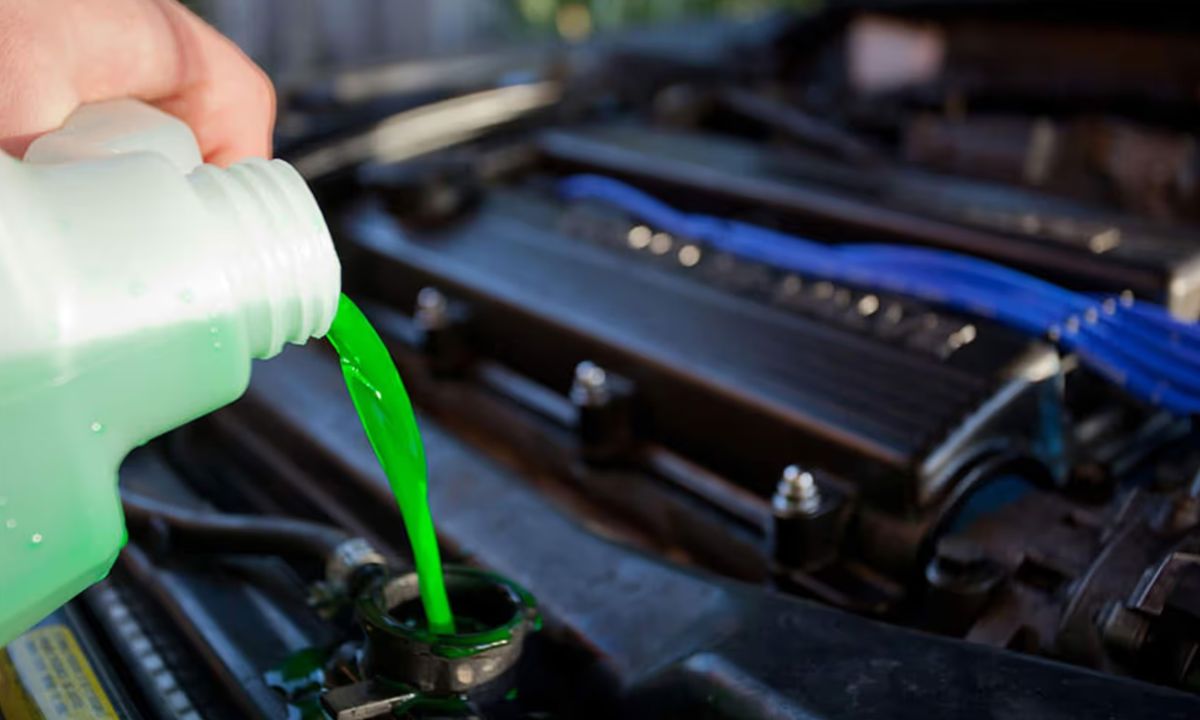
Nissan has used two different coolant formulations across its model range, and the confusion between them is genuine — dealers have supplied different colours to the same model in different production years, and Qashqai owners have reported discovering green coolant topped up with blue or vice versa without any issues flagged at service. However, mixing the two types is not recommended, and understanding which specification your vehicle requires prevents the corrosion and deposit buildup that results from incompatible inhibitor chemistry.
Nissan Long Life Coolant — Blue (Pre-2018 Models)
Most Nissan models built before 2018 — including older Qashqai J11 variants, the X-Trail T32, Navara D40, Frontier, Pathfinder, and Sentra — use Nissan’s blue Long Life Antifreeze/Coolant. This is a HOAT (Hybrid Organic Acid Technology) formulation, phosphate-free and nitrite-free, premixed at 50/50 with distilled water. The genuine Nissan product is produced by Pentosin and available as Pentofrost A3.
When purchasing an aftermarket equivalent for blue-spec Nissan models, the label must confirm:
- HOAT formulation — hybrid organic acid technology
- Phosphate-free, nitrite-free, and silicate-free
- Ethylene glycol base
- Compatible with Nissan or Japanese vehicle specifications
Do not use standard green IAT coolants in any current Nissan model. The owner’s manual for most models explicitly warns that the use of orange or other non-Nissan coolants may damage the engine cooling system.
Nissan Long Life Coolant — Green (2018+ Models)
From approximately 2018 onward, Nissan transitioned to a green coolant for new model fills. Qashqai forum members confirmed this shift when comparing factory fills across model years, with Nissan UK parts department supplying green L248 premix for current Qashqai and X-Trail stock. The green coolant meets the same HOAT specification as the blue, but with an updated inhibitor package for longer service life.
This creates the most common source of confusion: pre-2018 Nissan vehicles came with blue coolant, while post-2018 vehicles came with green. Although both are HOAT-based and chemically similar, Nissan recommends not mixing them. If the current coolant colour is unclear — particularly after previous top-ups by different workshops — the safest approach is a full flush and refill with the correct current-spec product before the colour history causes an issue.
Diesel Models — Additional Consideration
Nissan diesel engines including the 1.5 dCi (shared with Renault), the 2.3 dCi Navara, and older 2.0 dCi X-Trail use the same HOAT specification as petrol models. However, because these engines generate more combustion byproducts that enter the coolant over time, the change interval is more critical — degraded coolant in a diesel engine causes corrosion that shows up earlier than on petrol variants. Since the coolant shares the same specification, no separate diesel-specific product is required, but the change interval should be followed without extension.
Capacities by Model
- Qashqai J11/J12 (1.2T and 1.3T petrol) — approximately 6.0–6.5 litres
- X-Trail T32/T33 (2.0L petrol) — approximately 7.0–7.5 litres
- Navara D40/D23 (2.5L petrol or 2.3 dCi diesel) — approximately 8.0–9.0 litres including the heater circuit
- Juke F15/F16 (1.0T and 1.6T) — approximately 5.5–6.0 litres
- Leaf (electric) — uses coolant in the battery thermal management system and inverter circuit, not in a combustion engine. The specification is the same HOAT coolant, however the capacity and circuit design are entirely different. Leaf coolant service should be performed by a Nissan dealer due to the high-voltage system proximity.
Change Intervals and What to Watch For
Nissan’s official coolant change interval is every 2 years or 30,000 miles for older models using conventional inhibitor packages, and every 5 years for newer models using the long-life formulation. Independent Nissan specialists typically recommend 3-year intervals as a practical compromise regardless of specification, since real-world coolant condition degrades faster in markets with extreme temperature cycles.
If the coolant in the reservoir appears brown, contains floating particles, or shows a rusty tinge, replace it regardless of the service interval. These signs indicate either inhibitor depletion or the early stages of internal corrosion — both require immediate attention before they reach the water pump or head gasket sealing surfaces.