BMW N20 Engine: Complete Guide to the 2.0L Turbo
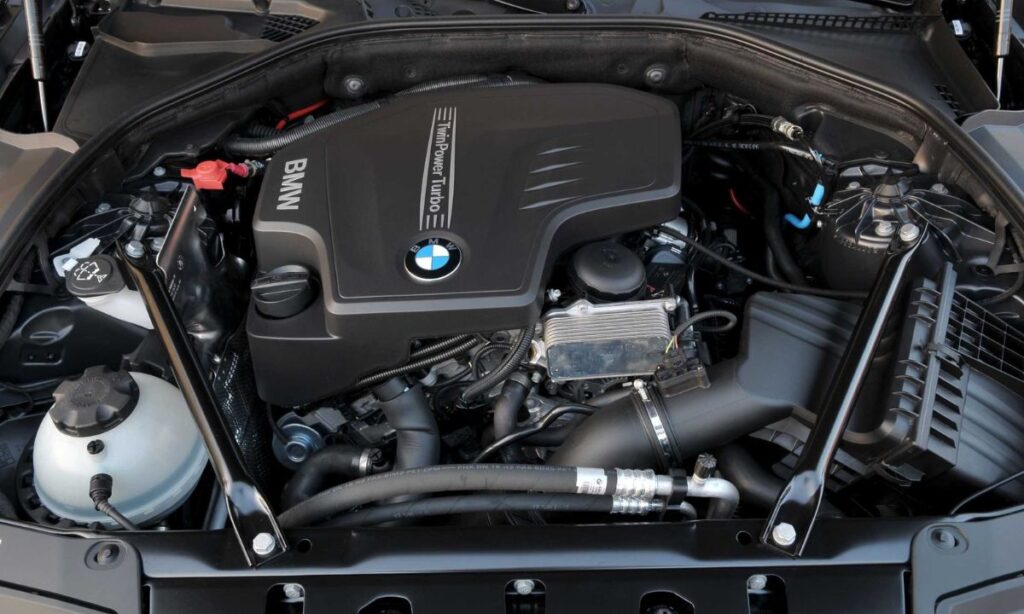
The BMW N20 is a 2.0-litre four-cylinder turbocharged petrol engine produced by BMW from 2011 to 2017. It replaced the naturally aspirated inline-six N52 in many models, delivering comparable performance with significantly improved fuel efficiency. The N20 was a landmark unit in BMW’s engine lineup, representing the brand’s transition toward downsized forced-induction engines without sacrificing the driving character BMW owners expect. Used in a wide range of vehicles from the 1 Series to the X3, this engine became one of the most widespread BMW powerplants of its generation.
N20 Engine Specifications
- Engine code: N20B20
- Configuration: Inline-4 (I4), turbocharged
- Displacement: 1,997 cc (2.0 litres)
- Bore x Stroke: 84.0 mm x 90.1 mm
- Compression ratio: 10.0:1
- Cylinder block material: Aluminium alloy with cast iron liners
- Cylinder head material: Aluminium alloy, DOHC, 16 valves
- Valvetrain: Double VANOS (variable camshaft timing on both intake and exhaust), Valvetronic (variable valve lift)
- Fuel system: Direct injection (High Precision Injection), 200 bar maximum fuel pressure
- Turbocharger: Single twin-scroll turbocharger (IHI or BorgWarner depending on build date)
- Intercooler: Air-to-air front-mounted intercooler
- Engine management: Bosch MSD80 / MSD81 ECU
- Oil capacity: 5.25 litres (with filter change)
- Recommended oil: BMW Longlife-01 specification, 5W-30 fully synthetic
- Firing order: 1-3-4-2
Power Output Variants
- N20B20A – 184 hp (135 kW) at 5,000 rpm, torque 270 Nm at 1,250–4,500 rpm – used in 320i, 520i, X1 xDrive20i
- N20B20B – 245 hp (180 kW) at 5,000 rpm, torque 350 Nm at 1,250–4,800 rpm – used in 328i, 428i, X3 xDrive28i, Z4 sDrive28i
- N20B20O0 – 218 hp (160 kW) at 5,000 rpm, torque 310 Nm at 1,250–4,500 rpm – used in 320i EfficientDynamics, select markets
Vehicles Fitted with the BMW N20
- BMW 1 Series (F20/F21): 116i, 118i, 120i (select variants)
- BMW 2 Series (F22/F23): 220i, 228i
- BMW 3 Series (F30/F31/F34): 320i, 328i
- BMW 4 Series (F32/F33/F36): 420i, 428i
- BMW 5 Series (F10/F11): 520i, 528i
- BMW X1 (E84): sDrive20i, xDrive20i, xDrive28i
- BMW X3 (F25): xDrive20i, xDrive28i
- BMW Z4 (E89): sDrive20i, sDrive28i
N20 Timing Chain Issues – Critical Information
The N20 timing chain is one of the most widely discussed reliability concerns with this engine. Early production units (2011–2013) used a single-row timing chain on the lower chain (connecting crankshaft to balance shaft/oil pump), which was prone to premature wear and stretch. BMW later revised this to a double-row chain in updated builds.
- Symptom 1: Rattling noise from the front of the engine on cold start, lasting a few seconds
- Symptom 2: Fault codes P0016, P0017 (crankshaft/camshaft position correlation)
- Symptom 3: Rough idle or misfires following chain stretch
- Affected build dates: Primarily engines produced before late 2013
- Recommended action: Replace both upper and lower timing chains, guides, tensioners and sprockets as a complete kit
- Service interval advisory: Inspect chain condition at or before 60,000 miles on affected vehicles
Common Faults and Known Issues
- Oil leaks from valve cover gasket: Common after 60,000 miles; oil seeps down onto the exhaust and can cause smoke or burning smell
- Oil filter housing gasket leak: Located on the front of the block; causes oil to drip onto the ground and can lead to confusion with other leaks
- VANOS solenoid faults: Solenoid screens block with sludge if oil service intervals are exceeded; causes rough idle, loss of power, fault codes P0010, P0011, P0013, P0014
- Water pump failure: BMW uses an electric water pump on the N20; failure is common between 60,000–80,000 miles and can cause overheating rapidly. Thermostat often fails simultaneously
- High-pressure fuel pump (HPFP) noise: Ticking or tapping noise under the hood at idle; common but usually not immediately damaging; monitor fuel trims
- Carbon build-up on intake valves: Direct injection engines do not wash intake valves with fuel; carbon deposits accumulate over time causing rough idle, misfires and reduced power; walnut blasting recommended every 50,000–60,000 miles
- PCV (positive crankcase ventilation) failure: The integrated PCV valve in the valve cover fails, causing excessive oil consumption, blue smoke and rough running
- Turbocharger oil feed line blockage: Restricted oil supply can lead to turbo bearing wear; inspect oil feed line during any turbo-related diagnostics
Maintenance Schedule and Service Requirements
- Engine oil and filter: Every 10,000 miles or 12 months (BMW Longlife-01 spec, 5W-30); earlier intervals recommended for high-performance or track use
- Spark plugs: Every 30,000–45,000 miles; use only BMW-approved iridium plugs (NGK or Bosch equivalent)
- Air filter: Every 30,000 miles or inspect annually
- Fuel filter: Integrated into high-pressure fuel pump assembly; replace as needed based on fuel quality
- Coolant flush: Every 4 years or 60,000 miles; use BMW blue coolant (ethylene glycol based)
- Timing chain inspection: At 60,000 miles on pre-2014 engines; replace if any rattle or fault codes present
- Valve cover gasket: Inspect from 60,000 miles; replace at first sign of leakage
- Intake valve cleaning (walnut blasting): Every 50,000–60,000 miles to prevent carbon build-up
Performance Upgrades and Tuning Potential
- Stage 1 ECU remap (245 hp base): Achieves approximately 290–310 hp and 430–450 Nm on a stock hardware platform
- Stage 2 with upgraded intercooler and downpipe: 330–360 hp possible with appropriate fuelling and mapping
- Intake upgrades: Aftermarket panel filters or cold air intakes improve throttle response; minimal peak power gain without ECU tune
- Turbocharger upgrades: Hybrid turbos or direct bolt-on larger turbos available from MHD, Precision and EFR for builds exceeding 400 hp
- Fuelling: HPFP upgrade or port injection addition recommended above Stage 2 to prevent fuel delivery limitations
- Engine internals: Stock rods and pistons reliably handle up to approximately 350 hp; forged internals advised beyond this threshold
N20 vs N26 – Key Differences
- The N26 is a SULEV (Super Ultra Low Emission Vehicle) variant of the N20 sold in specific US states
- N26 uses an additional catalytic converter integrated into the exhaust manifold
- N26 produces the same power outputs as the equivalent N20 tune
- N26 has slightly different ECU calibration and emissions hardware; not all N20 parts are interchangeable
- Tuning an N26 to remove SULEV equipment may affect emissions compliance depending on jurisdiction