How a Boxer Engine Works — and Why Some Brands Won’t Give It Up
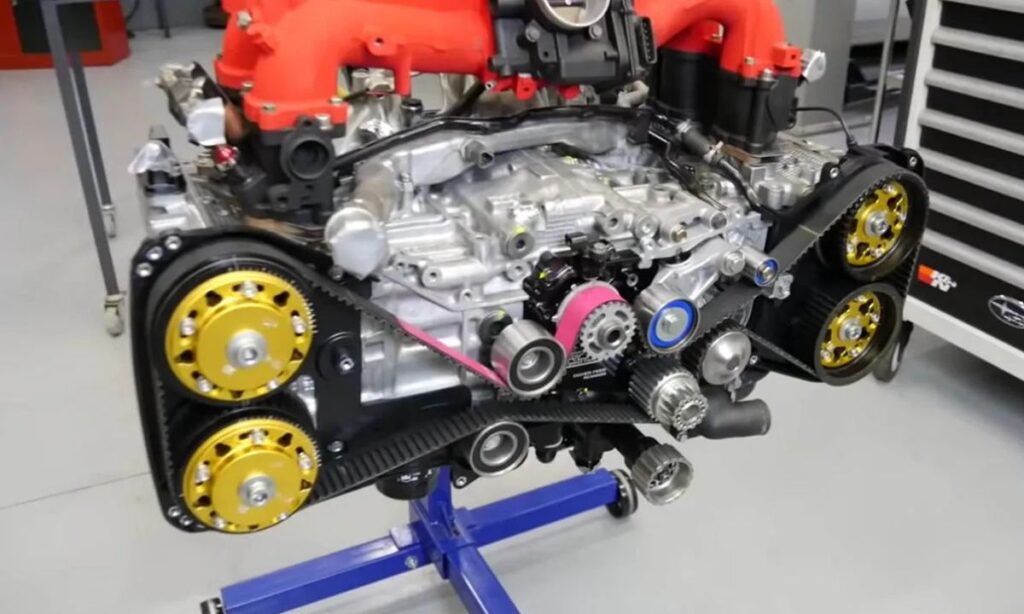
Most engines stack their cylinders upright or in a V shape. The boxer does something different — it lays them flat and points them at each other, with pistons punching inward simultaneously like two fighters trading blows. The result is an engine that sits lower, vibrates less, and handles weight distribution in a way that vertical designs simply can’t match. Owner communities on Subaru forums and Reddit threads have debated this layout for decades — and the arguments haven’t settled yet.
What Makes It Horizontally Opposed
A boxer engine, also called a flat or horizontally opposed engine, positions its cylinders parallel to the ground on either side of the crankshaft. The pistons face each other and move in opposite directions simultaneously. This mirrored motion is the core of everything the engine does well — and a few things it doesn’t.
In a conventional inline-four, pistons move up and down, creating an imbalance that engineers must correct with counterweights and vibration-dampening systems. In the boxer configuration, the opposing pistons naturally cancel each other’s inertia. There are no counterweights needed for primary balance, which means fewer components, less rotating mass, and smoother operation across the rev range.
The name comes from the resemblance to a boxing match — two fighters throwing punches toward each other at the same time. Each piston gets its own crank pin, and the alternating fire order keeps the crankshaft spinning with minimal pulse variation. This is why boxer engines feel unusually refined at idle compared to inline fours of similar displacement.
The Low Center of Gravity Advantage
Because the engine lies flat, it can be mounted significantly lower in the engine bay than an upright design. Lower mass means a lower center of gravity for the entire vehicle. This directly affects cornering behavior — the car resists rolling more naturally, and the driver feels less body lean when changing direction quickly.
Subaru pairs its boxer engine with Symmetrical All-Wheel Drive specifically because the engine sits along the car’s centerline. The drivetrain runs straight back from the engine without offset, which gives equal-length driveshafts on both sides. This contributes to the balanced torque delivery that Subaru owners often mention when comparing their cars to front-wheel-drive rivals with transverse layouts.
There is also a passive safety benefit. The low, flat engine is designed to slide downward and beneath the passenger cell during a frontal collision rather than being pushed into the cabin. This is a deliberate engineering outcome — not just a side effect of the layout.
Who Still Uses the Boxer Layout and Why
Two mainstream manufacturers have committed to the boxer layout as a core part of their identity: Subaru and Porsche. Toyota used a Subaru-sourced flat-four in earlier versions of the GT86 and BRZ co-development project. No other volume manufacturers currently offer boxer engines in production cars.
For Porsche, the flat-six in the 911 is part of the car’s identity going back decades. The rear-engine placement combined with the flat layout keeps weight distributed in a way that defines how the 911 drives. Changing to a different engine format would require redesigning the entire vehicle architecture — which is why Porsche has stayed with it even as turbocharged versions replaced naturally aspirated ones.
For Subaru, the boxer engine is a brand differentiator. The symmetrical AWD system that the company markets depends on it. The characteristic sound — sometimes called the “Subaru burble” by owners — comes partly from the unequal-length exhaust manifolds that the layout typically requires, and has become associated with the brand even in cars where Subaru has moved toward equal-length headers.
Real Weaknesses That Owners Actually Face
The horizontal cylinder orientation creates a specific head gasket problem that Subaru owners know well. Because the engine lies flat, oil stays in contact with the head gasket surface even when the engine is off — it doesn’t drain away like it would in a vertical engine. Over heat cycles, this accelerates gasket deterioration if the coolant isn’t maintained or if the original gasket material is substandard.
The EJ25 engine — used in Impreza, Outback, Legacy, and Forester — became notorious for this:
- 1999–2011 naturally aspirated variants had the highest failure rates, typically around 100,000 miles
- Subaru introduced improved gasket materials from 2012 onward, significantly reducing failure rates
- The FB series (2011+) that replaced the EJ family has seen far fewer gasket issues in owner reports
Beyond gaskets, the wide flat layout makes the engine bay cramped in ways that vertical designs aren’t. Changing spark plugs on a boxer requires removing components that would stay in place on most other engines. Labor time for basic maintenance is often higher, and independent mechanics without specific experience with the platform can make errors that compound into larger problems.
Manufacturing cost is also higher. Two cylinder heads, two valve trains, two cooling jackets — the parts count is greater than a comparable inline engine. This is reflected in repair bills and is part of why most volume manufacturers haven’t adopted the layout despite its handling advantages.
Is the Boxer Layout Worth the Trade-offs
For buyers who prioritize handling balance, low-speed refinement, and a purpose-built AWD system, the boxer layout delivers real advantages that aren’t marketing language. The lower center of gravity is measurable. The smoother idle is audible. The crash safety geometry is a genuine engineering benefit.
However, the maintenance reality is worth factoring in before purchase. A Subaru with high mileage on an early EJ25 needs a gasket history check the same way a turbocharged engine needs a timing chain inspection. The 2.0L EJ20 variants had fewer gasket failures than the 2.5L EJ25, and the FB25 that replaced them has proven more durable in owner-reported experience across forums and service center data.
The boxer engine rewards owners who maintain it properly and penalizes those who don’t — more so than a conventional inline design. It’s a layout built around a specific set of priorities, and it delivers on those priorities when everything is working as intended. Understanding exactly what those trade-offs are is the most useful thing any potential buyer can take away from learning how the engine works.