Chrysler Dashboard Warning Lights and Symbols Explained
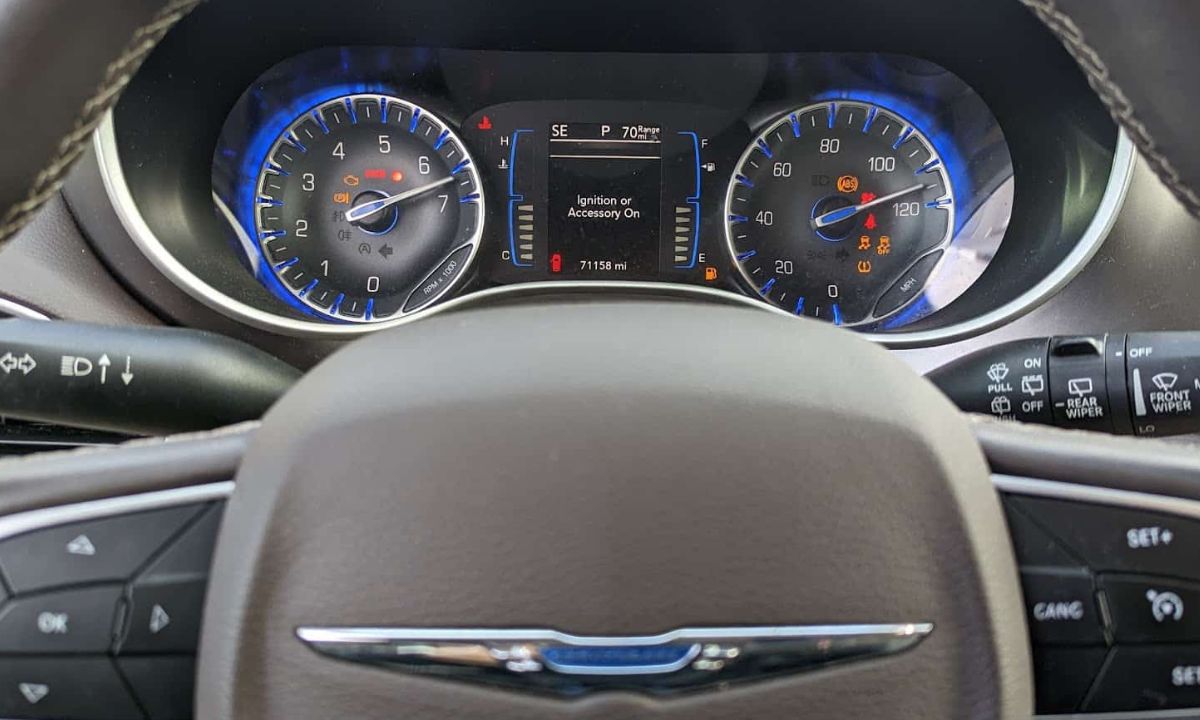
Chrysler uses a color-coded warning system across all models — Pacifica, 300, Voyager, Town & Country. Red means stop or pull over. Yellow means schedule service. Green and blue confirm active systems. Knowing which category a light falls into before looking it up changes how urgently you respond. Below is a breakdown of the most common symbols, what they look like, and what to do when they appear.
Red Warning Lights — Act Immediately
Low Oil Pressure — A small oil can with a drop falling from the spout, red. The engine is not receiving adequate lubrication. Pull over immediately, shut off the engine, and check the oil level before restarting. Driving even a short distance with this light active can cause irreversible engine damage.
Engine Coolant Temperature — A thermometer submerged in wavy liquid, red. The engine is overheating or coolant level is critically low. Stop the vehicle and allow the engine to cool before opening the hood. Never remove the coolant reservoir cap on a hot engine.
Battery / Charging System — A rectangle with a plus sign on one end and minus on the other — the standard battery outline, red. The alternator has failed or the electrical system has a fault. The vehicle may continue running on battery reserve briefly, but electrical systems will begin failing in sequence. Drive directly to a service point.
Brake System Warning — A circle with an exclamation mark inside, sometimes with the word BRAKE beneath it, red. Appears when the parking brake is engaged, brake fluid is critically low, or a hydraulic fault exists. If the parking brake is fully released and the light remains, do not continue driving.
Airbag / SRS — A seated figure with a large circle deployed in front of them, red. A fault exists in the supplemental restraint system. Airbags may not deploy in a collision, or may deploy unexpectedly. Requires immediate diagnosis at a certified Chrysler service center.
Door Ajar — An overhead view of the vehicle with one or more doors shown open as an outline, red. One or more doors are not fully latched. Common on minivans when the sliding door is not completely closed. Check all doors including the tailgate before driving.
Yellow and Amber Warning Lights — Schedule Service
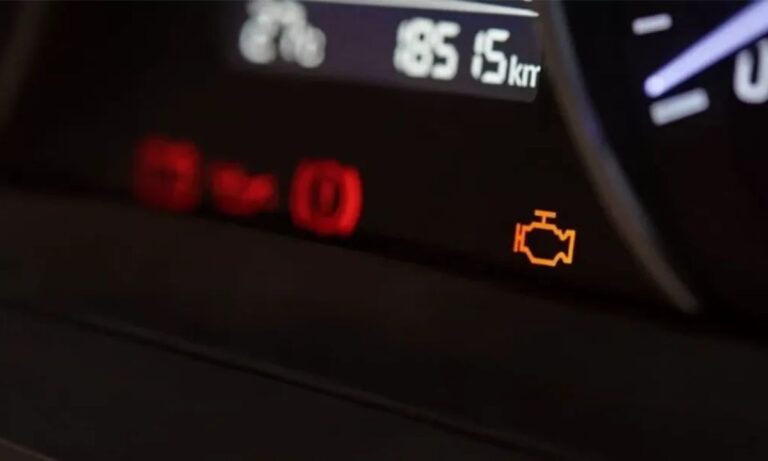
Check Engine (MIL) — An outline of an engine block, amber. A steady light means the ECU has logged a fault — emissions, fuel trim, ignition system, or sensors. Schedule a diagnostic scan. A flashing check engine light indicates an active misfire damaging the catalytic converter — reduce load and seek service the same day.
Tire Pressure (TPMS) — A cross-section of a tire that resembles a horseshoe shape with an exclamation mark inside, amber. One or more tires are significantly underinflated. Check all four tires and inflate to the pressure shown on the driver-side door jamb sticker. If pressure is correct and the light remains, a TPMS sensor may need recalibration or replacement.
ABS Warning — The letters ABS inside a circle with a ring around it, amber. The antilock brake system has a fault and is disabled. Normal braking still functions but wheels may lock under hard braking. Avoid emergency stops until repaired.
Electronic Stability Control / ESC Off — A car seen from above with two wavy lines beneath the rear wheels, amber. The stability system is disabled — either manually via a button or due to a fault. In wet or slippery conditions the vehicle has reduced ability to correct slides and oversteer.
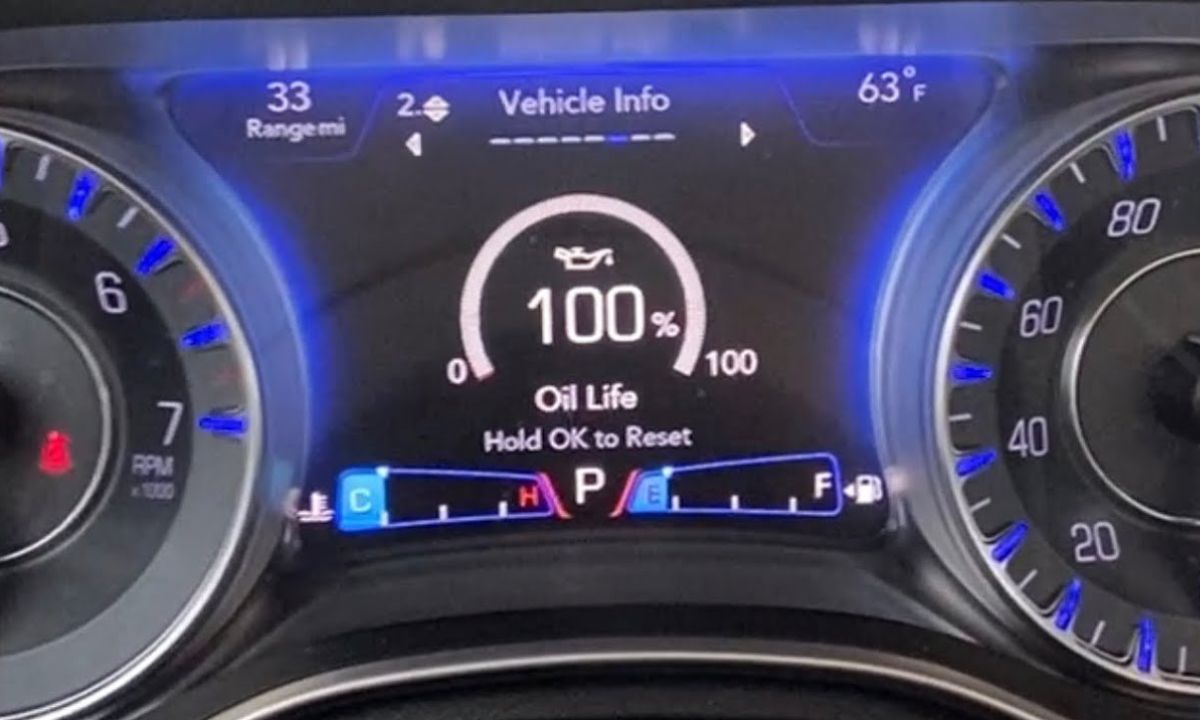
Service Engine / Wrench — A wrench icon, amber, sometimes accompanied by text in the DIC. Scheduled maintenance is due — typically an oil change or inspection interval. Does not indicate a mechanical fault.
Forward Collision Warning Off — An icon resembling a star or explosion shape, amber, with the word OFF beneath it. The forward-collision warning system has been deactivated. On the Pacifica specifically, when active it displays as a car with lines radiating forward.
Lane Sense — A car with weaving lines on either side, amber or yellow. The lane departure system has detected a drift from the intended lane. When white, the system is active with no drift detected. When green, road lines are clearly detected and the system is ready.
Auto Stop-Start Fault — The letter A inside a circle, amber. Unique to hybrid and plug-in Pacifica variants. A fault has been detected in the automatic stop-start system. The engine will not shut off at stops until the issue is resolved.
Blue and Green Indicators — System Status
High Beam Indicator — A headlight shape with horizontal lines projecting forward, blue. High beams are active.
Turn Signal — A green arrow pointing left or right, blinking with the indicator. A faster-than-normal blink rate typically means a bulb has failed on that side.
Cruise Control Active — A speedometer face or the letters ACC, green. Speed is being maintained. On adaptive cruise variants, a car outline with lines in front confirms the vehicle ahead is being tracked.
Lane Sense Active — A car between two lane markings, green. The lane departure system is on and road markings are detected.
When a Light Appears and Then Disappears
A warning light that illuminates briefly at startup and then goes off is a self-check — normal behavior for ABS, airbag, and stability indicators. A light that comes on while driving and then clears on its own has still stored a fault code in the ECU. Even without a return, an OBD2 scan will retrieve the stored code. Intermittent faults are frequently early signs of a component beginning to fail, and diagnosing them early costs significantly less than waiting for a full failure.