Land Rover Dashboard Warning Lights: What Every Symbol Means
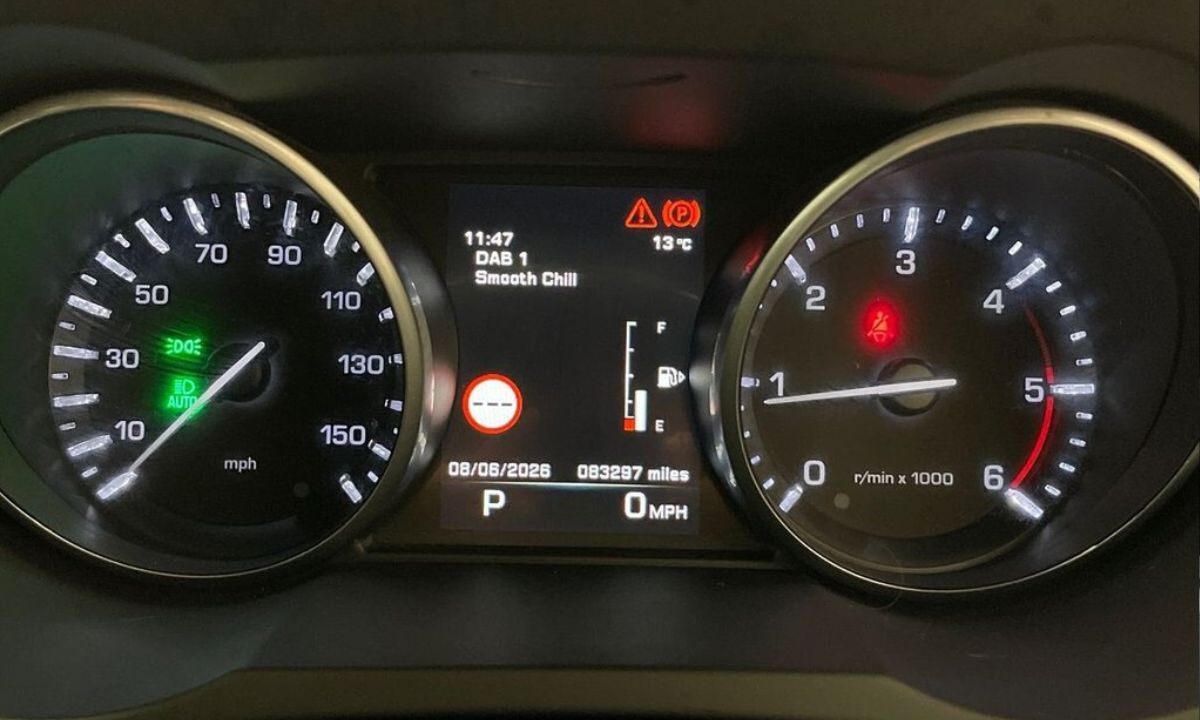
Land Rover uses a colour-coded warning system across all current models — Defender, Discovery, Discovery Sport, Range Rover, Range Rover Sport, Range Rover Evoque, and Range Rover Velar. Red means stop or act immediately. Amber means schedule service or investigate soon. Green and blue confirm active systems. A warning that appears briefly at startup is a self-check and requires no action. However, a light that stays on or appears while driving always requires attention.
Red Warning Lights — Act Immediately
Red lights indicate conditions that can cause injury or serious mechanical damage. Do not continue driving until you have addressed the issue.
Low Oil Pressure — A small oil can with a drop falling from its spout, red. The engine is not receiving adequate lubrication. Pull over immediately and switch off the engine. Check the oil level before restarting. Although the light may go out after adding oil, continuing to drive with this light active risks engine seizure.
Engine Coolant Temperature — A thermometer submerged in wavy liquid, red. The instrument panel also displays the message ENGINE OVERHEATING. Stop the vehicle as soon as safely possible and allow the engine to cool. Do not remove the coolant cap while the engine is still hot, because pressure in the system can cause serious burns.
Battery / Charging System — A rectangle with a plus sign on one end and minus on the other — the standard battery outline, red. The alternator is not charging, or there is a fault in the electrical system. Because electrical systems will begin failing as the battery reserve depletes, drive directly to a service point rather than waiting.
Brake System — The word BRAKE in red, or a circle with an exclamation mark inside. It illuminates briefly at startup as a self-check. However, if it stays on while driving, brake fluid is critically low or there is a fault with the Electronic Brake Distribution system. Stop and check brake fluid before continuing.
Brake Pad Wear — An exclamation mark inside a circle, sometimes with a different shape to the main brake warning. The brake pads are worn and therefore need replacement. The vehicle can still be driven, but contact a service centre promptly to avoid brake failure.
Airbag / SRS — An inflated airbag icon, red or amber depending on the model. A fault exists in the supplemental restraint system. Because airbags may not deploy in a collision — or may deploy unexpectedly — this requires diagnosis at a Land Rover service centre as soon as possible.
DEF / AdBlue Warning — A warning lamp specific to diesel models, red. The Diesel Exhaust Fluid level is critically low, or incorrect fluid has been added to the system. Since the vehicle will not restart after being switched off if the reservoir runs dry, refill with the correct AdBlue fluid immediately.
Critical Warning Message — A red triangle with an exclamation mark. An urgent message appears in the instrument panel, and the content varies depending on the fault. Red triangle warnings always require immediate attention — do not dismiss the message before reading it.
Amber Warning Lights — Schedule Service
Amber lights indicate faults that need attention but generally allow continued driving. However, do not delay investigation, since unresolved amber faults often escalate into more expensive repairs.
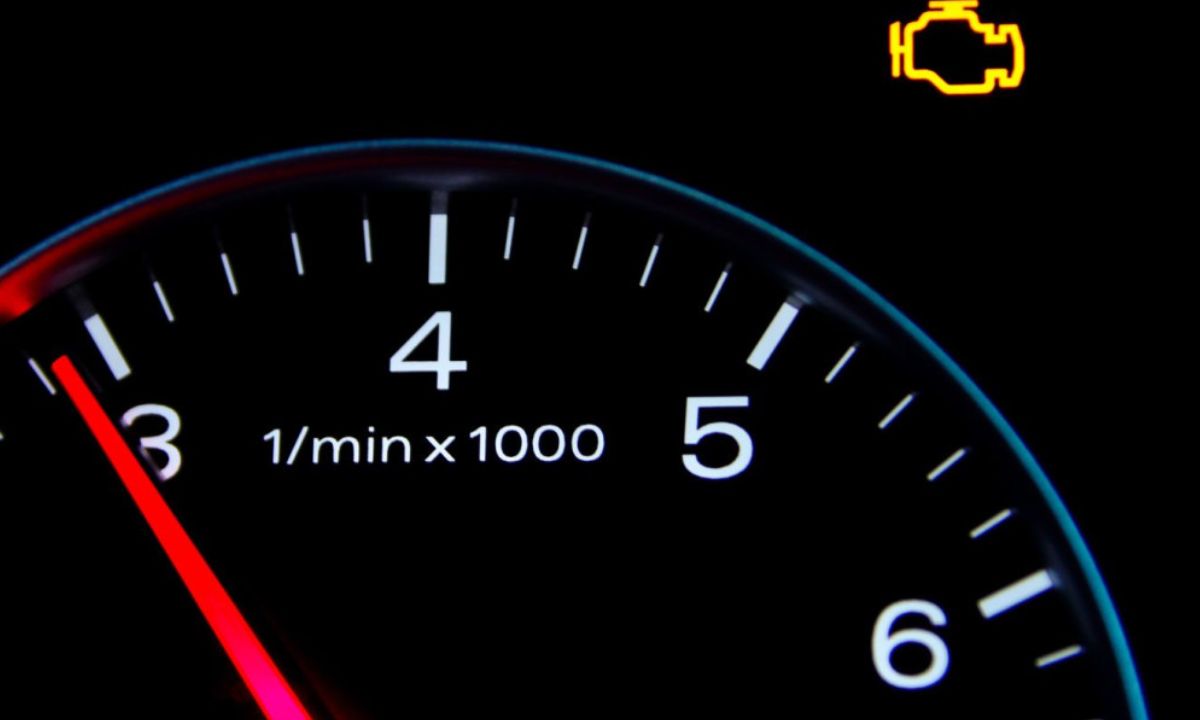
Check Engine — An engine block outline, amber. An engine or transmission emissions fault has been detected. Although the vehicle can continue to be driven, performance may be affected. Schedule a diagnostic scan to identify the specific fault code.
ABS — The letters ABS inside a circle with a ring around it, amber. The antilock brake system has a fault and is therefore disabled. Standard braking still functions, however wheels may lock under hard braking. Avoid emergency stops until the system is repaired.
Dynamic Stability Control — A car seen from above with wavy lines beneath the rear wheels, amber. When flashing, DSC is actively intervening — normal behaviour on slippery surfaces. When steady, DSC is disabled or has a fault. Because vehicle stability assistance is reduced, drive more cautiously in wet or off-road conditions.
Tire Pressure (TPMS) — A cross-section of a tire resembling a horseshoe with an exclamation mark inside, amber. One or more tires are significantly underinflated. Check all four tires and inflate to the specification on the driver’s door jamb. If pressure is correct and the light remains on, a TPMS sensor may need recalibration.
Service Due — A spanner or wrench icon, amber. Scheduled maintenance is due. On hybrid and PHEV variants, a spanner with a lightning bolt additionally indicates the hybrid system requires servicing.
Gearbox Warning — A cog outline with an exclamation mark, amber. A fault has been detected in the gearbox or transmission control system. Since shift quality may be affected, schedule a diagnostic scan.
Power Steering — A steering wheel with an exclamation mark, amber. Electric power steering has a fault. Although steering remains functional, it requires greater physical effort. Try switching the vehicle fully off and restarting — however, if the light returns, seek service immediately.
Low Fuel — A fuel pump icon with an arrow pointing downward, amber. Fuel level is approaching empty. The distance-to-empty display in the instrument cluster provides a more precise figure.
Off-Road and Driver Assistance Faults
Hill Descent Control Fault — A car descending a slope with an exclamation mark, amber. HDC has a fault and is therefore unavailable. The vehicle can still be driven normally on flat roads. This commonly appears after a wheel speed sensor fault or software issue.
Terrain Response Fault — Various terrain-specific icons with an exclamation mark, amber. The terrain management module has detected a fault. Since this affects the vehicle’s ability to optimise traction for specific surfaces, seek service before any serious off-road use.
Lane Departure Warning — Two parallel lane lines with a car drifting toward one of them, amber. The system has detected unintended lane drift. When white, the system is monitoring and ready. Furthermore, on models with Lane Keep Assist, the steering will gently correct back toward the centre of the lane.
Automatic Speed Limiter Active — A speedometer icon above the text LIM, amber. The speed limiter has been set to a maximum speed. Deactivating the feature switches the symbol off.
Blue and Green Indicators — System Status
These lights confirm active systems and therefore require no action unless they appear unexpectedly or fail to extinguish after startup.
High Beam — A headlight shape with horizontal lines projecting forward, blue. High beams are active.
Auto High Beam Assist — The same headlight icon with the letter A added, green. The automatic high beam system is active and will manage beam switching based on oncoming traffic conditions.
Turn Signal — A green arrow pointing left or right, blinking with the indicator. A faster-than-normal blink rate usually means a bulb has failed on that side.
Adaptive Cruise — A car outline with lines in front, green. Adaptive cruise is active and tracking the vehicle ahead.
Lane Keep Assist Active — Two lane lines with a small car centred between them, green. The system is monitoring lane position and is ready to intervene on drift.
Rear Fog Lamp — A lamp shape with wavy lines projecting rearward, amber. The rear fog lamp is active. Since it is easy to leave on after fog conditions, deactivating it reduces glare for following drivers.
When a Light Appears and Then Disappears
A warning light that comes on during driving and then clears on its own has still stored a fault code in the ECM or the relevant control module. Even though the light has gone out, the code remains in the system. On Land Rover vehicles, reading those codes requires either JLR’s proprietary SDD software or a capable aftermarket scanner — because standard generic OBD2 scanners only read powertrain P-codes and miss body, chassis, and communication faults stored in other modules. Diagnosing intermittent faults early costs significantly less than waiting for a full failure.