Kia OBD2 Codes: Full List with Causes and Fixes
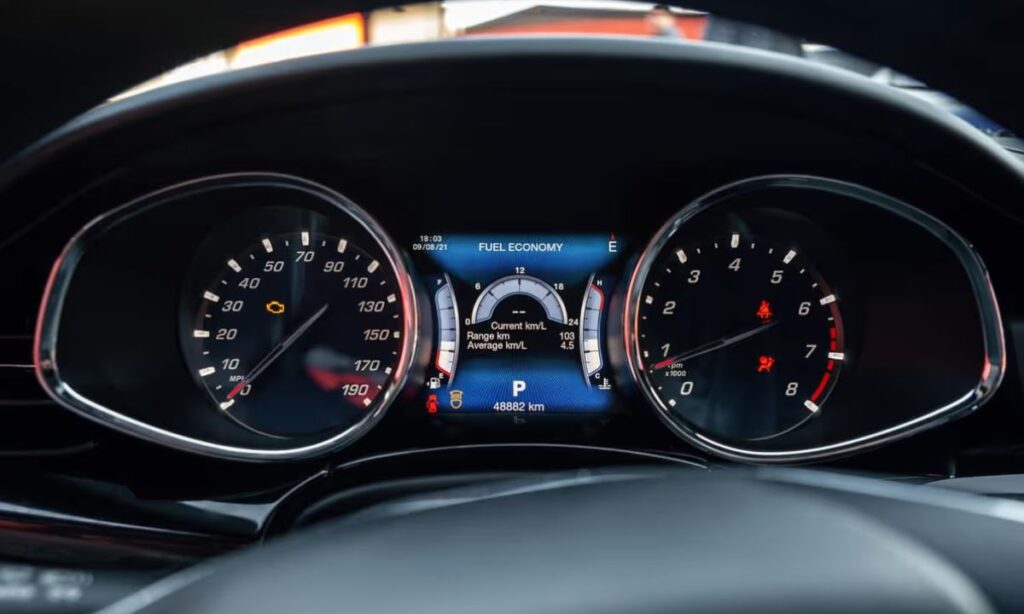
When the check engine light comes on in a Kia, the OBD2 system has already logged a fault code. Kia shares its platform and engine families with Hyundai, which means many codes and failure patterns are identical across both brands. However, Kia also uses manufacturer-specific codes in the P1xxx range that standard generic scanners may not display — a scanner with Kia/Hyundai manufacturer support reads the full picture. Below are the most common codes across the Sportage, Sorento, Rio, Soul, Stinger, and Telluride, organised by system.
Engine and Fuel System
- P0011 — Camshaft position timing over-advanced, Bank 1. Stuck oil control valve or degraded oil from overdue changes. Common on the 2.4L GDI and 2.0T engines in the Sportage and Sorento. Check oil condition first; replace OCV or cam phaser if needed.
- P0014 — Camshaft position timing over-advanced, Bank 1 Exhaust. Same cause as P0011 but on the exhaust cam. Dirty oil passages in the VVT system — often caused by extended oil change intervals. Clean or replace the OCV; address maintenance schedule.
- P0016 — Crankshaft/camshaft position correlation fault, Bank 1. Stretched timing chain on higher-mileage engines or a slipped reluctor wheel. On the 2.4L GDI past 120,000 miles, confirm chain condition before replacing sensors.
- P0087 — Fuel rail pressure too low. Failing fuel pump, clogged filter, or leaking pressure regulator. On the Sorento 3.3L V6, fuel pump failure is documented from around 130,000 miles. Check fuel pressure with a gauge before replacing the pump module.
- P0101 — MAF sensor range/performance. Sensor reading within range but inconsistent with engine load. Common on higher-mileage Kias. Clean the MAF sensor with dedicated spray before replacing.
- P0113 — Intake air temperature sensor voltage high. Open circuit or disconnected connector at the airbox. Check the IAT connector before replacing the sensor.
- P0117 — Engine coolant temperature sensor voltage low. Faulty ECT sensor or corroded connector. On the 1.6T and 2.0T engines, sensor connector corrosion is a documented failure point. Replace sensor and inspect connector.
- P0128 — Coolant temperature below thermostat regulating temperature. Thermostat stuck open — one of the most frequently reported codes across all Kia models. Also causes poor heater output and fuel economy loss. Thermostat replacement resolves it in the majority of cases.
- P0131 — Upstream O2 sensor low voltage, Bank 1. Exhaust leak near the sensor, failed sensor, or genuine lean condition from a vacuum leak. Check for exhaust leaks before replacing the sensor.
- P0171 — System too lean, Bank 1. Vacuum leak, dirty MAF sensor, low fuel pressure, or failing upstream O2 sensor. On the Rio and Soul 1.6L, intake manifold gasket leaks are a documented cause. Smoke test for vacuum leaks first.
- P0300 — Random/multiple cylinder misfire. Worn spark plugs, failing ignition coils, or carbon buildup on GDI intake valves. On GDI engines (2.0T, 2.4L), intake valve carbon buildup causing P0300 at higher mileage is a known issue — walnut blasting the intake resolves it.
- P0301–P0304 — Cylinder-specific misfire. Failed coil, spark plug, or injector on that cylinder. Swap the coil to confirm — if the misfire code follows it, replace the coil.
- P0335 — Crankshaft position sensor circuit fault. No signal from the CKP sensor. On higher-mileage Kia engines, the CKP sensor is a known wear item. Replace sensor; inspect wiring harness for damage.
- P0340 — Camshaft position sensor circuit fault, Bank 1. Failed sensor or timing chain wear affecting signal consistency. Check chain stretch before replacing the sensor.
- P0365 — Camshaft position sensor circuit fault, Bank 1 Sensor B. Exhaust cam sensor fault on engines with dual VVT. On the 2.0T Theta II, this code alongside P0014 often indicates VVT sludging from neglected oil changes.
- P0420 — Catalyst system efficiency below threshold, Bank 1. Under 100,000 miles: often a failed upstream O2 sensor. Past 150,000 miles: converter at end of life. A flashing check engine light alongside P0420 means misfires have damaged the substrate. Address misfires before replacing the converter.
- P0430 — Catalyst system efficiency below threshold, Bank 2. When P0420 and P0430 appear together, both converters have failed — common on high-mileage V6 models. Address misfire codes first.
- P0441 — EVAP system incorrect purge flow. Failed purge solenoid, cracked vacuum hose, or faulty fuel cap. Check fuel cap seal first.
- P0455 — EVAP system large leak detected. Loose or damaged fuel cap, cracked EVAP hose, or failed vent valve. A loose fuel cap accounts for a significant portion of P0455 codes on Kia vehicles — check it first before smoke testing the system.
- P0506 — Idle RPM too low. Dirty throttle body, vacuum leak, or failed IACV. On GDI engines, carbon buildup on the throttle body is the primary cause. Clean with throttle body cleaner.
- P0507 — Idle RPM too high. Vacuum leak or cracked intake boot. On the 1.6T, a cracked turbo inlet pipe causes a high idle and P0507. Inspect intake piping before replacing sensors.
Kia-Specific Engine Codes
- P1326 — Knock sensor detection system fault (Theta II engine). This is a critical Kia-specific code affecting the 2.0T and 2.4L GDI Theta II engines in the Sportage, Sorento, and Optima. It indicates abnormal knock patterns consistent with rod bearing failure. Kia extended the warranty on affected engines and issued a settlement. If this code appears, contact a Kia dealer immediately — continuing to drive risks catastrophic engine failure. The code is read by Kia’s KSDS (Knock Sensor Detection System) software update and requires dealer-level diagnostics.
- P1295 — Throttle position sensor circuit fault (sub-throttle). The throttle position sensor is providing an inconsistent or out-of-range signal. On the Sorento and Sedona, this code often triggers a reduced power mode. Cleaning or replacing the throttle body resolves it in most cases.
Ignition System
- P0351–P0354 — Ignition coil primary circuit fault, cylinders 1–4. Failed coil winding — coil failure is a routine higher-mileage repair on Kia four-cylinder engines. Swap the suspect coil to another cylinder; if the misfire code follows it, replace the coil.
- P0325 — Knock sensor circuit fault, Bank 1. Failed knock sensor, corroded wiring, or incorrect sensor torque. On the 2.4L engine, the knock sensor is mounted under the intake manifold and can be affected by oil accumulation. Inspect connector first; replace sensor if wiring is intact.
Transmission
- P0700 — Transmission control system malfunction. General code — TCM has stored its own specific fault codes. Always appears alongside additional transmission codes. Read all stored codes; P0700 alone does not describe the fault.
- P0720 — Output shaft speed sensor circuit fault. Erratic speedometer and poor shift scheduling. On the 6-speed automatic in the Sportage and Sorento, the output speed sensor is a known wear item. Replace sensor.
- P0740 — Torque converter clutch circuit fault. Failed TCC solenoid, contaminated fluid, or worn clutch plate. Highway shudder often precedes this code. Change fluid first; replace TCC solenoid if shudder persists.
- P0750 — Shift solenoid A circuit fault. Failed solenoid or valve body contamination. Solenoid pack replacement is the standard repair on the 6-speed automatic at higher mileage.
Chassis and Brakes
- C1200 — ABS wheel speed sensor fault. Generic ABS module code indicating a wheel speed sensor has failed or lost signal. A specific C12xx code identifies which corner — C1200 (front right), C1201 (front left), C1202 (rear right), C1203 (rear left) on most Kia configurations. Failed sensor, damaged tone ring, or wiring harness damage are the primary causes.
- C1604 — ABS control unit fault. Internal ABS module fault. On the Sportage and Sorento, this code sometimes appears after battery replacement due to voltage disruption during module initialisation. Disconnect battery for 10 minutes before replacing the ABS module.
Electrical and Communication
- U0100 — Lost communication with ECM/PCM. Failed ECM, CAN bus wiring fault, or battery-related communication loss. On Kia models, a corroded ground strap at the engine block is a documented cause. Inspect ground connections first.
- U0101 — Lost communication with TCM. The ECM cannot communicate with the transmission control module. CAN bus fault or failed TCM. Check fuses and connector at the TCM before replacing the module.
- U0140 — Lost communication with body control module. Failed BCM causing erratic lighting, power windows, and missing gauge readings. Replace BCM; requires programming to vehicle VIN.
How to Read Codes on Kia
The OBD2 port on all Kia vehicles is under the dashboard on the driver’s side. Generic OBD2 scanners read standard P0 codes. For Kia-specific codes including P1326, C12xx, and U-codes, a scanner with Hyundai/Kia manufacturer coverage is required. The P1326 code specifically requires Kia’s dealer software (GDS) to read and interpret sub-faults — generic scanners will not display it even if manufacturer mode is enabled.
After fixing the fault, clear codes with the scanner. Disconnecting the battery clears codes but also resets emission readiness monitors — the vehicle will need several drive cycles before passing an emissions or state inspection.
Additional Engine and Emissions Codes
- P0031 — Upstream O2 sensor heater circuit low, Bank 1. Failed heater element inside the upstream sensor. Replace the upstream O2 sensor. Common on Kia engines past 100,000 miles.
- P0036 — Downstream O2 sensor heater circuit fault, Bank 1. Failed heater element in the post-catalyst sensor. Replace downstream O2 sensor; does not indicate converter failure on its own.
- P0102 — MAF sensor circuit low input. Signal below minimum expected voltage — often a disconnected connector or torn intake boot rather than a failed sensor. Check physical connections before replacing.
- P0107 — MAP sensor voltage too low. Cracked or disconnected vacuum hose, or faulty sensor. Inspect all vacuum hoses before replacing the sensor.
- P0122 — Throttle position sensor voltage low. On models with electronic throttle control, the TPS is integrated into the throttle body assembly — replace the assembly, not a standalone sensor.
- P0133 — Upstream O2 sensor slow response, Bank 1. Worn sensor past 100,000 miles not responding quickly enough to mixture changes. Replace the upstream O2 sensor.
- P0138 — Downstream O2 sensor high voltage, Bank 1. Post-catalyst sensor reading consistently rich. Confirm converter efficiency before replacing the sensor.
- P0172 — System too rich, Bank 1. Failed upstream O2 sensor, stuck-open injector, or ECT sensor fault. When accompanied by P0128, thermostat replacement typically resolves both codes.
- P0175 — System too rich, Bank 2. When appears alongside P0172, suspect a shared cause — MAF sensor, ECT sensor, or thermostat — rather than a bank-specific issue.
- P0191 — Fuel rail pressure sensor circuit performance. Inconsistent sensor signal rather than actual low pressure. Check wiring and connector; replace sensor if signal remains erratic.
- P0201–P0204 — Fuel injector circuit fault, cylinders 1–4. Failed injector, wiring damage, or failed ECM driver. On GDI engines, carbon buildup can cause injector codes alongside misfires — clean injectors before replacing.
- P0327 — Knock sensor circuit low, Bank 1. Open circuit or short in the knock sensor wiring. Inspect connector and wiring before replacing the sensor.
- P0400 — EGR flow insufficient. EGR system not flowing enough exhaust gas during the test cycle. On Kia diesel models, carbon buildup on the EGR valve is the primary cause. Clean or replace the EGR valve.
- P0404 — EGR valve position sensor performance. EGR valve not moving to commanded position. Carbon buildup on the valve is the most common cause. Clean or replace the EGR valve.
- P0411 — Secondary air injection system incorrect flow. Air pump delivering insufficient airflow. Common on cold-climate models — pump may have seized from moisture. Replace air pump.
- P0443 — EVAP purge solenoid circuit fault. Failed purge solenoid on the intake manifold. Replace solenoid — straightforward repair on most Kia models.
- P0446 — EVAP vent control circuit. EVAP canister vent valve not operating correctly. Causes include a stuck valve or wiring fault. Replace vent valve; confirm canister is not clogged.
- P0462 — Fuel level sensor low. Fuel level sender reading below minimum expected signal. On the Sportage and Sorento, the fuel level sender is part of the pump module — module replacement is typically required.
- P0480 — Cooling fan relay circuit fault. PCM cannot control the cooling fan relay. Failed relay, wiring issue, or faulty fan. Replace relay first — inexpensive and straightforward.
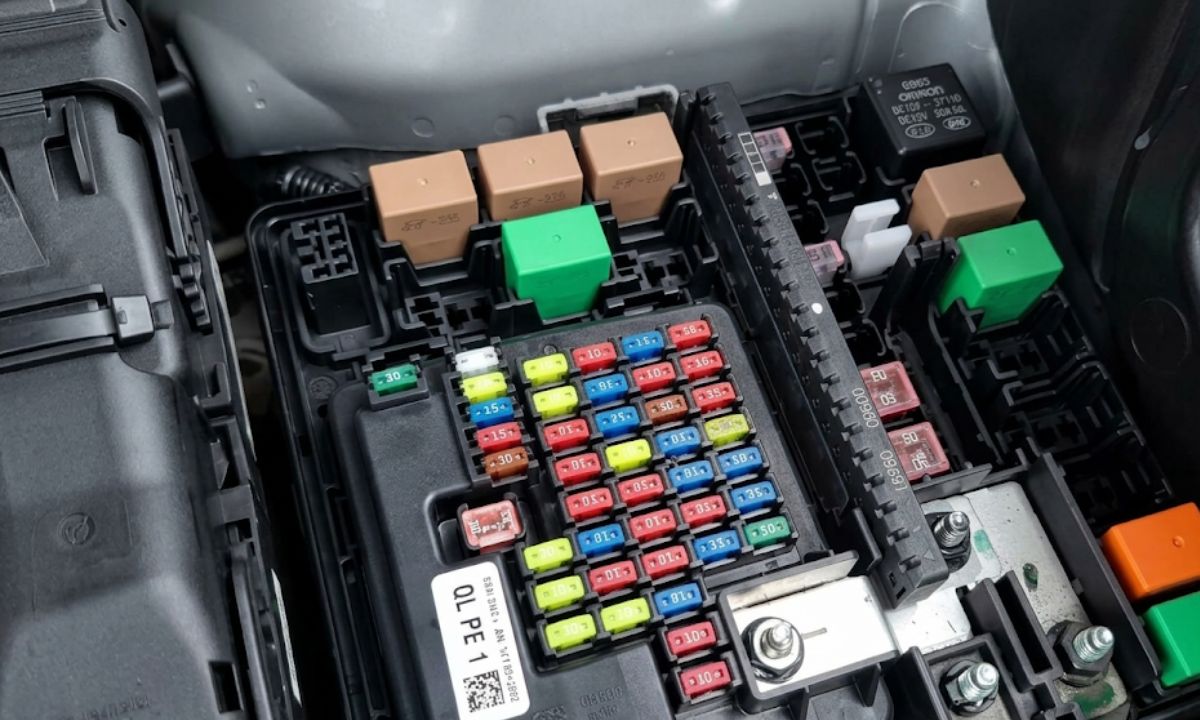
- P0562 — System voltage low. Failing battery, corroded terminals, or failing alternator. Load test battery; inspect battery cable connections at fusebox for corrosion.
- P0601 — ECM internal memory checksum error. Internal ECM fault; sometimes resolves after battery disconnect. Replace and reprogram ECM if fault returns after battery reset.
- P0638 — Throttle actuator control range/performance. Carbon buildup on throttle body actuator. Clean throttle body; typically appears alongside P0507 on GDI engines.
- P1128 — Closed loop fueling not achieved, Bank 1. Engine not reaching operating temperature — companion to P0128. Thermostat replacement resolves both.
Additional Chassis Codes
- C1101 — ABS front right wheel speed sensor circuit fault. Failed sensor, damaged tone ring, or wiring harness damage near the ABS ring. Inspect harness; replace sensor if harness is intact.
- C1102 — ABS front left wheel speed sensor circuit fault. Same failure pattern as C1101 on the opposite side.
- C1103 — ABS rear right wheel speed sensor circuit fault. Rear sensor failures on the Sorento and Sportage are often caused by hub corrosion at the sensor mounting boss.
- C1104 — ABS rear left wheel speed sensor circuit fault. Same pattern as C1103. On the Rio and Soul, rear sensor harness routing is vulnerable to abrasion damage.
- C1610 — Brake pressure sensor circuit fault. The ABS module is not receiving a valid signal from the brake pressure sensor. Check fluid level and sensor connector before replacing.