
JAC Engine Oil: Correct Specs for Diesel and Petrol Engines
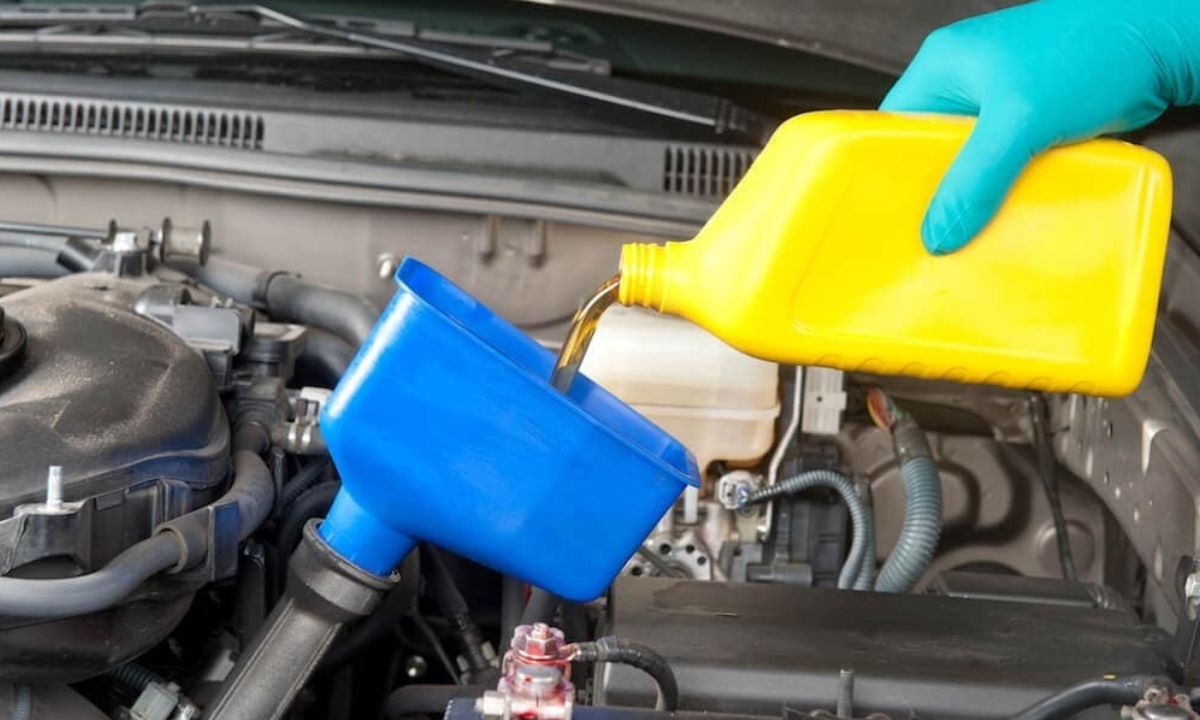
JAC doesn’t publicise its oil specifications the way European manufacturers do, which leaves owners guessing between what the local dealer recommends and what the owner’s manual actually says. The answer varies depending on the engine — the diesel units in the T9 and T8 have different requirements from the petrol engines in the JS4 and older sedans, and the climate you drive in changes the viscosity grade.
2.0L Turbodiesel
The 4DB2 engine family powering the T9 and T8 pickups in Australia and South Africa is a high-pressure common rail turbodiesel. The owner’s manual specifies oil meeting API CF classification as the minimum acceptable standard. In practice, most JAC dealers in Australia and South Africa are supplying API CI-4 or CK-4 rated diesel oils, which exceed the CF minimum and are the appropriate choice for a modern turbocharged common rail diesel with a DPF system.
Viscosity grades by climate:
- 5W-30 — recommended for temperatures above −30°C, covering Australia and most of South Africa year-round
- 5W-40 — acceptable alternative where 5W-30 full synthetic is not available, particularly in hotter climates or heavier towing applications
- 15W-40 — acceptable for consistently warm climates (above −10°C) but not recommended for cold morning starts
Full synthetic is strongly preferred over semi-synthetic or mineral oil in the 4DB2 engine. The turbocharger in the T9 runs at high thermal load, particularly under towing conditions, and mineral oil degrades faster under sustained heat. South African T9 owners towing regularly in summer conditions have reported extended oil life with full synthetic at 5W-30 or 5W-40 compared to conventional alternatives.
Oil capacity for the T9 2.0L turbodiesel: approximately 6.5–7.0 litres with filter replacement.
The T9 also requires AdBlue (DEF) for its SCR emissions system. This is a separate fluid — not mixed with engine oil — and is filled through a dedicated blue filler cap. Capacity is approximately 15 litres. Running low on AdBlue triggers a warning light and eventually limits engine power if not refilled.
1.5T Turbocharged Petrol
The JAC JS4 compact SUV sold in South Africa uses a 1.5-litre turbocharged petrol engine. The recommended specification is 5W-30 full synthetic meeting API SN or SP classification. The turbocharger in this engine is similarly sensitive to oil quality as the diesel units — synthetic oil is not optional on this platform.
Capacity: approximately 4.0–4.2 litres with filter.
The JS4 does not have the same DPF-related oil considerations as the diesel T9, but the turbocharger and variable valve timing system both benefit from regular oil changes at the correct interval. Oil that is overdue degrades faster in turbocharged petrol engines than in naturally aspirated ones because the turbo housing retains heat after shutdown and continues to expose the oil to high temperatures without active cooling.
Naturally Aspirated Petrol Engines
JAC sedans and smaller crossovers sold in older export markets use naturally aspirated petrol engines in the 1.5L to 2.0L range. These engines are less demanding than the turbocharged units:
- 10W-40 API SN — acceptable for most markets with ambient temperatures consistently above −10°C
- 5W-30 or 5W-40 API SN/SP — preferred for markets with cold mornings or owners who change oil less frequently
Capacity varies between 3.5 and 4.5 litres depending on engine size.
Change Intervals
JAC’s official interval across petrol models is 7,500 km or 6 months, whichever comes first, for mineral or semi-synthetic oil. For full synthetic, the interval extends to 10,000 km or 12 months. The 4DB2 diesel in the T9 follows a 10,000 km or 12-month interval with full synthetic under normal use, reducing to 7,500 km under severe conditions — defined as sustained high-load towing, extended idling, or frequent short cold-weather trips.
JAC Australia’s 7-year capped-price service plan includes the oil change schedule, and deviating from it can affect warranty coverage. Owners who service at independent workshops should ensure the oil grade and interval match JAC’s specifications and that the service is documented with a stamped logbook or receipt.
What to Look for on the Label
For the T9 diesel, look for API CK-4 or CI-4 rating alongside the viscosity grade. Avoid CH-4 and older diesel ratings — they do not adequately protect modern common rail injection systems with DPF. For petrol engines, API SP is the current standard and backward-compatible with SN — either is acceptable.