Cadillac Dashboard Warning Lights: What Every Symbol Means
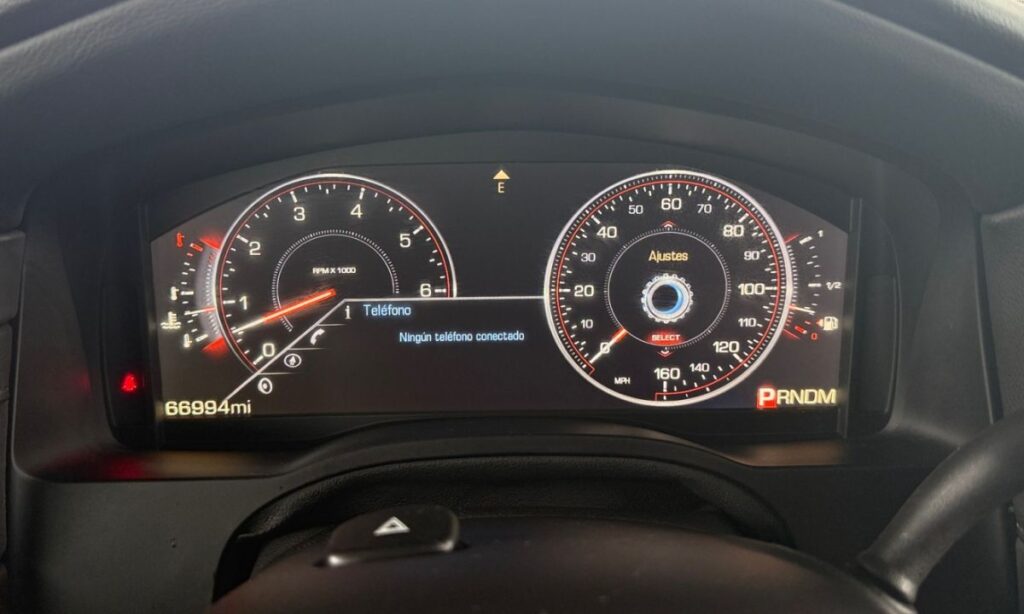
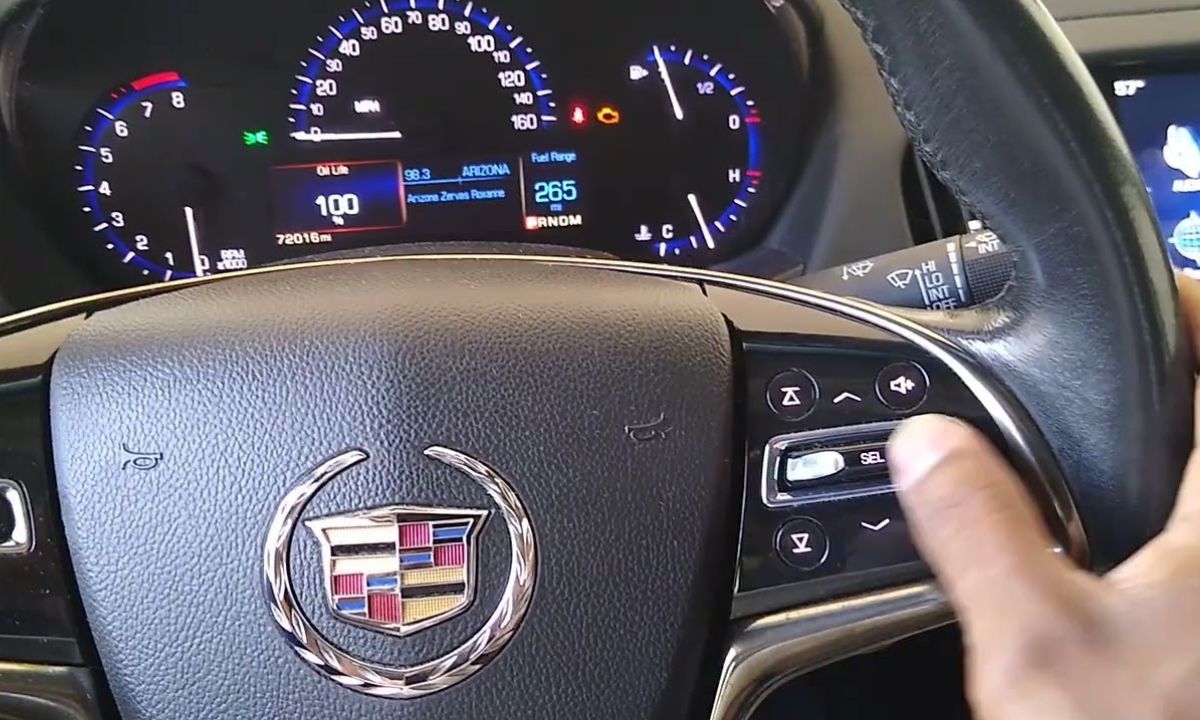
A warning light on a Cadillac dashboard is the car reporting a fault before it becomes a breakdown. Some require stopping immediately, others allow you to schedule service later. Ignoring a red oil pressure warning for even a few miles can destroy an engine — a yellow tire pressure light gives you time to find a pump. Cadillac uses a color-coded system across all models: red for immediate danger, yellow or amber for faults requiring attention, green and blue for active system status.
Red Warning Lights — Stop or Pull Over
Red lights indicate conditions that can cause injury or serious mechanical damage. Do not continue driving until the issue is addressed.
Low Oil Pressure — A small oil can with a drop falling from its spout, lit in red. This means the engine is not receiving adequate lubrication. Pull over immediately and turn off the engine. Check oil level before restarting. Driving even a short distance with this light active risks engine seizure.
Engine Coolant Temperature — A thermometer submerged in wavy liquid, red. The engine is overheating or coolant level is critically low. Stop the vehicle, turn off the engine, and allow it to cool before opening the hood. Do not remove the coolant cap while hot.
Brake System Warning — A circle with an exclamation mark inside, sometimes enclosed in curved brackets resembling a drum, occasionally with the word BRAKE below. Appears when the parking brake is engaged, brake fluid is low, or there is a fault in the hydraulic circuit. If the parking brake is released and the light stays on, do not drive.
Battery / Charging System — A rectangle with a plus sign on one end and a minus on the other — the standard battery outline, red. The alternator is not charging, or there is an electrical system fault. The vehicle may run briefly on battery reserve, but systems will begin failing. Drive directly to a service point.
Airbag / SRS — A seated figure with a large circle inflated in front of them, red. There is a fault in the supplemental restraint system. Airbags may not deploy in a collision, or may deploy unexpectedly. Requires diagnostic scan immediately.
Yellow and Amber Warning Lights — Service Required
These lights indicate faults that need attention but allow continued driving in most cases. Do not postpone diagnosis.
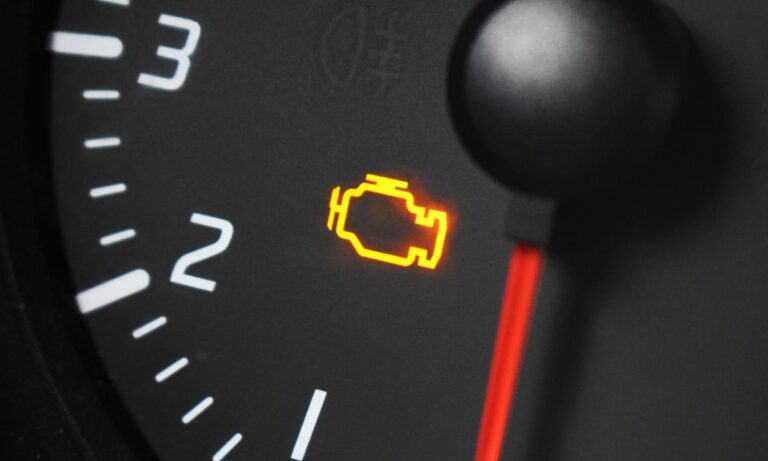
Check Engine (MIL) — An outline of an engine block with a lightning bolt or the words CHECK ENGINE, amber. A steady light means the engine control system has logged a fault — emissions, fuel trim, ignition, or sensors. Schedule a scan. A flashing check engine light indicates an active misfire damaging the catalytic converter — reduce speed and seek service the same day.
ABS Warning — The letters ABS inside a circle with a ring around it, amber. The antilock brake system has a fault and is disabled. Standard braking still functions, but wheels may lock under hard braking. Avoid aggressive stops until repaired.
Traction Control / StabiliTrak — A car seen from above with two wavy lines beneath the rear wheels, amber. Sometimes displayed as text: SERVICE STABILITRAK or STABILITRAK OFF. The electronic stability system is disabled or has a fault. In wet or slippery conditions the vehicle is more prone to losing control.
Tire Pressure (TPMS) — A cross-section of a tire — like a horseshoe shape — with an exclamation mark inside, amber. One or more tires are significantly underinflated. Check all four tires and inflate to the pressure shown on the driver-side door jamb. If pressure is correct and the light stays on, a TPMS sensor may need replacement or recalibration.
Change Engine Oil Soon — An oil can icon similar to the red version but amber, or a text message in the Driver Information Center reading CHANGE ENGINE OIL SOON. The GM Oil Life Monitoring System has calculated the oil has reached the end of its service life. Change the oil and reset the monitor.
Power Steering Warning — A steering wheel with an exclamation mark beside it, amber. Electric power steering has a fault. Steering remains functional but requires noticeably more effort. Sometimes clears after a restart — if it returns, requires diagnosis.
TPMS Sensor Fault — Similar to the tire pressure icon but with a wrench or additional indicator, amber. One or more tire pressure sensors has failed or lost signal. The system can no longer monitor that wheel’s pressure accurately.
Blue and Green Indicators — System Status
These lights confirm active systems and require no action.
High Beam Indicator — A headlight with horizontal lines radiating forward, blue. High beams are active.
Turn Signal — A green arrow pointing left or right, blinking with the indicator. Faster blink than normal usually means a failed bulb on that side.
Cruise Control Active — A speedometer face or the letters ACC, green or white. Speed is being maintained automatically.
Lane Keep Assist — Two lane lines with a small car between them, green. The system monitors lane position and intervenes on drift.
Vehicle Ahead Detected — A car outline with curved lines ahead, green. Adaptive cruise is tracking the vehicle in front. Turns amber if following distance drops below the set threshold.
When the Light Comes On and Goes Off
A warning light that appears briefly at startup and then extinguishes is a system self-check — normal behavior for ABS, airbag, and stability control indicators. A light that appears while driving and then disappears has still logged a fault code in the ECU. Even without a return, a diagnostic scan will retrieve the stored code. Intermittent faults are often the first sign of a component beginning to fail, and catching them early is always cheaper than waiting for a full failure.