Hyundai G4KH Engine: 2.0L T-GDI Complete Technical Guide
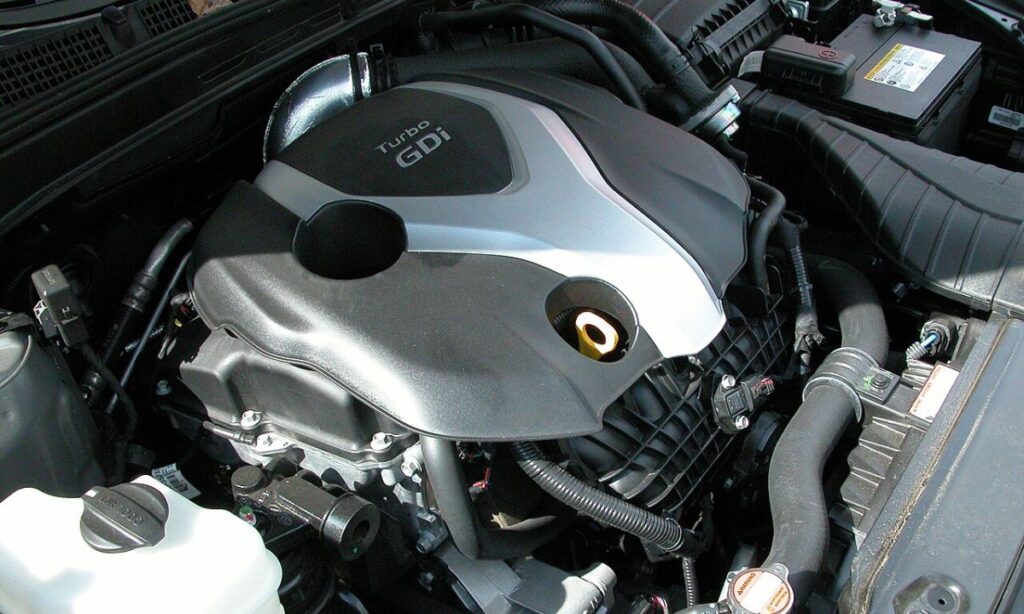
The Hyundai G4KH is a 2.0-liter turbocharged gasoline direct injection engine developed by Hyundai Motor Group as part of their Nu engine family. This powerplant represents a significant leap in performance engineering for Hyundai and Kia vehicles, combining turbocharging with direct fuel injection to deliver an impressive balance of power and efficiency. Understanding the G4KH’s specifications, maintenance requirements, and common issues is essential for owners, mechanics, and enthusiasts working with this engine.
G4KH Engine Overview and Key Specifications
The G4KH 2.0T-GDI engine is an inline-4 cylinder unit built on the Nu platform. Below are its core technical specifications:
- Displacement: 1,998 cc (2.0 liters)
- Engine Family: Nu (Theta successor for specific applications)
- Configuration: Inline-4 cylinder, DOHC
- Valvetrain: 16-valve with Dual Continuously Variable Valve Timing (DCVVT)
- Fuel System: Turbocharged Gasoline Direct Injection (T-GDI)
- Bore x Stroke: 86.0 mm x 86.0 mm (square engine)
- Compression Ratio: 9.5:1
- Maximum Power Output: 275 hp (205 kW) at 6,000 rpm (high-output version)
- Standard Power Output: 245 hp (183 kW) at 6,000 rpm
- Maximum Torque: 353 Nm (260 lb-ft) at 1,350–4,000 rpm (high-output)
- Standard Torque: 353 Nm (260 lb-ft) at 1,500–4,500 rpm
- Turbocharger: Single twin-scroll turbocharger
- Intercooler: Air-to-air front-mounted intercooler
- Fuel Type: Premium unleaded (91 octane minimum, 95 recommended)
- Engine Management: Bosch MED17 ECU
- Oil Capacity: 5.2 liters with filter change
- Recommended Oil: SAE 5W-30 full synthetic (GF-5 / SN or higher)
- Firing Order: 1-3-4-2
- Block Material: Cast iron
- Head Material: Aluminum alloy
Vehicles Using the G4KH Engine
The G4KH 2.0 T-GDI has been deployed across several high-performance Hyundai and Kia models:
- Hyundai Sonata Sport 2.0T – LF generation (2015–2019)
- Hyundai Sonata Turbo – YF generation (certain markets)
- Hyundai Santa Fe Sport 2.0T – DM generation (2013–2018)
- Hyundai Tucson 1.6T (related platform) – certain specifications
- Kia Optima SX 2.0T – JF generation (2016–2020)
- Kia Sportage 2.0T – QL generation (selected markets)
- Hyundai Genesis Coupe 2.0T – BK2 (G4KF predecessor, closely related)
Maintenance Schedule and Service Intervals
Proper maintenance of the G4KH is critical to longevity, especially given the demands of forced induction:
- Engine oil change: Every 8,000–10,000 km or 6 months (severe duty: every 5,000 km)
- Oil filter replacement: Every oil change interval
- Spark plugs: Iridium plugs every 60,000 km; inspect at 30,000 km
- Air filter: Every 30,000 km or annually
- Fuel filter (in-tank): Every 60,000 km or as needed
- Timing chain inspection: Every 100,000 km; no scheduled replacement unless wear detected
- Coolant flush: Every 60,000 km or 5 years
- Turbocharger oil feed line inspection: Every 40,000 km
- PCV valve inspection: Every 40,000 km
- Drive belt (serpentine): Inspect every 60,000 km, replace at 120,000 km
- Throttle body cleaning: Recommended every 60,000 km due to GDI carbon buildup
Common Problems and Known Issues
The G4KH has a number of documented issues that owners should be aware of:
- Carbon buildup on intake valves: A widespread issue with all GDI engines. Because fuel is injected directly into the cylinder and not through the intake port, intake valves are not cleaned by fuel wash, leading to carbon deposits. Symptoms include rough idle, misfires, and reduced power. Walnut blasting every 60,000–80,000 km is strongly recommended.
- Oil consumption: Some units report higher-than-normal oil consumption between changes. Monitor levels every 3,000 km. Hyundai issued technical service bulletins (TSBs) related to piston ring sealing on some production runs.
- Timing chain tensioner wear: Earlier production G4KH units have shown timing chain rattle on cold starts, indicating tensioner fatigue. Replacement of tensioner and chain guides is recommended if rattling persists beyond warm-up.
- Turbocharger failures: Often caused by neglected oil changes, low oil level, or using incorrect oil viscosity. The twin-scroll turbo requires clean, high-quality oil for proper bearing lubrication.
- High-pressure fuel pump (HPFP) noise: A ticking or tapping noise from the top of the engine is common and often related to the HPFP cam follower wear. Inspect follower and camshaft lobe at 60,000 km intervals.
- Coolant leaks: The water pump and thermostat housing are known weak points. Inspect hoses and connections during every service.
- Ignition coil failures: Intermittent misfires may be traced to weak ignition coils. Replace all four coils if one fails to prevent recurring misfires.
G4KH Turbocharger Details
- Turbo type: Twin-scroll, single turbo
- Manufacturer: BorgWarner (primary supplier)
- Maximum boost pressure: Approximately 18–20 psi (1.24–1.38 bar) stock
- Wastegate: Internal wastegate with electronic boost control
- Oil-cooled and water-cooled center section
- Turbo spool range: Effective from approximately 1,350 rpm
Engine Codes and OBD-II Diagnostics
Common OBD-II fault codes associated with the G4KH 2.0T-GDI:
- P0011 – ‘A’ Camshaft Position Timing Over-Advanced Bank 1 – Causes: faulty OCV, dirty oil, low oil pressure, timing chain stretch
- P0021 – ‘A’ Camshaft Position Timing Over-Advanced Bank 2 – Same causes as P0011
- P0300 – Random/Multiple Cylinder Misfire – Causes: carbon buildup, spark plugs, coils, fuel injectors
- P0301–P0304 – Cylinder-specific misfires – Causes: individual coil or plug failure, injector fault
- P0087 – Fuel Rail/System Pressure Too Low – Causes: HPFP wear, fuel pressure regulator, clogged filter
- P0171 – System Too Lean Bank 1 – Causes: vacuum leaks, MAF sensor, fuel delivery issue
- P0234 – Turbocharger Overboost Condition – Causes: wastegate stuck closed, boost solenoid fault, ECU issue
- P0299 – Turbocharger/Supercharger Underboost – Causes: boost leaks, wastegate stuck open, turbo wear
- P1326 – Knock Sensor Detection System (KSDS) – Causes: rod bearing wear; critical code requiring immediate inspection to avoid engine damage
Performance and Tuning Potential
- Stage 1 ECU tune: 290–310 hp / 380–400 Nm on stock hardware with 98 octane fuel
- Upgraded intercooler: Reduces intake charge temps by 15–25°C, supporting further power gains
- Upgraded downpipe: Reduces turbo backpressure, improves spool time
- High-flow air intake: Mild gains of 5–10 hp, primarily improves throttle response
- Port injection kit (PI kit): Adds secondary port injection to combat carbon buildup while supporting higher power levels
- Fuel pump upgrade: Required for power levels exceeding 320 hp