
Kia Sportage QL 2015-2021 Fuses – Complete Guide
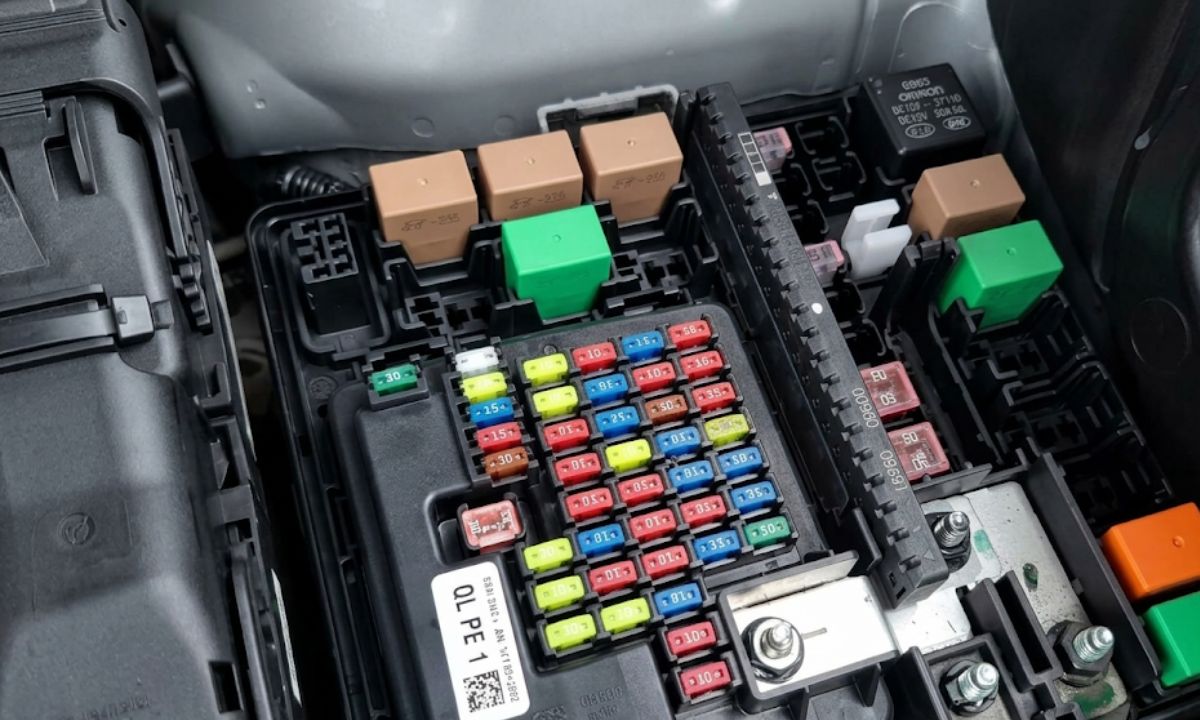
The Kia Sportage QL (fourth generation, 2015–2021) uses a multi-box fuse and relay architecture to protect every electrical circuit on board. Knowing the exact fuse layout helps you diagnose electrical faults, replace a blown fuse with the correct amperage, and avoid damaging sensitive modules. This guide covers every fuse in every box – engine compartment, passenger compartment (instrument panel), and the trunk/rear fuse block where fitted – together with fuse ratings, locations, and practical diagnostic notes specific to the QL platform.
Fuse Box Locations on the Kia Sportage QL
The Sportage QL has three main fuse/relay centres:
- Engine compartment fuse box (IPDM) – located on the left side of the engine bay, near the battery. Contains high-current fuses and main relays.
- Passenger compartment fuse box – located under the driver’s side dashboard, behind a removable cover. Contains low-current fuses for interior and control systems.
- Trunk fuse box (on some variants) – located behind the left trim panel in the cargo area. Typically houses fuses for the rear power systems and optional equipment.
Engine Compartment Fuse Box – Full Fuse List
- F1 – 100A – Main fuse (battery protection)
- F2 – 80A – Engine control module (ECM) and main relay
- F3 – 60A – ABS/ESC hydraulic unit motor
- F4 – 50A – Blower motor (HVAC)
- F5 – 40A – Alternator output
- F6 – 40A – Starter motor circuit
- F7 – 30A – ABS/ESC valve fuse
- F8 – 30A – Electric power steering (EPS)
- F9 – 30A – Front wiper motor
- F10 – 30A – Rear window defogger
- F11 – 20A – Cooling fan (high speed)
- F12 – 20A – Cooling fan (low speed)
- F13 – 20A – Fuel pump relay
- F14 – 20A – Headlamp (left, low beam)
- F15 – 20A – Headlamp (right, low beam)
- F16 – 15A – Headlamp (left, high beam)
- F17 – 15A – Headlamp (right, high beam)
- F18 – 15A – Horn relay
- F19 – 15A – Ignition coil and injectors (Bank 1)
- F20 – 15A – Ignition coil and injectors (Bank 2 / GDi)
- F21 – 10A – ECM main relay
- F22 – 10A – Variable valve timing (CVVT) solenoid
- F23 – 10A – Transmission control unit (TCU)
- F24 – 10A – Lambda (O2) sensor heaters
- F25 – 10A – Air conditioning compressor clutch
- F26 – 10A – Radiator cooling fan relay control
- F27 – 10A – Start-stop system (ISG) relay – where fitted
- F28 – 10A – AWD transfer case control module – AWD models
Passenger Compartment (Instrument Panel) Fuse Box – Full Fuse List
- F1 – 30A – Front heated seats (driver and passenger)
- F2 – 30A – Rear heated seats – where fitted
- F3 – 25A – Cigar lighter / 12V accessory socket (front)
- F4 – 25A – Rear 12V accessory socket
- F5 – 20A – Power windows (front)
- F6 – 20A – Power windows (rear)
- F7 – 20A – Power door locks / central locking
- F8 – 20A – Sunroof motor – where fitted
- F9 – 15A – Audio head unit and amplifier
- F10 – 15A – Navigation and infotainment screen (AVN)
- F11 – 15A – Instrument cluster (cluster supply)
- F12 – 15A – Body control module (BCM) main supply
- F13 – 15A – Exterior lighting relay (tail lamps, DRL)
- F14 – 15A – Interior courtesy lights and map lamps
- F15 – 15A – Parking aid / around view monitor (AVM) – where fitted
- F16 – 10A – Airbag and SRS control module
- F17 – 10A – Driver assistance systems (LKAS, LDW, FCW) – where fitted
- F18 – 10A – Brake light switch supply and stop lamp relay
- F19 – 10A – Reverse lamp and back-up camera
- F20 – 10A – Turn signal / hazard flasher relay
- F21 – 10A – OBD-II diagnostic port (DLC) power
- F22 – 10A – Electronic throttle control (ETC)
- F23 – 10A – Rain sensor and auto headlamp sensor
- F24 – 10A – Tyre pressure monitoring system (TPMS)
- F25 – 10A – Steering wheel control module and multifunction switch
- F26 – 10A – USB and 12V charging ports (second row)
- F27 – 7.5A – Smart key and immobiliser
- F28 – 7.5A – Clock and memory retention (continuous battery feed)
- F29 – 7.5A – Cluster illumination and dimmer
- F30 – 7.5A – Fuel level gauge sender
Trunk / Rear Fuse Block – Full Fuse List
- F1 – 20A – Power tailgate motor and latch – Power tailgate models
- F2 – 15A – Rear HVAC blower (dual-zone models)
- F3 – 10A – Rear heated seats control supply
- F4 – 10A – Rear parking sensors (PDC)
- F5 – 10A – Subwoofer / premium audio amplifier – where fitted
- F6 – 10A – Trailer socket / tow bar electrics – where fitted
How to Identify and Replace a Blown Fuse on the Sportage QL
- Check the fuse diagram label printed on the inside of each box cover – always verify against this guide for your exact variant and model year.
- Use a fuse puller tool (stored in the engine bay box) or long-nose pliers; never use metal tools across terminals.
- Inspect fuses with the circuit powered on using a test light probing both sides of the fuse – a blade fuse can appear intact but be internally open.
- Always replace with the identical amperage and type (mini blade / regular blade / maxi blade) as marked on the fuse body and the cover chart.
- A fuse that blows repeatedly indicates a short circuit or overloaded component – replace the fuse once and investigate the root cause before repeated replacement.
Common Electrical Faults by Fuse on the Kia Sportage QL
- F5 / F6 engine bay (cooling fans) – overheating at idle; fans not operating; check fan motor resistance before replacement.
- F9 passenger box (audio/AVN) – infotainment black screen; check for software reset before suspecting fuse.
- F16 passenger box (airbag/SRS) – SRS warning light illuminated; blown fuse here may indicate a fault event; requires scan tool diagnosis.
- F3 passenger box (cigar lighter) – USB and wireless charger adapters draw high current; a blown F3 or F4 is common with multi-device charging.
- F28 engine bay (AWD module) – AWD warning light, system defaulting to 2WD; check module connector for corrosion on 2015–2017 builds.