
Hyundai Tucson TL Fuses 2015-2020 – Complete Guide
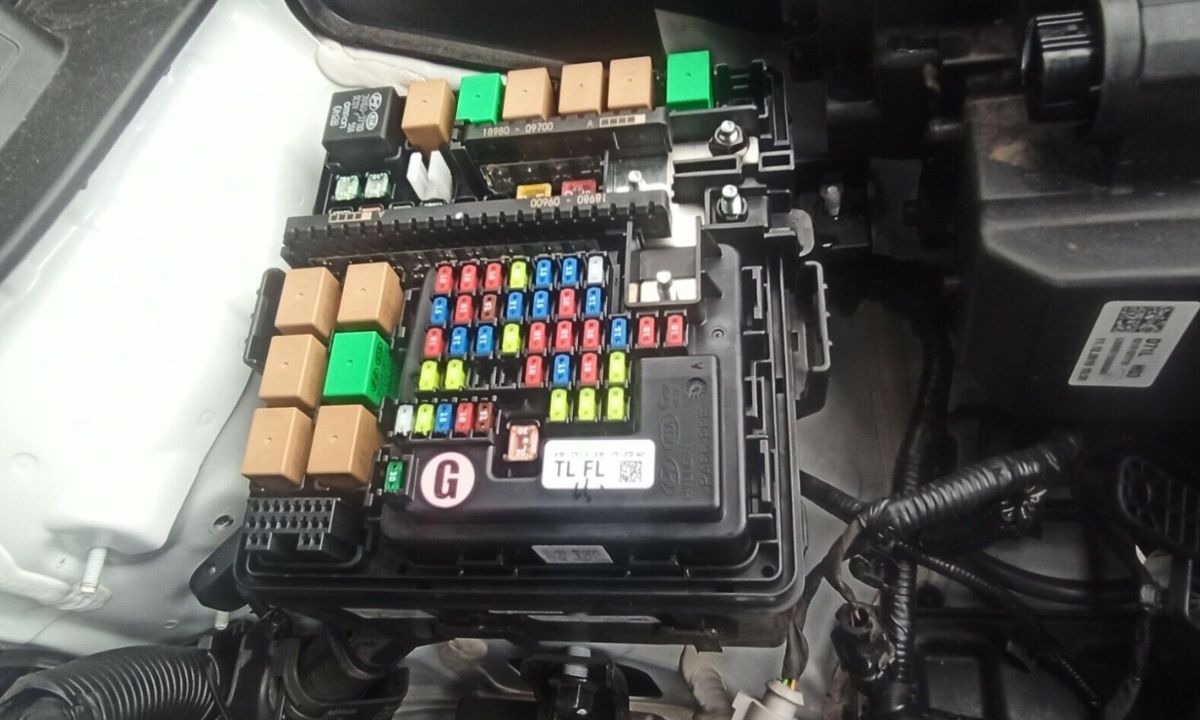
The Hyundai Tucson TL (2015–2020) uses a dual-fuse-box layout, with one underhood junction block and one interior passenger-compartment fuse panel. Knowing the exact amperage and function of every fuse is essential for safe electrical diagnosis, preventing costly dealer visits and protecting sensitive components such as the ECU, ABS module, and airbag system. This guide covers every fuse position in both boxes for the Tucson TL generation sold globally between 2015 and 2020.
Engine Compartment Fuse Box – Hyundai Tucson TL
The engine compartment junction block is located on the left side of the engine bay, near the battery. It contains high-current fuses and relays that protect major powertrain and chassis systems.
- F1 – 100A – Alternator charge line (main battery feed)
- F2 – 80A – ABS/ESC hydraulic control unit motor
- F3 – 60A – Engine control module (ECM) and related actuators
- F4 – 60A – Transmission control unit (TCU) power supply
- F5 – 40A – Cooling fan motor (high-speed circuit)
- F6 – 40A – Cooling fan motor (low-speed circuit)
- F7 – 40A – Rear window defroster
- F8 – 30A – Ignition switch main supply
- F9 – 30A – ABS/ESC solenoid valve supply
- F10 – 30A – Electronic power steering (MDPS) control module
- F11 – 30A – Junction block interior (sub-fuse feed)
- F12 – 20A – Fuel pump relay and fuel injectors
- F13 – 20A – Headlamp left low beam
- F14 – 20A – Headlamp right low beam
- F15 – 20A – Headlamp left high beam
- F16 – 20A – Headlamp right high beam
- F17 – 15A – Front wiper motor
- F18 – 15A – Horn relay
- F19 – 15A – Radiator cooling fan relay control
- F20 – 10A – Engine control module (ECM) keep-alive memory
- F21 – 10A – Canister close valve / purge control solenoid
- F22 – 10A – Lambda sensor heater (front and rear)
- F23 – 10A – Variable valve timing (CVVT) solenoid
- F24 – 10A – ABS/ESC warning lamp and sensor supply
- F25 – 10A – Transmission range sensor and shift solenoids
- F26 – 10A – Start relay coil
- R1 – Relay – Main relay (IGN1)
- R2 – Relay – Start relay
- R3 – Relay – Cooling fan high-speed relay
- R4 – Relay – Cooling fan low-speed relay
- R5 – Relay – Horn relay
- R6 – Relay – Fuel pump relay
Interior Fuse Panel – Hyundai Tucson TL
The interior junction block is located beneath the driver-side instrument panel, accessible by pulling the cover downward. It governs comfort, infotainment, lighting, and safety electronics inside the cabin.
- F1 – 30A – Front left power window motor
- F2 – 30A – Front right power window motor
- F3 – 30A – Rear left power window motor
- F4 – 30A – Rear right power window motor
- F5 – 30A – Panoramic sunroof / moonroof motor
- F6 – 25A – Blower motor (HVAC fan)
- F7 – 20A – Heated front seats (driver side)
- F8 – 20A – Heated front seats (passenger side)
- F9 – 20A – Power door locks actuators
- F10 – 20A – Rear wiper motor
- F11 – 15A – Audio / infotainment head unit
- F12 – 15A – Instrument cluster and combination meter
- F13 – 15A – Body control module (BCM) main supply
- F14 – 15A – Airbag SRS control module
- F15 – 15A – Parking assist sensors (front and rear PDC)
- F16 – 15A – Reversing camera and display module
- F17 – 15A – Heated steering wheel
- F18 – 15A – Exterior mirror adjustment and folding motors
- F19 – 10A – Interior lighting (dome, map, cargo lamps)
- F20 – 10A – Cigarette lighter / 12V accessory socket (front)
- F21 – 10A – 12V accessory socket (rear / boot)
- F22 – 10A – USB charging ports and media interface
- F23 – 10A – Climate control panel (FATC or manual A/C)
- F24 – 10A – Hazard warning lamp switch
- F25 – 10A – Turn signal lamps and side markers
- F26 – 10A – Brake lights and brake switch signal
- F27 – 10A – Reverse lamps
- F28 – 10A – Licence plate lamps
- F29 – 10A – Daytime running lamps (DRL) module
- F30 – 10A – Tyre pressure monitoring system (TPMS)
- F31 – 10A – Smart key receiver and start button module
- F32 – 10A – Lane keeping assist / forward collision warning camera module
- F33 – 10A – BlueLink / telematics control unit (if equipped)
- F34 – 10A – OBD-II diagnostic port (DLC) power supply
- F35 – 7.5A – Clock, radio memory and BCM keep-alive
Fuse Types and Replacement Tips for Tucson TL
The Tucson TL uses standard blade-type fuses (ATO/ATC) for most positions and mini blade fuses for smaller circuits inside the cabin block. High-current fuses in the engine bay use mega fuses (bolt-down type) for the 60A–100A ratings. Always replace with the exact same amperage; fitting a higher-rated fuse risks wiring harness damage or fire. A blown fuse typically indicates a short circuit or overloaded component — replacing without diagnosing the root cause will result in repeated failures. Hyundai recommends keeping a spare fuse assortment in the glovebox; the Tucson TL owner manual confirms spare fuses are stored inside the interior fuse box lid.
Common Electrical Issues Related to Fuses on Tucson TL 2015–2020
- F11 (Audio unit) blowing repeatedly – often caused by aftermarket accessories wired directly into the head-unit harness without an independent relay
- F20 (Cigarette lighter) blown – most common failure point; caused by high-draw dashcams or tyre inflators without auto-cutoff
- F14 (Airbag SRS) fault – if this fuse blows, the SRS warning light illuminates and airbags will not deploy; requires immediate professional inspection
- F10 (MDPS / power steering) in engine bay blown – results in heavy steering and a MDPS warning on the cluster; common after jump-starting incorrectly
- F2 engine bay (ABS motor) fault – ABS and ESC warning lights illuminate simultaneously; often damaged by voltage spikes
