Correct tire pressure for Chevrolet: how to avoid problems and extend tire life
Correct tire pressure in Chevrolet vehicles directly affects safety, fuel consumption, and driving comfort. Many drivers underestimate this parameter, yet a deviation of just 0.3–0.5 bar can lead to faster tire wear, reduced handling, and increased road risks. Regular checks help save on repairs and maintain excellent driving performance. For each Chevrolet model, the manufacturer’s recommendations are based on vehicle weight, tire size, and operating conditions. Following these values ensures even wear and optimal grip in any weather.
Why it is important to monitor tire pressure on Chevrolet
Low pressure increases rolling resistance, leading to higher fuel consumption and tire overheating. High pressure reduces the contact patch with the road, worsening braking and comfort. On Chevrolet vehicles, optimal values are listed on the sticker in the driver’s door jamb or in the owner’s manual. Regular monitoring is especially important when seasons change, as air temperature fluctuations affect tire pressure.
- Safety: Stable pressure maintains handling and shortens braking distance.
- Economy: Proper inflation reduces tire wear by 20–30% and lowers fuel consumption.
- Comfort: Smooth suspension operation without extra vibrations or noise.
- Durability: Tires last longer, and chassis components experience less stress.
Recommended tire pressure for popular Chevrolet models
For most Chevrolet sedans and crossovers, the optimal pressure is 2.3–2.5 bar. Exact figures depend on the trim and load. Always check the data for your specific vehicle.
- Spark: 2.2–2.4 bar in all wheels under average load.
- Cruze: 2.3–2.5 bar front and rear.
- Malibu: 2.4 bar for most versions.
- Equinox: 2.4 bar, in some trims up to 2.5–2.6 bar.
- Trailblazer: 2.3–2.5 bar.
- Tahoe and Suburban: 2.4 bar for standard conditions, up to 2.8 bar when fully loaded.
- Colorado and Silverado 1500: 2.4 bar for light loads, 4.1–5.2 bar for heavy-duty versions.
- Camaro: around 2.2 bar.
- Bolt: 2.5–2.6 bar due to battery weight.
These values are for cold tires (after parking for at least 3 hours). While driving, pressure rises by 0.2–0.4 bar — this is normal.
How to measure and adjust tire pressure correctly
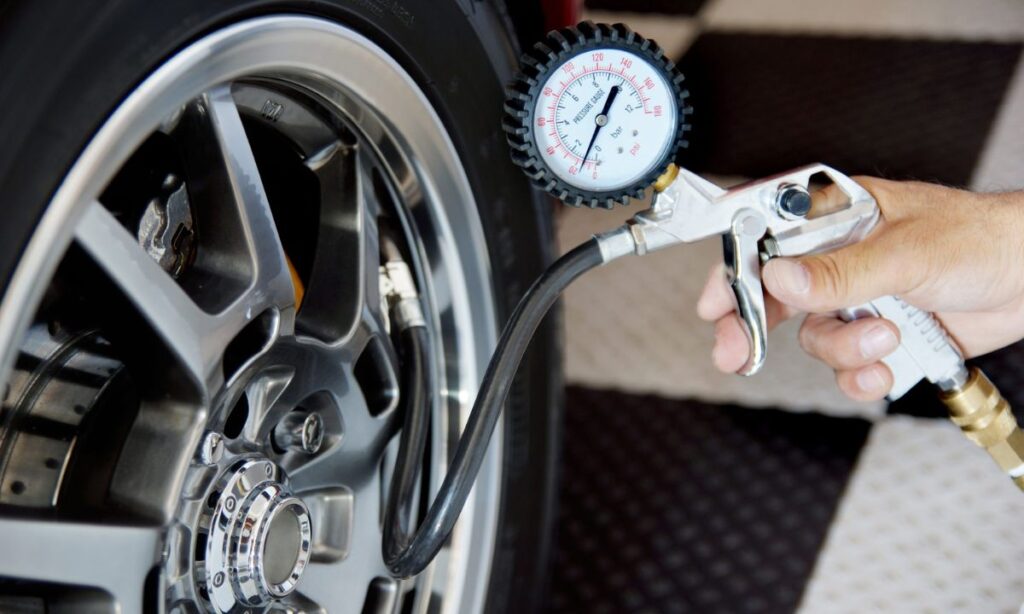
Check tires weekly or before long trips. Use a reliable pressure gauge. Measure on cold tires in the morning or after parking. Adjust according to load: with full load, increase rear pressure by 0.2–0.4 bar.
- Remove the valve cap.
- Firmly attach the gauge and read the value.
- If needed, add air in small increments with a compressor.
- Check all four wheels and the spare.
- Replace the valve caps.
Do not forget about seasonal tires: winter tires often require slightly lower pressure for better grip.
How tire pressure affects Chevrolet performance
Proper inflation improves dynamics and stability at high speeds. On crossovers like Equinox and Tahoe, this is especially noticeable on highways and in corners. Underinflated tires cause the vehicle to “float” and increase wear on the shoulder areas of the tread. Overinflated tires result in a harsh ride and rapid wear in the center of the tread.
On all-wheel-drive versions such as Colorado or Tahoe, even pressure helps the all-wheel-drive system work more efficiently and prevents premature differential wear.
Useful tips for caring for Chevrolet tires
Regularly inspect the tread for wear, cuts, and foreign objects. Wheel balancing and alignment every 10–15 thousand km complement correct pressure. When installing new tires, choose the size recommended by the manufacturer — this ensures compliance with load indexes.
In hot weather, check pressure more often because heating increases it. In cold weather, pressure tends to drop.
Recommendations for Chevrolet owners: Always start with the sticker on the door or the data in your vehicle’s manual for your specific trim. Keep a simple log of measurements — this will help detect air leaks early. If pressure drops faster than usual, visit a service center to diagnose valve issues or possible damage. By following these simple rules, you will ensure maximum safety, efficiency, and driving pleasure from your Chevrolet for many years.